
The 10 Best Automatic Turntables in 2027
Side ends, you're two rooms away, and the stylus grinds the run-out. We weighed auto action, sound and build to rank the best automatic turntables of 2027.

Affiliate Disclosure: As an Amazon Associate, we may earn a commission from qualifying purchases, and it never changes our picks.
Our picks at a glance

10.0/10Score

$498.00
as of Nov 10, 2026, 17:30 UTC

10.0/10Score
$299.00
as of Nov 10, 2026, 17:30 UTC

9.9/10Score
$379.00 $399.00 Save 5%
as of Nov 10, 2026, 17:30 UTC

9.6/10Score
$1,099.00 $1,299.00 Save 15%
as of Nov 10, 2026, 17:30 UTC

9.4/10Score
$348.00 $398.00 Save 13%
as of Nov 10, 2026, 17:30 UTC

9.4/10Score
$249.00
as of Nov 10, 2026, 17:30 UTC

9.3/10Score
$899.00
as of Nov 10, 2026, 17:30 UTC

8.8/10Score
$179.00 $199.00 Save 10%
as of Nov 10, 2026, 17:30 UTC

8.7/10Score
$284.90
as of Nov 10, 2026, 17:30 UTC
8.1/10Score
$799.00
as of Nov 10, 2026, 17:30 UTC
Product prices and availability are accurate as of the date/time indicated and are subject to change. Any price and availability information displayed on Amazon.com at the time of purchase will apply to the purchase of this product.
How we rank best automatic turntables for you?
We rank automatic operation first, because the point is a deck that lowers the arm, returns it and stops on its own, or at least lifts it at the end. Sound quality comes next, since the cartridge and stylus decide whether your records sound full or thin. Then the preamp and Bluetooth, which let one box play through powered speakers, a stereo or wireless headphones. Value checks you pay only for the convenience you'll use, and design and build matters more here, because automatic parts are moving parts. That puts the Sony PS-LX5BT on top.
 Automatic Operation30%
Full auto start, return and stop, or at least auto-lift, is why you're shopping here: no stylus left grinding at the end.
Sound Quality25%
Sound Quality25%Automatic shouldn't mean thin sound, so the cartridge and stylus decide how good your records really get.
Preamp and Bluetooth15%
Preamp and Bluetooth15%A built-in preamp and Bluetooth let one box play through powered speakers, a stereo or wireless headphones.
 Value15%
Automatic decks run from entry level to premium, and you should pay only for the convenience and sound you'll use.
 Design and Build15%
Automatic parts are moving parts, so a solid build and gentle mechanism matter more than on a manual deck.
Best automatic turntables compared
Swipe sideways to see every spec.
| Product | Score | Drive Type | Speeds | Operation | Preamp |
|---|---|---|---|---|---|
| 10.0 | Belt drive, die-cast aluminum platter | 33 1/3 and 45 RPM, with 7/12-inch size dial | Fully automatic: auto start, return and stop | Built-in, switchable phono/line, three gain settings | |
| 10.0 | Belt drive, aluminum platter | 33 1/3 and 45 RPM | Fully automatic: auto start, return and stop | Built-in, switchable phono/line | |
| 9.9 | Belt drive, die-cast aluminum platter, damped base | 33-1/3 and 45 RPM | Fully automatic, with damped cue lift | Built-in, switchable phono or line | |
| 9.6 | Belt drive with optical speed control | 33 1/3, 45 and 78 RPM | Fully automatic or manual, plus app control | Built-in, switchable | |
| 9.4 | Belt drive, die-cast aluminum platter | 33 1/3 and 45 RPM, set by dial with 7/12-inch size dial | Fully automatic: auto start, return and stop | Built-in, switchable phono/line, three gain settings | |
| 9.4 | Belt drive, DC motor, die-cast aluminum platter | 33-1/3 and 45 RPM | Fully automatic, with cue lever and tonearm lock | Built-in, switchable phono or line | |
| 9.3 | Belt drive, DC motor | 33 1/3, 45 and 78 RPM | Semi-automatic: auto tonearm lift and stop at record end | Built-in switchable MM phono EQ | |
| 8.8 | Belt drive, DC servo motor, aluminum platter | 33 1/3 and 45 RPM | Fully automatic start, return and stop; cue button | Built-in switchable phono preamp | |
| 8.7 | Belt drive, DC servo motor, die-cast aluminum platter | 33-1/3 and 45 RPM | Fully automatic start, return and stop | Built-in, switchable phono or line | |
| 8.1 | Belt drive, DC motor, platter speed sensor | 33 1/3, 45 and 78 RPM | Semi-automatic: auto lift and stop at end (can be turned off) | Built-in switchable MM phono EQ |
1. Sony PS-LX5BT: Best Automatic Turntable Overall
This is the automatic turntable we'd put in most homes. One press and it lowers the arm into the lead-in, plays to the end and sends the arm back to its rest, and an up/down key pauses things mid-song. The sound is open and detailed with a little extra bass, and it has more snap than the cheaper PS-LX3BT.
Say you start side B and head down the hall to fold laundry. The music ends, the arm comes home and the platter stops, so nothing is grinding in the run-out when you get back. Setup is mat on, cables in, press start. The 45 adapter lives inside the deck, the RCA cables unplug, and the high gain setting gives quiet powered speakers a 6 dB boost.
The trade-off is an arm you can't touch. TechRadar measured 3.13 g on its sample, against Sony's 2.0 g figure. Sony says that unit was an outlier, yet with no counterweight you'd have no way to correct it. If Bluetooth pairing ever hangs, switching it off and on clears it. Is it the one to get? For press-and-forget listening with real sound, yes. If you'll want a better cartridge later, the AT-LP3XBT (#3) is built for that.

Best for: Anyone who wants push-button play and lively sound through Bluetooth headphones, powered speakers or a stereo.

Skip it if: You want to upgrade the cartridge later. The Audio-Technica AT-LP3XBT (#3) is the better pick.
Pros
- Fully automatic with up/down cue button
- aptX Adaptive Bluetooth and switchable preamp
- Three gain settings for any speaker or amp
- Clear, detailed, energetic sound for the class
- Detachable RCA cables, unlike the PS-LX3BT
- Plays 12-inch singles at 45 without fuss
Cons
- Light build; doesn't feel substantial
- Fixed counterweight; like-for-like cartridge only
- Slightly heavy bass and thin treble
- Power switch is on the back
- Bluetooth pairing mode can need a reset
Hands-on reviews behind this pick
- What Hi-Fi?
Show the verdict
A triumph: clear, cohesive, natural and detailed sound with fully automatic play and Bluetooth, noticeably better than the LX3BT, though purist manual decks sound better.
- TechRadar
Show the verdict
One of the best pound-for-pound Bluetooth decks: painless automatic play, a stable aptX Adaptive link and an energetic sound, held back only by a light build and fixed arm.
2. Audio-Technica AT-LP70XBT: Best Value Automatic Bluetooth Turntable
Here's the value pick. The AT-LP70XBT runs the whole routine on one button: the arm drops, plays, comes home, and the motor stops. The mechanism is slow but sure. Next to the Sony you give up a little detail, but you keep full auto play, the preamp and aptX Adaptive Bluetooth.
It's 11 p.m., the house is asleep, and you're on the couch with wireless headphones. The side ends and the arm returns while you stay put. There's nothing to balance, since tracking force is preset at 2.05 g, and the box has a dust cover, felt mat, 45 adapter and an RCA cable with a ground wire. The deck has no slot for that adapter, so give it a home in a drawer.
The weak link is often the speaker, not the deck. A What Hi-Fi forum member running it into a soundbar heard muddy, boomy Bluetooth, and others in the thread said a cable to better speakers fixes it, which the built-in preamp makes easy. Is the Sony worth the extra? Only if you want its more detailed sound. Wired speakers only? The AT-LP70X (#6) is the same deck without Bluetooth.
Best for: Households that want reliable automatic play to Bluetooth headphones or speakers on a sensible budget.
Skip it if: You'll only ever play through wired speakers. The Audio-Technica AT-LP70X (#6) is the better pick.
Pros
- Fully automatic, one-button playback
- Built-in preamp and aptX Adaptive Bluetooth
- VM95 stylus can be upgraded
- Pre-set tracking force, no calibration
- Detachable RCA cables with ground wire
- Easy, reliable Bluetooth pairing
Cons
- Light plastic chassis
- Fixed cartridge and counterweight
- Bass can be bloomy, treble a touch bright
- Stock conical stylus limits detail
- No USB output
Hands-on reviews behind this pick
 Engadget
Show the verdict
Best pick for beginners: fully automatic, crisp and clear with optional Bluetooth, and a clear upgrade on the LP60XBT, though not as full as some rivals and the stylus begs an upgrade.
- TechRadar
Show the verdict
A delightful budget deck: easy automatic play, a decent preamp, painless Bluetooth and an upgradeable stylus, with sound that beats most rivals in its class despite some bloom.
3. Audio-Technica AT-LP3XBT: Best Upgradable Automatic Turntable
Want automatic play without getting stuck with the cartridge it ships with? That's the AT-LP3XBT. It runs the full start-to-stop routine on a straight 8.6-inch arm that has a proper counterweight, adjustable anti-skate and a damped cue lift. The AT-HS3 headshell comes off, so your upgrade path doesn't end at a stylus.
Picture it on a living-room sideboard in a busy house. Someone bangs a drawer shut beside it mid-song, and the heavy, damped base absorbs it before it reaches the stylus. Out of the box the conical VM95C sounds warm and balanced. Later, fit an elliptical VM95 stylus for crisper highs and firmer bass, or mount a different cartridge on a spare headshell. aptX Adaptive is only a touch behind the wired sound.
The annoyances are small but daily. The buttons feel hollow, and owner reviews on Audio-Technica's US product page keep raising the missing power switch and a Bluetooth radio that never turns off, so a Bluetooth speaker that's also wired in can echo. Worth the step up from the LP70XBT? If you're the tinkering type, yes. Want the smallest, simplest deck instead? The AT-LP60XBT (#9) fits a tighter shelf.
Best for: Sound-conscious listeners after one-button play today and room for a better cartridge later.
Skip it if: You just want the smallest, simplest Bluetooth deck. The Audio-Technica AT-LP60XBT (#9) is the better pick.
Pros
- Automatic, yet with a real counterweight arm
- Removable headshell for cartridge upgrades
- aptX Adaptive Bluetooth
- Heavy 5 kg base shrugs off bumps
- Easy VM95 stylus upgrades
- Warm, balanced sound with the stock stylus
Cons
- Buttons feel cheap and springy
- No power switch
- Bluetooth has no off switch
- No 10-inch auto setting
- Bluetooth audibly a touch below wired
Hands-on reviews behind this pick
- Senses
Show the verdict
A brilliant step-up deck: sturdy and resistant to bumps, warm and balanced, with aptX Adaptive and room to grow through VM95 styli; only the cheap, hollow buttons let it down.
- Sound Matters
Show the verdict
A serious turntable that happens to be automatic: proper tonearm, headshell and upgrade path, and sound good enough that the reviewer considered swapping out his own manual deck.
4. Dual CS 529: Best Premium Fully Automatic Turntable
Think automatic means compromise? The Dual CS 529 argues otherwise. Its arm lifts, cues and sets down with barely any drag, and the twin-gimbal arm carries an Ortofon 2M Red on a removable headshell. A 6.7 kg MDF plinth on a damped subchassis makes it feel like a real hi-fi component.
Hosting a long dinner? Set the app to repeat a favorite side, and nobody gets up between courses. The belt arrives taped in place, so setup is about 15 minutes. Opinions split on the built-in phono stage: SoundStage! Access ranks it among the best it has tried, while StereoNET calls it only adequate. We side with SoundStage! for most systems, and an outboard preamp stays an option later. Bluetooth is aptX HD out only, and 78s need a separate 2M 78 stylus.
Speed is the real catch, since SoundStage! measured wow at several times Dual's 0.08% claim. The sound is smooth and capable rather than class-leading. Worth it? For automatic play done properly, with five years of cover, yes. If you want most of the convenience for far less, the Sony PS-LX5BT (#1) gets you most of the way.
Best for: Hi-fi owners who want hands-off play without giving up a proper cartridge, arm and phono stage.
Skip it if: You want most of this convenience for far less money. The Sony PS-LX5BT (#1) is the better pick.
Pros
- Superb, low-drag fully automatic mechanics
- Ortofon 2M Red and twin-gimbal arm
- Plays 78s (with a 78 stylus)
- Built-in phono stage is better than most
- App control: start, stop, speed and repeat
- Five-year warranty
Cons
- Measured wow higher than Dual's spec
- 2M Red can sound bright on hot masters
- Bass a little light, staging somewhat shallow
- Feet aren't adjustable for leveling
- App is basic: start, stop and repeat only
Hands-on reviews behind this pick
- SoundStage! Access
Show the verdict
Superb, drag-free automatic mechanics, excellent build and one of the best built-in phono stages tested make this perhaps Dual's best automatic yet, despite wow figures above its spec.
- StereoNET
Show the verdict
A successful blend of slick, easy automatic operation and smooth, detailed sound with stable speed and clean tracking, though it never excels in one area and bass and drama are a touch light.
- PremiumHIFI in English
Show the verdict
Feels serious and solid, with refined automation and a cohesive, slightly warm, low-noise sound; the app is basic, but it is easy to recommend to music lovers and less demanding audiophiles.
5. Sony PS-LX3BT: Best Easy Automatic Turntable for Gifts
Buying for someone else? Start here. The PS-LX3BT has no arm to balance and no settings to learn: the belt, mat and lid go on, and three buttons on the front do the rest. Start, stop and up/down are all there is, and the arm goes home on its own at the end.
Imagine it's a Father's Day present for a dad whose hands aren't as steady as they were. He presses start, and the arm settles on track one without a wobble. Bluetooth pairs with one button and holds steady, and a wired speaker can run at the same time. The sound is warm and composed, and the phono stage has three gain levels for quiet speakers. A hinged lid and a USB-C power supply are in the box.
So what's the catch? It's light and plasticky, the RCA cable is fixed, its 3.5 g tracking force is heavy, and the stylus is Sony-only. TechRadar thinks the AT-LP70XBT is better value, and we agree for anyone likely to get hooked. As a gift for someone who'll never touch a setting, though, nothing here is easier. Want an upgrade path? The AT-LP70XBT (#2) is it.
Best for: Gift buyers and listeners who find cueing a tonearm by hand difficult.
Skip it if: You want to upgrade the stylus later. The Audio-Technica AT-LP70XBT (#2) is the better pick.
Pros
- Fully automatic, foolproof push-button play
- Easy aptX Adaptive Bluetooth that just works
- Good built-in phono stage with gain control
- Plugs straight into powered or Bluetooth speakers
- Composed, warm and enjoyable sound for the class
- Bluetooth and wired outputs can play at once
Cons
- Light, plasticky chassis feels cheap
- Built-in cartridge, no cartridge upgrade path
- Sony-only replacement stylus
- Heavy 3.5 g tracking force
- Hardwired RCA cable, no 3.5mm out
- Power switch hidden at the back
Hands-on reviews behind this pick
- What Hi-Fi?
Show the verdict
An easy, effective way into vinyl: plug-and-play automatic operation, Bluetooth and a composed, detailed sound that makes it very easy to recommend, though purist decks still sound better.
- TechRadar
Show the verdict
A foolproof automatic deck with warm sound, a clean preamp and excellent aptX Adaptive Bluetooth, let down by a cheap plastic chassis, a proprietary stylus and poor value next to rivals.
6. Audio-Technica AT-LP70X: Best Automatic Turntable for Wired Speakers
If Bluetooth would just gather dust, this is the smarter buy. The AT-LP70X is the wired twin of our #2 pick, with the same full auto play, VM95C cartridge and switchable preamp, plus a real cue lever and a tonearm lock. It's also a clear step up in sound over the older LP60X.
Set it between powered bookshelf speakers and you have two ways in. Press start for side one, or raise the cue lever, move the arm over track three and lower it gently. Setup is the platter and belt, and the box has an RCA cable with a ground wire, a felt mat and a 45 adapter. When the stylus wears, pull it off and push on a better VM95 one.
There are trade-offs. The light plastic chassis has springy buttons, you lift the dust cover to reach the controls, and What Hi-Fi heard slight instability on inner grooves from the fixed anti-skate. Owners on Audio-Technica's site describe skipping on early units, fixed by a replacement or a later production date. Our verdict: for wired speakers, buy it from a store with easy returns. Want wireless too? Get the AT-LP70XBT (#2).
Best for: Owners of a stereo amp or powered speakers who'll never use Bluetooth.
Skip it if: You want to listen on Bluetooth headphones or speakers. The Audio-Technica AT-LP70XBT (#2) is the better pick.
Pros
- Fully automatic with a real cue lever
- VM95 cartridge sounds clearly better than LP60X
- Easy stylus upgrades through the VM95 range
- No counterweight or anti-skate to set up
- Proper RCA outputs and ground terminal
- Three color options, looks sharper than LP60X
Cons
- Plastic chassis and springy buttons
- Fixed anti-skate, slight wobble on inner grooves
- Non-adjustable feet
- Controls sit under the dust cover
- Early units had a skipping defect
- No Bluetooth (that is the LP70XBT)
Hands-on reviews behind this pick
 Digital Trends
Show the verdict
The new entry-level champ: the VM95C cartridge makes it sound far better than the LP60X and it sets up in seconds, so it is worth the step up despite plastic build and fixed feet.
- What Hi-Fi?
Show the verdict
Automatic, almost zero-effort setup and enjoyable sound at the price, with an easily upgraded stylus; basic looks and fixed anti-skating are the only real catches here.
- Sound Matters
Show the verdict
Raises the bar for entry automatics: a longer J-arm, real cue lever, VM95 cartridge and RCA outputs make the LP60 look redundant, though the LP3XBT stays the reviewer's core pick.
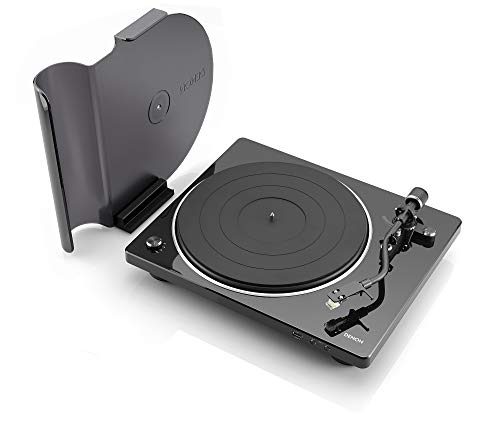
7. Denon DP-500BT: Best Semi-Automatic Turntable
Not everyone needs the arm to go home. The Denon DP-500BT is semi-automatic, so when a side finishes the arm rises, the platter halts, and that's it. In return you get a deck that feels a class above most automatics, with a 13.6 lb build, a die-cast platter and cast feet.
Your phone rings mid-side and the call runs long. The record finishes, the stylus sits in the run-out for about 17 seconds, then the arm rises and the platter halts. It hovers over the record until you're back, and starting again means turning the speed knob to Off and back, which is clunky. Setup takes 5 to 10 minutes, tonearm balancing included. Bluetooth is the star: aptX Adaptive sounds close to wired and stayed steady to Denon Home speakers and aptX headphones.
The stock cartridge is the limit, and eCoustics found a wired-only deck more expressive for the money. The twist-lock headshell makes the cure easy, and the preamp can be bypassed later. Should you get it? For Bluetooth-heavy listening on a sturdy deck, yes. Want the arm to return too? The Sony PS-LX5BT (#1) does it all.
Best for: Listeners who want auto-lift peace of mind, a better-built deck and strong Bluetooth.
Skip it if: You want the arm back on its rest when the side ends. The Sony PS-LX5BT (#1) is the better pick.
Pros
- Solid build with die-cast aluminum platter
- aptX Adaptive and aptX HD Bluetooth
- Arm lifts and platter stops at end of side
- Plays 78s as well as LPs and singles
- Switchable preamp; easy to bypass later
- Twist-lock headshell makes cartridge swaps easy
Cons
- Stock cartridge holds the deck back
- Arm lifts but does not return to its rest
- Stylus sits in the runout about 17 seconds
- No power button; speed knob doubles as power
- Wired-only rivals sound better for the money
- Matte black is the only finish
Hands-on reviews behind this pick
- eCoustics
Show the verdict
A gorgeous, well-built deck that sounds smooth and balanced and nearly as good as it looks; a strong pick for vinyl fans who want wireless, though wired rivals and better cartridges dig deeper.
- AV Nirvana
Show the verdict
A flexible, musically satisfying deck whose Bluetooth gets close to its wired sound with no dropouts; the semi-auto runout and restart are clunky, but newcomers will really like it.
- Future Audiophile
Show the verdict
A solid, premium-feeling deck with an organized, expansive sound and only a slight Bluetooth step down; the competent stock cartridge is the limit, so keen listeners will upgrade it.
8. Audio-Technica AT-LP60X: Best Cheap Automatic Turntable
For a household where little hands use the turntable, this is the safe, simple start. The AT-LP60X is about as easy as records get: one press, and the arm drops, plays and swings back before the motor stops. There's a cue button for pausing, a built-in preamp and nothing to balance.
Saturday morning, and your seven-year-old wants to play their own record. One press, and the deck does the rest, so small fingers never go near the stylus. Setup is the platter, belt and a 3.5 mm-to-RCA cable, and the sound is warm and full in the bass, improving as your speakers do. A replacement stylus lasts roughly 1,000 hours of play.
Here's what to weigh. It's light plastic with a fixed cartridge, and tracking force and anti-skate can't be adjusted. Buyers rating it on Audio-Technica's site mention units dying near or after the warranty, styli that stop seating and no upgrade path. Bottom line? For kids and guests on a tight budget, yes. If you can stretch, the AT-LP70X (#6) sounds clearly better, and our budget record players with auto return cover the cheaper end.
Best for: Family households and tight budgets that want kids or guests to play records safely.
Skip it if: You can stretch for clearly better sound. The Audio-Technica AT-LP70X (#6) is the better pick.
Pros
- Push-button play, auto return and stop
- Built-in preamp works with powered speakers
- Setup takes minutes, no arm balancing
- Warm, bass-rich sound for the price
- Small footprint fits shelves and desks
- Replaceable stylus
Cons
- Lightweight plastic build
- Cartridge can't be upgraded, only the stylus
- No tracking force or anti-skate adjustment
- Some owners report breakdowns after warranty
Hands-on reviews behind this pick
- CNET
Show the verdict
The first stop for anyone getting into vinyl: affordable, feature-rich and easy to set up, with warm, bass-rich sound that scales with better gear, if plastic and less detailed than pricier decks.
- The Joy of Vinyl Records
Show the verdict
A worry-free starter deck: fully automatic, belt driven, with a switchable preamp; his brother still prefers it to a pricier hand-me-down. Minor gripes are the fixed cartridge and felt mat.
9. Audio-Technica AT-LP60XBT: Best Compact Automatic Bluetooth Turntable
Short on space? Here's the smallest deck on the list. The AT-LP60XBT plays fully automatically and is barely bigger than the record it spins. Audio-Technica launched the LP70XBT to replace it, but this one is still on sale and still the easiest fit for a tight spot.
Say you rent a studio with one narrow shelf and a Bluetooth speaker across the room. Platter on, belt on, plug in, pair over aptX, press start: about five minutes in all. Grippy feet keep the very light body steady. The sound is warm and coherent, though detail drops off on busy mixes and an external preamp lifts it noticeably. Playing a 10-inch record? Cue it by hand with the lift button, and never auto-start it in 12-inch mode.
Bluetooth is where it can let you down. Several owners say the connection drops after a minute or won't come back after a break, and the front buttons feel flimsy. Does it earn a spot? For a tiny space, yes. If you have the room, the AT-LP70XBT (#2) is the better deck.
Best for: Small spaces and rentals where the turntable plays to a Bluetooth speaker.
Skip it if: You have the shelf width for a bigger deck. The Audio-Technica AT-LP70XBT (#2) is the better pick.
Pros
- Fully automatic: press start and walk away
- Bluetooth aptX to speakers or headphones
- Built-in preamp works with powered speakers
- Up and running in minutes, no tonearm setup
- Compact footprint, barely bigger than an LP
- Warm, coherent sound for an entry deck
Cons
- Very light, plasticky build
- Detail drops off on busy mixes
- Fixed cartridge, only the stylus is replaceable
- No tracking force or anti-skate adjustment
- No power switch or tonearm lock
- Some owners report Bluetooth dropouts
Hands-on reviews behind this pick
- TechRadar
Show the verdict
A great starter deck: setup is easy, Bluetooth paired seamlessly with no dropouts and sound is warm and pleasing, though detail could be sharper and the plastic build feels fragile.
- What Hi-Fi?
Show the verdict
Sounds better than you might expect, with coherent timing and decent balance, but the cheap plastic build and limited detail on dense music keep it short of a recommendation.
- Sound Matters
Show the verdict
Underrated: plasticky but steady on grippy feet, with a capable sound for newcomers and casual listeners, though the built-in preamp is the weak link and the LP3XBT lasts longer.
10. Denon DP-450USB: Best Semi-Auto Turntable for USB Recording
This is the deck for turning a shelf of LPs into files. The Denon DP-450USB records straight to a USB stick at one touch, as MP3 or WAV, with no computer involved. When a side ends the arm rises and the platter halts, and it powers down after 20 minutes idle.
Got a box of a grandparent's out-of-print LPs? Plug a stick into the deck, press record, and walk off while side one plays, knowing the arm will lift at the end. Each side lands as one long file you split later, and Sound & Vision needed a USB 3.0 drive for long WAV files. Speeds, including 78, change electronically.
Here's the trade-off. Stock sound is soft, with vague bass. Andrew Robinson judged the rips poor, while Sound & Vision found them fine for the car or phone, so treat them as convenience copies. With an Ortofon 2M Blue fitted, Robinson says it gets close to a Fluance RT85 or Technics SL-1500C. The open-sided display lid lets dust in. The gut check: buy it only if USB ripping matters. Otherwise the Denon DP-500BT (#7) is the better deck.
Best for: Buyers who want auto-lift plus USB ripping without a computer, and will upgrade the cartridge.
Skip it if: You don't need USB recording. The Denon DP-500BT (#7) is the better pick.
Pros
- Arm lifts and platter stops at end of side
- Three speeds set electronically, no belt moving
- One-touch recording to a USB stick
- Switchable preamp; works with any amp
- S-arm with removable headshell for upgrades
- Stylish and quick to set up
Cons
- Stock cartridge sounds soft and vague
- One reviewer judged USB rips poor
- Display-style dust cover leaves the sides open
- Arm does not return to its rest
- Faint motor whir reported
- Gloss finish shows fingerprints and dust
Hands-on reviews behind this pick
- The Master Switch
Show the verdict
A capable, feature-rich deck that sounds right, with solid bass, full mids and steady pitch; it is light and its cartridge is only OK, but cartridge and preamp upgrades can make it great.
- Sound & Vision
Show the verdict
Not the best turntable around with its MM stylus, but clear, solid-sounding and easy to set up, and its simple WAV and MP3 recording makes it a good fit for fans who also want their records on the go.
- Andrew Robinson
Show the verdict
A good table, not a great one: stylish and easy to set up with a fine arm, but the stock cartridge sounds soft, USB rips sound poor and the cover barely protects; better with a cartridge upgrade.
Best automatic turntables buying guide for 2027
Fully automatic or semi-automatic: which turntable do you need?
Go fully automatic if your plan is one press and walk away. A fully automatic deck sets the arm down, plays the side, sends the arm back to its rest and switches off the motor. All four of our top picks work this way: the Sony PS-LX5BT, AT-LP70XBT, AT-LP3XBT and Dual CS 529.
Semi-automatic decks only handle the ending. On the Denon DP-500BT and DP-450USB the arm rises and the platter halts when the side is over, but you lower it by hand and it never returns. That still spares your stylus the run-out, and it's fine if you like cueing records yourself. If anyone in your home is nervous about the tonearm, go fully automatic. Buying your very first deck? Our list of turntables that make a first setup painless covers the setup questions too.
Do automatic turntables sound worse than manual ones?
A little, at the same price, but less than most people think. The auto mechanism takes some of the budget, so a purist manual deck near the Sony PS-LX5BT's price will sound better. What matters far more is the cartridge and stylus.
That's why the AT-LP3XBT and Dual CS 529 sound so good for automatics: the LP3XBT takes VM95 styli on a real counterweight arm, and the Dual runs an Ortofon 2M Red with low-drag mechanics. The cheapest automatics, like the AT-LP60X, use a basic fixed cartridge, and that's where the thin, soft sound comes from. If sound comes first and you'll happily lift the arm yourself, compare against manual decks in the main turntable buying guide.
Can you upgrade the cartridge on an automatic turntable?
On some, yes, and it's the most important thing to check before you buy. Automatic decks fall into three groups.
Fixed: the Sony PS-LX3BT and PS-LX5BT take only like-for-like replacements, and the two LP60X models use their own ATN3600 styli. Stylus upgrades: the LP70X and LP70XBT take the whole VM95 stylus range, so an elliptical one is an easy push-on step. Full cartridge swaps: the AT-LP3XBT, Dual CS 529 and both Denons have removable headshells, so fitting a new cartridge is a straightforward job. If you think you'll want better sound in a year, buy from that last group now. The AT-LP3XBT is our pick there.
Do automatic turntables break more often?
They can, because there are more moving parts, so build quality and warranty matter more here than on a manual deck. Owner reports back that up at the cheap end: AT-LP60X owners describe decks dying around the end of their one-year warranty, and an early run of the AT-LP70X skipped until Audio-Technica replaced affected units.
So buy from a store with easy returns, and keep the box for the first few weeks. A heavier, better-damped deck helps too. The AT-LP3XBT's 5 kg base absorbs knocks, and the Dual CS 529 carries a five-year warranty on the turntable. If long-term worry is what's holding you back, that five-year cover is the reassurance worth paying for.
Which automatic turntable is best for kids and guests?
The AT-LP60X is the easiest pick for a busy household. One button starts the record and the arm finds its own way back, so nobody needs to touch the tonearm. The Sony PS-LX3BT is just as foolproof, with Bluetooth for a speaker across the room.
If the deck lives where things get knocked, the AT-LP70X adds a tonearm lock to protect the stylus when it's moved, and the AT-LP3XBT's heavy base keeps playing through bumps. Need it small? The AT-LP60XBT is barely bigger than an LP. Teach everyone one rule: wait for the arm to stop before lifting the lid.
What else do you need to play an automatic turntable?
Only something to hear it through. Every pick here has a phono preamp built in, so powered speakers or any stereo input will do, with no separate phono stage to buy. The ones with Bluetooth (the two Sonys, the AT-LP70XBT, AT-LP3XBT, AT-LP60XBT, Dual CS 529 and Denon DP-500BT) also play to wireless speakers and headphones.
But Bluetooth into a TV soundbar can sound muddy. A wired RCA connection to a pair of powered speakers is the bigger upgrade. And if you pick the AT-LP70X, plan on wired speakers, since it has no Bluetooth at all.
Best automatic turntables: frequently asked questions
What is the best automatic turntable?
Our pick is the Sony PS-LX5BT. It's fully automatic from start to arm return, with aptX Adaptive Bluetooth, a preamp offering three gain levels and a clear, detailed sound. Spending less? The Audio-Technica AT-LP70XBT keeps the push-button play. For a hi-fi system, the Dual CS 529 adds an Ortofon 2M Red and 78 RPM.
Are automatic turntables bad for sound quality or records?
No. A good mechanism barely touches the sound: the Dual CS 529 plays with practically no drag. Auto return also protects your stylus from the run-out groove. Entry automatics like the Sony PS-LX3BT track heavy at 3.5 g, so if you care, the AT-LP70XBT's preset force sits within its stylus's range.
What's the difference between a fully automatic and semi-automatic turntable?
A fully automatic deck lowers the arm, plays, returns the arm and stops, like the Sony PS-LX5BT. A semi-automatic one only lifts the arm and stops the platter at the end; you cue it yourself, and the arm stays over the record. The Denon DP-500BT is our semi-automatic pick.
Can you upgrade the cartridge on an automatic turntable?
On some. The Audio-Technica AT-LP3XBT, Dual CS 529 and both Denons have removable headshells for full cartridge swaps. Both LP70X models take any VM95 stylus. The Sony decks and the two LP60X models stick to their own replacement styli. For the widest upgrade path, buy the AT-LP3XBT.
Can an automatic turntable be used manually?
Yes, most can. The AT-LP70X has a real cue lever for dropping the needle on any track, the Sony PS-LX5BT has an up/down button, the AT-LP3XBT has a damped cue lift, and the Dual CS 529 works fully automatic or manual. On the Denon DP-450USB, auto mode can be switched off.