
The 10 Best Home Thermostats in 2027
The wrong thermostat can leave a heat pump burning backup heat all winter. We matched 2027's best home thermostats to your furnace, boiler or baseboard.

Affiliate Disclosure: As an Amazon Associate, we may earn a commission from qualifying purchases, and it never changes our picks.
Our picks at a glance

10.0/10Score

$239.95 $259.99 Save 8%
as of Nov 13, 2026, 20:31 UTC

9.9/10Score
$249.00 $279.99 Save 11%
as of Nov 13, 2026, 20:31 UTC

9.3/10Score
$161.25 $189.00 Save 15%
as of Nov 13, 2026, 20:31 UTC
9.1/10Score
$184.82 $199.99 Save 8%
as of Nov 13, 2026, 20:31 UTC

9.0/10Score
$239.99
as of Nov 13, 2026, 20:31 UTC

8.5/10Score
$89.99 $129.99 Save 31%
as of Nov 13, 2026, 20:31 UTC

8.2/10Score
$60.99 $84.99 Save 28%
as of Nov 13, 2026, 20:31 UTC

7.5/10Score
$55.99
as of Nov 13, 2026, 20:31 UTC
7.5/10Score
$99.00
as of Nov 13, 2026, 20:31 UTC

7.0/10Score
$47.80 $50.93 Save 6%
as of Nov 13, 2026, 20:31 UTC
Product prices and availability are accurate as of the date/time indicated and are subject to change. Any price and availability information displayed on Amazon.com at the time of purchase will apply to the purchase of this product.
How we rank best home thermostats for you?
We start with system compatibility, because a thermostat that doesn't match your furnace, heat pump, boiler or baseboard won't run it right. Heating and cooling control comes next: proper staging and aux heat handling keep your system from short cycling or leaning on expensive backup heat. Then setup and everyday use, since clear wiring help saves a service call. Design and build decides whether the screen is still easy to read years from now, and value checks you only pay for what your system can use. That puts the ecobee Premium first, with the Nest Learning close behind for three-stage systems.
 System Compatibility35%
A thermostat that doesn't match your furnace, heat pump, boiler or baseboard simply won't run it right.
Heating and Cooling Control25%
Heating and Cooling Control25%Proper staging and heat pump handling stop short cycling and expensive backup heat from running all winter.
Setup and Everyday Use15%
Setup and Everyday Use15%Clear install guidance and simple controls save a service call and make the schedule stick.
 Design and Build15%
A well-built unit with a readable display holds up to years of daily use on the wall.
 Value10%
Basic systems don't need premium thermostats, so the price should match what your system can use.
Best home thermostats compared
Swipe sideways to see every spec.
| Product | Score | C-Wire | Smart Home | Sensors | Display |
|---|---|---|---|---|---|
| 10.0 | Required; Power Extender Kit included | Apple Home, Alexa built in, Google Assistant, SmartThings | 1 SmartSensor included; up to 32 room sensors | 4-inch color touchscreen (540 x 540) | |
| 9.9 | Optional; C wire or Nest Power Connector needed in rare cases | Google Home; Matter for Apple Home, Alexa, SmartThings | 1 room sensor included; pairs up to 6 Nest Temperature Sensors | 2.7-inch round LCD, press-to-select ring, not a touchscreen | |
| 9.3 | Required; C-wire kit sold separately | Alexa, Google Assistant, SmartThings; no Matter or HomeKit | Temp and humidity; up to 15 room sensors, outdoor sensor option | 4.3-inch color touchscreen | |
| 9.1 | Needed, but Power Extender Kit in the box covers most homes | Apple Home, Alexa, Google Assistant, SmartThings, IFTTT | Temp, humidity, radar occupancy; SmartSensors sold separately | 4-inch 540 x 540 color touchscreen | |
| 9.0 | Required; Honeywell offers a free C-wire adapter | Matter; Alexa, Google Assistant, Apple Home; Ring doorbell view | Temp, humidity, air quality, radar presence; room sensor optional | 5-inch color touchscreen with custom idle themes | |
| 8.5 | Not needed on most systems; heat-only and heat pumps need one | Alexa, Google Assistant, Apple HomeKit, SmartThings | Built-in temperature and humidity; no room sensor support | Backlit monochrome LCD with physical buttons | |
| 8.2 | Required (24 VAC); Honeywell offers a free C-wire adapter | Matter; Alexa, Google Assistant, Apple Home via Matter | Built-in temp and humidity; no room sensor support | Backlit monochrome LCD with six physical buttons | |
| 7.5 | Optional: 2 AA batteries, 24V C-wire or both | None (no Wi-Fi or app) | Built-in only | Large backlit touchscreen | |
| 7.5 | None: 120-240V line voltage, 16A max | Native HomeKit; Alexa and Google via Mysa cloud | Temperature only (+/-0.5F), no humidity sensor | LED display with physical up/down buttons | |
| 7.0 | Not used: 2-wire line voltage (120/240V), no batteries | None (no Wi-Fi or app) | Built-in only, ±0.5°F of setpoint | Backlit LCD with push buttons |
1. ecobee Smart Thermostat Premium: Best Home Thermostat Overall
If you want one thermostat that will almost certainly run the system in your basement, this is the one we'd buy. It handles conventional furnaces and AC up to two stages each, heat pumps with two stages plus two stages of aux heat, boilers, PTACs and fan coils. Its 12-terminal plate also leaves more room for dual-fuel and accessory wiring than the cheaper ecobees.
Picture a mild November afternoon. Your two-stage furnace used to blast on and off, and now it can lean on the low stage instead. The SmartSensor in the box helps it heat the room you're actually in, and the Power Extender Kit covers homes with no C-wire. It works with Apple Home, Alexa, Google and SmartThings with no plan required.
But the real downside shows up on heat pumps. Owners keep mentioning heat pump and dual-fuel staging delays, plus built-in readings a few degrees off, and on Apple's forum 42 people flagged the same fault: it goes unresponsive in the Home app while the ecobee app keeps working. Still, nothing else here covers as many systems with a sensor included. Our call? For a two-stage or dual-fuel home, buy it. Running a three-stage furnace or AC? The Google Nest Learning Thermostat (#2) is your pick.

Best for: Homes with multi-stage furnaces, two-stage AC or dual-fuel heat pumps that want room sensors too

Skip it if: Your furnace or AC has three stages. The Google Nest Learning Thermostat (#2) is the better pick.
Pros
- Room sensor and C-wire adapter both in the box
- Big, responsive color touchscreen
- Works with Apple Home, Alexa, Google and SmartThings
- Built-in air quality monitor
- Doubles as smart speaker and security hub
- 3-year warranty
Cons
- Expensive next to basic smart thermostats
- Security features need a paid plan
- Speaker sound is weak
- Some owners report flaky HomeKit connections
Hands-on reviews behind this pick
2. Google Nest Learning Thermostat (4th gen, 2024): Best Thermostat for Multi-Stage Systems
Three-stage equipment narrows your choices fast, and this Nest is where we'd send you. It runs up to three stages of heat and three of cooling, heat pumps with aux or emergency heat, plus humidifiers, dehumidifiers and ventilation. It's designed to work without a C-wire, and Google says fewer than 1% of homes need one or its Nest Power Connector.
So say an alert lands on your phone a week before the first hard freeze, telling you the furnace is struggling. You get time to book a tune-up. Day to day, it learns your routine and builds its own schedule, and the sensor in the box keeps a chosen bedroom on target. Matter brings it into Apple Home, Alexa and SmartThings, though the room sensors don't show up in Apple Home.
Still, the trade-offs are physical. You press and turn the ring rather than tapping a screen, the new base has tiny wire connectors, and older Nest bases won't fit. And the screen is the gripe owners raise most: it's dim, and no setting turns it up. Is it the one for you? With three-stage equipment, yes. On two stages and want more terminals and a longer warranty? Go with the ecobee Premium (#1).
Best for: Multi-stage furnace and AC owners who want learning and no C-wire hassle
Skip it if: You run a two-stage or dual-fuel system and want a touchscreen and a 3-year warranty. The ecobee Smart Thermostat Premium (#1) is the better pick.
Pros
- Learns your routine and builds its own schedule
- Remote temperature sensor included in the box
- Matter brings it into Apple Home, Alexa, SmartThings
- Large Farsight display reacts as you walk up
- Works with or without a C wire in most homes
Cons
- Costs more than rivals that also include a sensor
- Not a touchscreen; you press and turn the ring
- Tiny wire connectors on the new base
- Old Nest bases don't fit; full reinstall needed
- Screen can't be set brighter
Hands-on reviews behind this pick
- PCMag
Show the verdict
An excellent premium thermostat: sleek, easy to install, learns your schedule and adds Matter and a room sensor, though Ecobee's Premium offers more features for slightly less.
- WIRED
Show the verdict
Blends beauty with smarts better than any rival: quick setup, a helpful AI schedule and an included sensor. Pricey, so it makes most sense where the thermostat is on show.
- AppleInsider (YouTube)
Show the verdict
Matter finally makes a learning Nest work in Apple Home, and it looks and learns better than Ecobee, but setup was painful and Ecobee still wins on sensors and extras.
3. Sensi Touch 2 Smart Thermostat (ST76): Best Home Thermostat for Heat Pumps
Here's the thing about heat pumps: the painful part of a winter bill is often the backup heat, not the pump. That's why this Sensi earns our heat pump spot. With its outdoor sensor, sold separately, you can set a balance point and lock out aux heat, and it controls heat pumps up to four heat and two cool stages.
Say a 20-degree morning arrives. With the outdoor reading on hand, you can judge when backup heat should kick in. It also runs a humidifier or dehumidifier, schedules allow up to eight periods a day, and you can pair a room sensor right from the 4.3-inch touchscreen. It works with Alexa, Google and SmartThings, and carries a 3-year warranty.
But it asks more of your wiring and your wallet. It needs a C-wire, and the kit, wall plate, room sensors and outdoor sensor are all extras. There's no Apple Home or Matter, and Home Assistant owners describe touchy pairing that can take a reset. So would we buy it? For a heat pump in an Alexa or Google home, yes. On a tight budget with a C-wire? The Honeywell X2S (#7) runs heat pumps with electric backup for much less.
Best for: Heat pump owners who want an outdoor sensor option and humidity equipment control
Skip it if: You want the cheapest smart thermostat for a heat pump with electric backup. The Honeywell X2S (#7) is the better pick.
Pros
- Bright, responsive color touchscreen
- Supports up to 15 room sensors
- Very easy to learn and to schedule
- Dual-band Wi-Fi
- Usage reports and maintenance reminders
- 3-year warranty
Cons
- No Apple HomeKit, Matter or IFTTT
- Room sensors and wall plate cost extra
- C-wire required, no adapter in the box
- Geofencing only sets back 3 degrees
- Sensors can't be tied to schedule periods
Hands-on reviews behind this pick
- PCMag
Show the verdict
PCMag rates the Touch 2 an excellent smart thermostat thanks to room sensor support, dual-band Wi-Fi and usage reports; it performed well, though it drops HomeKit and lacks Matter.
- CNET
Show the verdict
CNET finds the Touch 2 elegant and easier to learn than rivals, ideal if you just want to set the temperature, but says its limited smart automation makes it pricey next to ecobee.
- One Hour Smart Home
Show the verdict
One Hour Smart Home calls the Touch 2 a reliable, intuitive thermostat with a sharp, bright screen and simple app, and sees room sensor support as its main upgrade over older Sensi models.
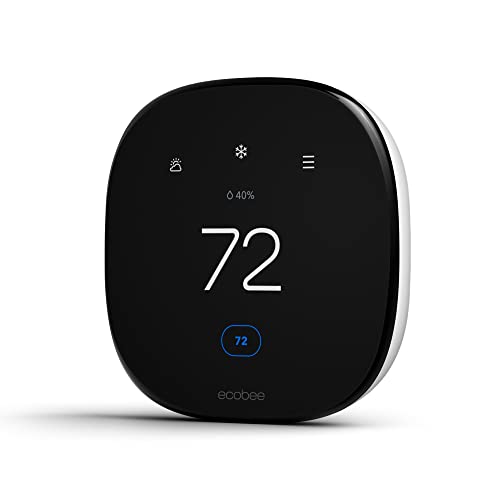
4. Ecobee Smart Thermostat Enhanced: Best Mid-Range Thermostat for Furnace and AC
Most homes have a plain furnace and AC, and for them this middle ecobee is the sensible buy. It handles up to two heat and two cool stages, heat pumps up to two stages with one aux stage, and one accessory wire. A Power Extender Kit in the box covers most homes with no C-wire.
Think about your first winter on a new heat pump. Each Monday you open the runtime report and watch the aux heat hours shrink, which matches what owners switching from Nest describe as it adapts. Accuracy holds up too: it read dead-on from 55 to 78°F against Reviewed's calibrated thermometer, though TechGearLab saw up to 3.5°F of drift, which you can offset. Install takes 15 to 45 minutes with photo-guided wiring steps in the app, and you get a 3-year warranty.
What you give up is the Premium's room sensor, built-in Alexa and extra terminals for dual fuel or several accessories. It also won't run a 2-wire heat-only system. Worth it? For a standard furnace and AC, yes, and add a SmartSensor later if one room runs cold. Wiring dual fuel or more than one accessory? Step up to the ecobee Premium (#1).
Best for: Standard furnace and AC or single heat pump homes that want ecobee without the Premium price
Skip it if: You have dual fuel or several accessories to wire, or want a room sensor included. The ecobee Smart Thermostat Premium (#1) is the better pick.
Pros
- Power Extender Kit in the box for homes without a C-wire
- Works with Apple Home, Alexa, Google and SmartThings
- Clear, bright color touchscreen readable across a room
- Supports ecobee room sensors for hot and cold spots
- Guided app install with photos, done in under an hour
- Spot-on accuracy in Reviewed's calibrated tests
Cons
- No room sensor in the box
- No built-in Alexa or Siri speaker (Premium has it)
- Won't work on 2-wire heat-only systems
- Some security features need a subscription
- One lab measured readings off by up to 3.5 degrees F
Hands-on reviews behind this pick
- Reviewed
Show the verdict
A strong mid-grade smart thermostat: it held temperature dead-on against a calibrated thermometer, the app mirrors the screen, and sensors make it work for bigger homes.
- PCMag
Show the verdict
Sleek, easy to install and reliable in testing, with dual-band Wi-Fi and broad voice support, though the Premium model adds a sensor, built-in Alexa and air monitoring.
- TechGearLab
Show the verdict
Easy to install and simple to live with, with a clear app, but temperature readings drifted in testing and day-by-day scheduling felt clunky for what it costs.
5. Honeywell Home X8S Premium Smart Wi-Fi Thermostat: Best Big-Screen Smart Thermostat
If your thermostat hangs somewhere everyone walks past, the X8S makes the strongest case for itself. Its 5-inch touchscreen is the biggest here, with custom idle themes. Underneath, it runs conventional systems up to two heat and two cool stages, heat pumps up to three heat stages, and one humidifier, dehumidifier or ventilator.
So say you're away for a winter week. Freeze protection keeps the house from dropping low enough to put your pipes at risk. When you're home, the feels-like humidity comfort setting and optional room sensors, up to 20, help warm an office or bedroom far from the hallway. It's Matter certified, works with Alexa, Google and Apple Home, and shows Ring or First Alert doorbell video with two-way talk.
Still, two limits matter for system fit. Heat pump backup has to be electric strips, so dual fuel is out, and it needs a C-wire, though Honeywell offers a free adapter. Matter also needs the First Alert app and account to start, and it shares only basic controls. Bottom line? For a furnace and AC where looks count, it's our pick. Want a C-wire kit in the box and more platforms? The ecobee Enhanced (#4) fits better.
Best for: Conventional furnace and AC homes with a C-wire that want a large touchscreen
Skip it if: You'd rather have a C-wire kit in the box and IFTTT and SmartThings support. The ecobee Smart Thermostat Enhanced (#4) is the better pick.
Pros
- Large, bright 5-inch touchscreen with custom themes
- Matter plus Alexa, Google and Apple Home
- Shows Ring or First Alert doorbell video with two-way talk
- Room sensor support with active-room priority
- Air quality and feels-like temperature features
- Wi-Fi setup right on the screen
Cons
- Most expensive Honeywell Home smart thermostat
- Needs a C-wire
- App setup was confusing for reviewers
- Doorbell support limited to Ring and First Alert
- Air quality data not shared over Matter
- Heat pump backup must be electric strips
Hands-on reviews behind this pick
6. Sensi Smart Thermostat (ST55): Best Budget Thermostat for Two-Stage Furnaces
Not every multi-stage home needs a premium thermostat, and the ST55 shows why. It controls conventional systems up to two heat and two cool stages and heat pumps up to four heat and two cool, plus humidifiers and dehumidifiers. So you can replace a worn thermostat on a two-stage gas furnace and keep both stages working.
And on forced-air gas and AC, it usually goes in without a C-wire, running on power stealing and two AA batteries that last up to two years. If your Wi-Fi drops during a storm, it carries on as a normal thermostat. Schedules allow up to eight periods a day with Early Start, and it works with Alexa, Google, HomeKit and SmartThings. Add filter reminders and a 3-year warranty.
The no-C-wire promise has limits, though. Heat pumps and heat-only systems need one, as boiler owners on Heating Help point out, and some features, like the continuous backlight, only work when it's hardwired. The screen is small, monochrome and dated, with no room sensors. Should you get it? For a two-stage furnace on a budget, yes. Want a touchscreen and an outdoor sensor for a heat pump? The Sensi Touch 2 (#3) is the upgrade.
Best for: Multi-stage or heat pump homes on a budget that want app control
Skip it if: You want a color touchscreen, room sensors or aux heat lockout. The Sensi Touch 2 (#3) is the better pick.
Pros
- Works with Alexa, Google, HomeKit and SmartThings
- Usually installs without a C-wire
- Dedicated Schedule button and an easy app
- Runs like a normal thermostat if Wi-Fi drops
- Battery backup through power cuts
- Humidity control and maintenance reminders
Cons
- Plain, dated look with a small mono screen
- No room sensors or learning features
- Heat-only and heat pump systems still need a C-wire
- No IFTTT support
- Continuous backlight needs a C-wire
Hands-on reviews behind this pick
- PCMag
Show the verdict
A plain-looking but capable thermostat: easy to install and program, quick to respond, and it worked with Alexa, Siri and geofencing in testing. The Nest looks nicer and links to more devices.
- One Hour Smart Home
Show the verdict
A bare-bones smart thermostat that has been very reliable in his home. It usually skips the C-wire, the app is easy, and it keeps working as a normal thermostat when Wi-Fi drops out.
7. Honeywell Home X2S Smart Wi-Fi Thermostat: Best Cheap Matter Thermostat
Say spring pollen clogs your heat pump's filter by May. The X2S sends a filter change alert, and a separate heat pump failure alert tells you if the system quits. It runs conventional systems up to two heat and two cool stages, and heat pumps up to two heat and one cool with electric backup. It also replaces the RTH6580 Wi-Fi model in Honeywell's line.
That's a lot of system for a budget thermostat. You also get geofenced auto-away and 5-1-1, 5-2 or 7-day schedules you can set on the buttons with no app. Matter brings it into Alexa, Google and Apple Home, it connects on 2.4 or 5GHz Wi-Fi, and it carries a 2-year warranty.
Where it falls short is wiring and setup. It needs a C-wire, though Honeywell offers a free adapter, and there's no room sensor support. Home Assistant owners found Matter needs a Resideo account and app first, early units couldn't do Matter at all, and humidity isn't shared. With newer firmware, Matter works. Would we buy it? For a single-zone heat pump on a budget, yes. Want aux heat lockout from an outdoor sensor? The Sensi Touch 2 (#3) is worth the step up.
Best for: Single-zone heat pump or furnace homes with a C-wire on a tight budget
Skip it if: You want aux heat lockout, room sensors and a touchscreen for your heat pump. The Sensi Touch 2 (#3) is the better pick.
Pros
- Very low price for a Matter thermostat
- Works with Alexa, Google and Apple Home
- Heat pump support with electric backup
- Clean, simple screen with physical buttons
- Scheduling works on the unit with no app
- Snaps onto existing Honeywell UWP wall plates
Cons
- No room or occupancy sensor support
- Needs a C-wire
- Matter setup still needs the First Alert app
- Confusing mix of Resideo apps at setup
- Plain design with thick bezels
Hands-on reviews behind this pick
- Reviewed
Show the verdict
A smart device at a smart price: broad ecosystem support, Matter that now works well and helpful support, held back by no room sensors, a confusing app setup and plain looks.
- Matter Alpha
Show the verdict
The most attractive, familiar thermostat the reviewer has owned and easy to install, but Matter needs the First Alert app first and setpoint changes failed in SmartThings at the time.
8. Lux TX9600TS 7-Day Touchscreen Programmable Thermostat: Best Home Thermostat for Boilers
If your heat comes from a boiler or an old gas wall heater, a dependable schedule may matter more to you than an app, and that's what the TX9600TS delivers. It works with 3-wire hydronic zone valves, gas millivolt heaters, conventional heat and AC, and heat pumps up to two heat stages and one cool.
Take that gas wall heater running on millivolt, with no C-wire anywhere. Two AA batteries power the Lux, so it can still put the heater on a schedule: seven days, each with two or four periods. The touchscreen lights up when you touch it and is easy to read, and you get a filter reminder, keypad lock, smart recovery and a 3-year warranty. The box has wire labels and a heat pump jumper, but no batteries.
But it's old-school. There's no Wi-Fi, app or voice control, cooling is single stage, and setup means flipping DIP switches on the back, which can trip up a beginner. It won't run line-voltage baseboards either. Our verdict? For a boiler or millivolt heater, it's the one. Want app control on a forced-air system? The Sensi ST55 (#6) adds it, usually without a C-wire on a gas furnace.
Best for: Boiler, hydronic and millivolt heat owners who want a programmable schedule without Wi-Fi
Skip it if: You want app and voice control on a forced-air furnace. The Sensi ST55 (#6) is the better pick.
Pros
- Large backlit touchscreen is easy to read
- Works without a C-wire on batteries
- Handles heat pumps, hydronic and millivolt
- Filter reminder and keypad lock
- Separate schedule for every day
Cons
- No Wi-Fi, app or voice control
- Single-stage cooling only
- Setup uses DIP switches on the back
- No auto daylight saving or auto changeover
- Not for line-voltage baseboard heat
Hands-on reviews behind this pick
- D2D NY Real World HVAC Simplified (YouTube)
Show the verdict
An HVAC tech's in-depth install shows a flexible battery-or-C-wire programmable that wires to heat-only, cool-only, heat/cool and heat pump systems, with setup done on rear DIP switches.
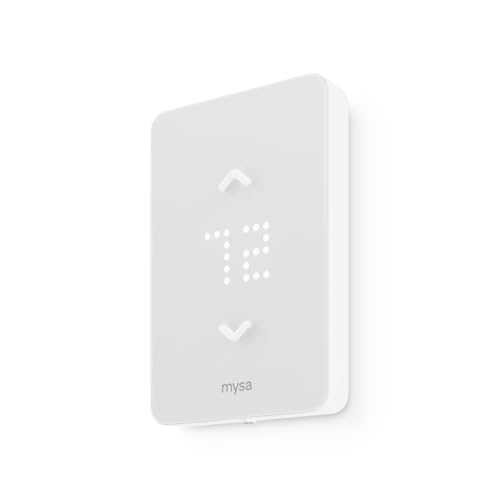
9. Mysa Smart Thermostat LITE for Electric Baseboard Heaters: Best Smart Home Thermostat for Baseboards
Electric baseboards run on 120 or 240 volts, and the low-voltage smart thermostats above can't switch that load at all. The Mysa LITE can. It handles baseboards, convectors, fan-forced wall heaters and radiant ceilings up to 16A, which works out to 1,900W at 120V or 3,800W at 240V, on a 20A breaker.
So before you buy, run the compatibility check in the Mysa app and confirm your 240V baseboard sits within that 16A rating. The app then walks you through a photo-based wiring guide, and Mysa puts the install at about 15 minutes. Once it's up, you get schedules and geofencing from HomeKit, Alexa or Google Home, with no hub and no subscription, plus a 5-year warranty.
But there's a catch, and it's noise. It switches with a relay, not a silent TRIAC, and owners on RedFlagDeals say it clicks on every cycle; one returned four units over it, while others running five to eight are happy. There's also no Matter or humidity sensor. Is it for you? In a family room or a home office, yes. For a bedroom where a click would wake you, the silent Honeywell RLV4305A (#10) is the better choice.
Best for: Electric baseboard and wall heater homes that want app and voice control
Skip it if: You want silent switching in a bedroom and don't need an app. The Honeywell RLV4305A (#10) is the better pick.
Pros
- Works with HomeKit, Alexa and Google Home
- Geofencing and app schedules, no subscription
- App-guided wiring and setup
- 5-year warranty
Cons
- Relay switching clicks audibly when cycling
- No humidity sensor, Zones or energy history
- No Matter support
- Needs 2.4GHz Wi-Fi
Hands-on reviews behind this pick
- Kwame & Nana
Show the verdict
An owner who bought a Costco four-pack swaps old dial thermostats for the LITE and finds setup smooth if you follow the app guide, despite the app crashing once mid-install.
10. Honeywell Home RLV4305A1000 5-2 Day Programmable Thermostat for Electric Baseboard: Best Quiet Line-Voltage Thermostat
A clicking bedroom baseboard can wake you at 3 a.m., and the RLV4305A's silent TRIAC switching is the fix. It runs baseboards, convectors, two-wire radiant ceilings and fan-forced heaters up to 3,500W at 240V, and Honeywell says it holds within 0.5°F of your setpoint.
And the swap is about as simple as wiring gets. With the breaker off, two non-polarized leads replace your old dial, and the programming steps are printed inside the cover. You set separate weekday and weekend schedules with four periods each (wake, leave, return, sleep), and the program survives a power cut without batteries. Owners on Honeywell's own store praise the easy install and say rooms hold a steadier temperature.
But keep your expectations simple. There's no Wi-Fi or app, it shares two temperatures across the four periods, it must mount horizontally, and some owners find the display text small. Honeywell's site now marks this model discontinued, though it's still sold new. Should you buy it? For a bedroom where quiet matters most, yes. Want phone and voice control instead? The Mysa LITE (#9) is the smart choice.
Best for: Baseboard owners replacing a clicking dial who want a schedule and no app
Skip it if: You want phone, HomeKit or voice control of your baseboards. The Mysa LITE (#9) is the better pick.
Pros
- Silent TRIAC switching, no relay click
- Simple two-wire swap for a baseboard dial
- Keeps its program through outages, no batteries
- Tight ±0.5°F temperature control claim
Cons
- Heat only; line-voltage electric heat only
- Only two temperatures shared across four periods
- No Wi-Fi, app or remote control
- Small display text, per some owners
- Must be mounted horizontally
Hands-on reviews behind this pick
- Timothy W Hamilton (YouTube)
Show the verdict
Swapping a dial baseboard thermostat for this one was about as easy as it gets: two leads on 240V, and setup is simple because the instructions are printed right inside the unit.
Best home thermostats buying guide for 2027
What thermostat is best for a heat pump with backup heat?
The best thermostat for a heat pump is one that knows when to hold back the backup heat, and the Sensi Touch 2 does that best here. Your heat pump does the efficient work, while aux heat is what makes a winter bill jump. With Sensi's outdoor sensor, the Touch 2 can set a balance point and lock out aux heat.
So check two things before you buy. First, stages: the ecobee Premium runs heat pumps with two aux stages, the ecobee Enhanced one, and the Nest Learning Thermostat handles aux and emergency heat. Second, the backup type. The Honeywell X8S and X2S only support electric strip backup, so a dual-fuel heat pump paired with a gas furnace belongs on the ecobee Premium. On a tight budget, the X2S still adds heat pump failure alerts.
Do I need a multi-stage thermostat?
You need a multi-stage thermostat only if your furnace, AC or heat pump has more than one stage, so check the equipment and the wires before you shop. Paying for a two-stage furnace and then fitting a thermostat that can only call one stage throws away what you bought.
Most picks here cover two heat and two cool stages, including the ecobee Premium and Enhanced, the Sensi Touch 2, the Honeywell X2S and the Sensi ST55. Three-stage furnaces and AC need the Google Nest Learning Thermostat, which runs up to three of each. The Lux TX9600TS cools on one stage only, so skip it with two-stage AC. And if your system is single stage, you don't need to pay for staging at all; our main thermostat guide ranks more all-round picks.
What is the difference between a programmable and a smart thermostat?
A programmable thermostat follows a schedule you set at the wall, while a smart thermostat adds Wi-Fi, an app, voice control and alerts. Both can turn the heat down while you sleep or work. The smart one lets you change plans from your phone and warns you when something's wrong, like the X2S's heat pump failure alert.
Programmable models still make sense where an app adds little. The Lux TX9600TS runs boilers and millivolt heaters on two AA batteries, and the Honeywell RLV4305A puts baseboards on a weekday and weekend schedule. If you want remote control without spending much, the Sensi ST55 and Honeywell X2S are the budget routes, and both keep working at the wall without Wi-Fi. Shopping for cheap replacements for a basic furnace and AC? We've rounded those up separately.
Do electric baseboard heaters need a special thermostat?
Yes. Electric baseboards need a line-voltage thermostat rated for 120 or 240 volts, because it switches the heater's power directly. The 24-volt models on this list, from the ecobees to the Honeywell X2S, can't run them, and Honeywell says so on the X2S page.
Two picks here are built for the job. The Mysa LITE adds HomeKit, Alexa and Google control, handles up to 16A and checks your heater in its app first. The Honeywell RLV4305A skips Wi-Fi but switches silently and keeps its program through outages. Match the rating to your heater: up to 3,800W at 240V on the Mysa, 3,500W on the Honeywell. And think about noise, because the Mysa's relay clicks and the Honeywell's TRIAC doesn't.
How do I check my thermostat wiring before buying?
Turn the power off at the breaker, take the old thermostat off its plate and snap a phone photo of each wire and the letter it sits on. That one photo answers most compatibility questions before you spend anything.
Then look for three things. A wire on the C terminal means any 24-volt pick here can power up; without one, the Nest Learning Thermostat usually works anyway, the Sensi ST55 does on gas furnace and AC systems, and the ecobee Premium and Enhanced include a Power Extender Kit. Extra wires for a second stage or aux heat tell you to match the stage counts above. And if the old unit switches a baseboard heater directly with two wires, it's line voltage, so buy the Mysa LITE or Honeywell RLV4305A. The ecobee and Mysa apps both walk you through wiring with photos. For picks for two-story homes and older wiring, see our home guide.
Best home thermostats: frequently asked questions
What is the best home thermostat?
For most homes, the ecobee Smart Thermostat Premium. It runs two-stage furnaces and AC, heat pumps with two aux stages and boilers, and includes a room sensor and a C-wire kit. Running three stages? Get the Google Nest Learning Thermostat (4th gen). Heat pump owners should look at the Sensi Touch 2, and baseboard homes at the Mysa LITE.
What thermostat is best for a heat pump?
The Sensi Touch 2 (ST76), because its optional outdoor sensor adds a balance point and aux heat lockout, so backup heat runs less. It handles heat pumps up to four heat and two cool stages. For a dual-fuel heat pump, get the ecobee Premium; on a tight budget with electric backup, the Honeywell X2S.
Do I need a multi-stage thermostat?
Only if your equipment has more than one stage of heating or cooling. Two-stage systems work with most picks here, including the ecobee Enhanced and the budget Sensi ST55. Three-stage systems need the Google Nest Learning Thermostat, which runs up to three stages of heat and cool. Single-stage 24-volt systems work with every low-voltage pick here.
Do electric baseboard heaters need a special thermostat?
Yes, a line-voltage thermostat rated for 120-240V. Standard smart thermostats like the ecobees and the Honeywell X2S can't run them. Buy the Mysa LITE if you want app, HomeKit and voice control, or the Honeywell RLV4305A for a silent schedule with no app and no batteries.
Are smart thermostats compatible with all HVAC systems?
No. Most run 24-volt furnaces, AC and heat pumps but not line-voltage baseboards, and some limit backup heat: the Honeywell X8S and X2S only support electric strips on heat pumps. The ecobee Enhanced won't run 2-wire heat-only systems. Check your wiring first; the ecobee Premium covers the widest range here.