
The 9 Best Affordable Drones in 2027
Cheap drones love to promise 4K, then shoot shaky 2.7K and drift away. The best affordable drones for 2027, matched on gimbal, GPS and real flight time.

Affiliate Disclosure: As an Amazon Associate, we may earn a commission from qualifying purchases, and it never changes our picks.
Our picks at a glance
10.0/10Score

$299.00
as of Nov 16, 2026, 23:17 UTC

9.6/10Score
Currently out of stock at Amazon.
View on Amazon
8.8/10Score
$269.99
as of Nov 16, 2026, 23:17 UTC

8.7/10Score
$319.99
as of Nov 16, 2026, 23:17 UTC

8.7/10Score
$259.00
as of Nov 16, 2026, 23:17 UTC

8.4/10Score
$479.00 $529.00 Save 9%
as of Nov 16, 2026, 23:17 UTC

7.9/10Score
$169.00 $199.00 Save 15%
as of Nov 16, 2026, 23:17 UTC
7.0/10Score
$179.99
as of Nov 16, 2026, 23:17 UTC

7.0/10Score
$149.99
as of Nov 16, 2026, 23:17 UTC
Product prices and availability are accurate as of the date/time indicated and are subject to change. Any price and availability information displayed on Amazon.com at the time of purchase will apply to the purchase of this product.
How we rank best affordable drones for you?
Value comes first, because on a budget every feature has to earn its place, so we look hard at what each drone leaves out. Stabilized video weighs just as much: a gimbal and real 4K turn a flying toy into a camera you'll keep using. Next is GPS and safe flying, since position hold, return-to-home and obstacle sensing bring a cheap drone home in one piece. Flight time and range decide how many shots you get per battery. Design and build covers the 250 g line and how each drone copes with wind.
Value25%
On a budget every feature has to earn its place, so we weigh what you get against what you give up.
Stabilized Video25%
A gimbal and real 4K are what separate a drone that shoots usable clips from a flying toy.
GPS and Safe Flying20%
GPS hold, return-to-home and any obstacle sensing are what bring a cheap drone back in one piece.
Flight Time and Range15%
Budget drones often promise long flights; real minutes decide how many shots you get per battery.
Design and Build15%
Under 250 g means no FAA registration for recreational flying, and build decides how it handles wind.
Best affordable drones compared
Swipe sideways to see every spec.
| Product | Score | Camera | Flight Time | Range | Weight |
|---|---|---|---|---|---|
| 10.0 | 12MP; 4K up to 30fps, 2.7K up to 60fps, normal color only | 31 min (maker rating) | 10 km max transmission | Under 249 g (no FAA registration for recreational flying) | |
| 9.6 | 1/1.3-inch 48MP sensor, 4K up to 60fps (100fps slow-mo), 3-axis | Up to 31 min claimed; about 27 min in reviewer tests | Up to 13 km (FCC) with remote; about 50 m on phone Wi-Fi | Under 249g | |
| 8.8 | 1/2.3-inch 48MP Sony sensor, 4K/30fps, 3-axis gimbal | Up to 30 min claimed; about 22 min in TechRadar's windy tests | Up to 6 km claimed (3 km at 2024 launch) | 249g | |
| 8.7 | 1/2-inch 48MP sensor, 4K/30fps HDR video | Up to 32 min claimed; about 20-22 min in reviewer tests | Up to 10 km (FCC) via PixSync 4.0 | Under 249g | |
| 8.7 | 1/2-inch 12MP sensor, 4K up to 60fps (100fps with controller) | Up to 19 min claimed; about 12-15 min in reviewer tests | Up to 10 km (FCC) with controller or goggles; short on phone Wi-Fi | 151g; 160g with the Digital Transceiver | |
| 8.4 | 1/1.3-inch f/1.7, 4K/60fps (4K/100 slow-mo), 48MP, 3-axis | Up to 32 min claimed; about 27.5 min in a cruise test | Up to 15 km claimed (SkyBridge) | Under 250 g (248 g measured by 51 Drones) | |
| 7.9 | 1/2-inch 12MP sensor, 4K/30fps, single-axis gimbal | Up to 18 min claimed; about 13-14 min in Engadget testing | Up to 10 km (FCC) with controller; about 50 m on phone Wi-Fi | About 135g | |
| 7.0 | 1/3-inch sensor, 4K/20fps or 2.7K/30fps, no stabilization | Up to 20 min claimed; about 15-17 min in tests | Up to 3 km (9842 ft) claimed | 249g | |
| 7.0 | 2.7K (2688x1512) video, no gimbal or EIS, tilt only | Up to 23 min per battery (claimed), 2 batteries | 500 m control, 300 m live view (claimed) | 215 g |
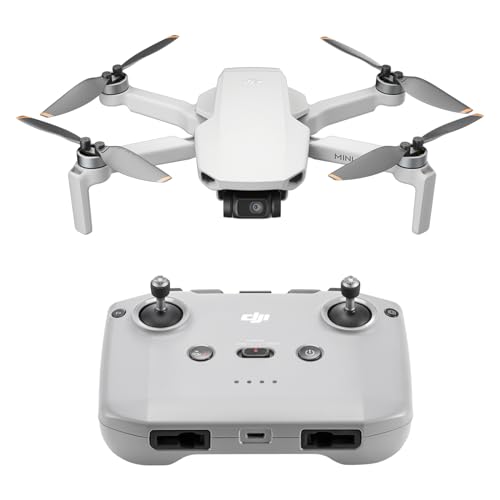
1. DJI Mini 4K: Best Affordable Drone Overall
This is the drone we'd hand most first-time buyers and parents of teens. It pairs a 3-axis gimbal and 4K/30 video with DJI's dependable GPS flight, and it stays under 249 g, so fun flying needs no FAA registration. Three in four owners recommend it, mostly calling it the best-value way into drones and steadier in wind than its weight suggests.
Say you stop at a mountain lookout on a road trip. You fly out over the open valley, and the clip comes back level even as the breeze picks up. The link is strong for the class: Matty DC Collins reached 2,175 m over the sea. The base kit has one battery and the RC-N1C controller, which uses your phone as the screen. Real flights run 20 to 25 minutes, so the three-battery Fly More Combo makes sense.
The catch is what's missing. There are no obstacle sensors, no follow mode and no log or HDR, and blue-hour clips get noisy. Would we buy it? For daylight travel clips, yes. Want better video and guarded props? The DJI Flip (#2) is the step up. Buying for a younger pilot? Start with our beginner drones sized for kids.
Best for: First-time pilots and parents of teens who want stabilized 4K and DJI's easy flying on a budget
Skip it if: You want noticeably better video, guarded props or forward sensing. The DJI Flip (#2) is the better pick.
Pros
- Cheapest way into stabilized 4K from DJI
- Under 249 g, so no registration for recreational flying
- Solid real range: 2.1 km over open sea in one test
- Easy QuickShots for automated moves
- Real controller included, not phone-only
- Good out-of-camera color for beginners
Cons
- No obstacle avoidance, so trees are a real risk
- No ActiveTrack or follow-me
- No D-Log or HDR, and noisy at blue hour
- Gimbal limited in Sport mode and heavy headwind
- Real flights of 20-25 minutes
- Needs your phone as the screen
Hands-on reviews behind this pick
- DroneXL
Show the verdict
A solid little drone for capturing good photos and footage with minimal fuss, ideal for beginners; no obstacle avoidance, no ActiveTrack and no log profile are fair trade-offs at its price.
- Matty DC Collins
Show the verdict
Still an easy first-drone recommendation in 2026 for daylight shooting: real 4K, good RAW photos and long range, with no collision sensors, no log and a small sensor as the honest trade-offs.
2. DJI Flip (RC-N3): Best Budget Drone for Better Video
If video quality is why you're buying, stretch to the Flip. Its 1/1.3-inch sensor shoots 4K up to 60fps and 100fps slow motion on a 3-axis gimbal, and Luke Maximo Bell's side-by-side put its D-Log M footage level with the pricier Mini 4 Pro's. His hover test ran 27 minutes 28 seconds, so you get long sessions too.
Take a calm lake morning with friends paddleboarding. You fly low and close, and the full guards make a misjudged pass far less scary for everyone on the water. Follow mode handles walking-pace subjects well without a controller, and the RC-N3 kit uses your phone as the screen. Pack a microSD card too, because 2GB of internal storage fills fast at 4K.
But wind is its weak spot. A FlipPilots owner says even Sport mode struggles to push forward in a 10 mph breeze, and several reviewers found the same. The forward sensor only brakes, it switches off while tracking, and the guards make it bulkier to pack. Would we buy it? For calm-weather filming, yes. Often fly in a breeze? The DJI Mini 4K (#1) has no guards to catch it.
Best for: Budget buyers who want noticeably better video and guarded props, and fly in calm air
Skip it if: You often fly in a breeze or want the smallest pack. The DJI Mini 4K (#1) is the better pick.
Pros
- Sharp, smooth 4K with 10-bit D-Log M
- Full built-in prop guards for people-safe flying
- About 27 minutes of real flight per battery
- Fold-out arms power it on and off instantly
- Controller-free follow mode and quickshots
Cons
- Forward-only sensing; off during smart tracking
- Struggles in wind because of the prop guards
- Bulkier to pack than a DJI Mini
- Gimbal broke in one reviewer's minor crash
- Not compatible with DJI goggles or Motion 3
Hands-on reviews behind this pick
 Engadget
Show the verdict
A bold new direction and one of the most useful creator drones, with sharp 4K, guarded props and long flights, but weak in wind and short on obstacle sensing in smart modes.
- Fstoppers
Show the verdict
A no-brainer for beginners and casual flyers who want easy flying and smart features, with reliable tracking and a great live feed, though wind and image-quality buyers should look up.
- DroneXL
Show the verdict
A harsh take from DC Rainmaker: tracking is so-so and slow, obstacle avoidance is useless in practice, and a minor crash in the woods broke the gimbal and ended the test.
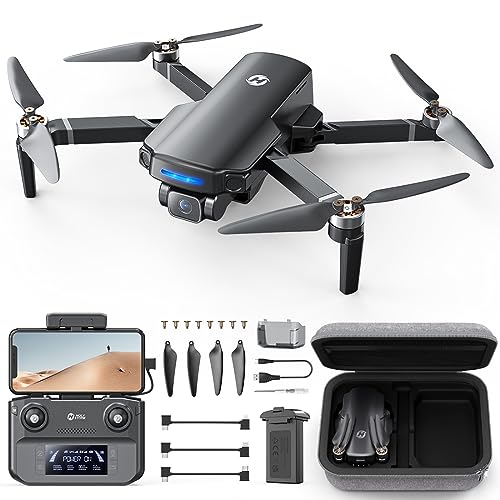
3. Holy Stone HS900 (Sirius): Best Cheap 4K Drone with a Gimbal
Want a gimbal without the DJI badge? The HS900 is the one we'd pick. It's Holy Stone's most capable budget drone: a 1/2.3-inch 48MP Sony sensor shooting 4K/30 on a true 3-axis gimbal, all at 249 g. In TechRadar's flights it handled 22mph gusts without trouble, and it stays predictable in noticeable wind.
Imagine a slow pass over a pumpkin patch on a breezy October afternoon. The gimbal keeps the horizon level while Cruise Control holds a steady speed, so the shot looks planned. You also get Follow Me, waypoints, time-lapse, a P2 controller, a gimbal guard and a carry bag. The app asks for a free Holy Stone account, and the battery charges in the drone over USB-C in just over an hour. It also makes a light backup if you already fly something bigger.
Here's the catch: nothing stops it hitting a tree, and real flights ran about 22 minutes. Auto white balance is the only reliable preset, and tracking drops fast subjects. Is it worth it? For open-field 4K, yes. Want DJI's proven app and a link that reached 2,175 m in one test? The DJI Mini 4K (#1) is worth a look.
Best for: Buyers who want gimbal-smooth 4K under 250 g from a brand other than DJI
Skip it if: You want DJI's proven app and strong link. The DJI Mini 4K (#1) is the better pick.
Pros
- Real 3-axis gimbal keeps 4K video smooth
- Handled 22mph gusts in testing
- Full manual camera control from app and controller
- Follow Me, Cruise Control and time-lapse included
- Under 250g, so no FAA registration for hobby flying
- Solid build and a carry bag in the box
Cons
- No obstacle avoidance
- Real flight time nearer 22 min than 30
- White balance presets are off
- Subject tracking loses targets at times
- No histogram or exposure bracketing
- Account sign-up required in the app
Hands-on reviews behind this pick
- TechRadar
Show the verdict
Holy Stone's best drone yet: well made, very good if not perfect image quality, solid flight and step-up features like tracking and cruise control, but no obstacle sensing and average flight times.
- Digital Camera World
Show the verdict
A strong mid-range sub-250g drone with features its direct rivals lack and very good photos and video, held back by quirky white balance, no histogram and no obstacle avoidance. Great for beginners.
- Half Chrome
Show the verdict
Called it the best drone Holy Stone sells: a real 3-axis gimbal, solid 4K camera and decent range that held up on a windy day, with a usable Follow Me, though account setup was a pain.
4. Potensic Atom 2 (Standard Kit): Best Affordable Beginner Drone Outside DJI
For a non-DJI first drone, the Atom 2 is our pick. It flies steadily, holds position in wind, and starts in Beginner Mode with tutorials in the app. There are no DJI-style no-fly-zone locks, and the airframe is tough: Bax Tech crashed it hard several times with no damage.
Planning new garden beds? On a Saturday morning you hover over the backyard, grab 48MP stills from the 1/2-inch sensor and sketch the layout from above. The controller has handy dials and uses your phone as the screen. Expect about 20 to 22 minutes per battery rather than 32, and use a fast microSD card for 4K.
The downsides are real. There's no obstacle sensing, footage is over-sharpened and can blow out in sun, and one reviewer got an overheat warning. Android owners on the Grey Arrows forum report failed updates and disconnects, while iPhone owners had none, and checking cables and antenna angle often fixed it. Our call: on an iPhone, in open fields, it's a good buy. Care more about the footage? The Holy Stone HS900 (#3) is the better non-DJI camera.
Best for: Beginners, or anyone wanting a tough second drone, who'd rather fly non-DJI in open spaces
Skip it if: Video quality matters more than flying feel. The Holy Stone HS900 (#3) is the better pick.
Pros
- Steady, stable flight that holds position in wind
- Beginner Mode on by default with in-app tutorials
- Solid build that survived hard crashes
- Fun AI tracking and quickshots like Dolly Zoom
- No DJI-style no-fly-zone locks
Cons
- No obstacle avoidance at all
- About 20-22 minutes per battery, not 32
- Over-sharpened, washed-out video in bright sun
- Overheat warning after an 11-minute summer flight
- Some owners report app and connection glitches
Hands-on reviews behind this pick
- The Drone Girl
Show the verdict
A tale of two drones: a well-built, steady airframe with a strong controller and beginner-friendly app, let down by a camera that washes out in sun; buy it to fly, not for footage.
- Fstoppers
Show the verdict
A capable, budget-friendly entry into the sub-249g class that holds steady in wind and tracks well, fine for casual creators and travelers but no replacement for high-end drones.
- TechSource
Show the verdict
The perfect beginner drone in the compact budget class, with 4K HDR, 8K stills and fun AI modes for the money, though obstacle detection is missed when running quickshots.
5. DJI Neo 2 (Drone Only): Best Affordable Selfie Drone
If you're usually the one in the shot, the Neo 2 is the safe bet. It's the cheapest drone here with omnidirectional sensing, and the forward LiDAR earns its keep: on a circle shot where the original Neo hit a rock, Luke Maximo Bell's Neo 2 braked in time. Gesture control and palm launch mean you don't need a controller at all.
Head to an empty parking lot after work. You launch from your hand, wave to frame the shot and skate a few laps while it tracks you. The 2-axis gimbal and 1/2-inch sensor shoot 4K up to 60fps. The Drone Only kit has one battery; add the RC-N3 for the full 10 km (FCC) range, because phone Wi-Fi reached only about 150 m.
Battery is the weak point: about 12 to 15 minutes per pack, and wind pushes it around. Shaky first flights are a known trap too, and Grey Arrows forum owners pinned them on battery firmware, since each pack needs its own update. So update every battery before day one. Worth it? For filming yourself, yes. On a tighter budget? The original DJI Neo (#7) costs less.
Best for: Solo creators who want a safe drone that films them without a controller
Skip it if: You want the cheapest DJI palm drone and can live without obstacle sensing. The DJI Neo (#7) is the better pick.
Pros
- All-round sensing with front LiDAR prevented crashes
- Gesture control lets you reframe a follow shot mid-flight
- Clearly sharper, wider video than the original Neo
- Follows from any angle, not only from behind
- Flies by palm, phone, remote, motion controller or goggles
- Full prop guards and a tough, light body
Cons
- Only about 12-15 minutes per battery in real use
- No microSD slot; 49GB internal storage only
- Too underpowered for confident manual FPV flying
- Buffeted by wind; tiny front screen is hard to read
- Phone-only range fell short of DJI's claim in testing
Hands-on reviews behind this pick
- Camera Jabber
Show the verdict
A fun, light tracking drone and a practical tool for creators, with the most accurate subject tracking of its type so far, though wind, a tiny screen and short flights hold it back.
- DroneXL
Show the verdict
After a year of ownership this is the drone he flies most: portable, durable and flexible, and better after updates, but limited by short flights, a small sensor and no card slot.
- Luke Maximo Bell
Show the verdict
A definite upgrade over the original Neo in almost every way, with far better video, real obstacle avoidance and great gesture control; only battery life failed to improve.
6. Skyrover X1 (Fly More Combo): Best Non-DJI Drone with Obstacle Sensing
The X1 is the most DJI-like drone you can buy without the DJI name. It's a near copy of the Mini 4 Pro, and QuickAssTutorials found the same dynamic range and low-light results side by side. You get 4K/60 on a 1/1.3-inch sensor, omnidirectional sensing and a camera that rotates for native vertical video.
Think of a still sunset over a city park pond. You drift sideways for the reflection and the sensors brake before you reach a lamp post. 51 Drones got just over 27.5 minutes in a cruise test, his best result. Owners on r/drones report stable GPS hover and reliable return-to-home, with the phone-holder controller as the main gripe. The Fly More Combo brings three batteries and a charging hub.
So what holds it back? The shell is thin, with exposed electronics in the battery bay, the app has no airspace map, there's no internal storage, and the brand's long-term support is unproven. Sensing also switches off in Sport mode, and it's the priciest pick here. Our verdict: a strong fair-weather travel drone. Want a proven brand with guarded props for less? The DJI Flip (#2) is the safer bet.
Best for: Fair-weather travel flyers who want obstacle braking and long flights without a DJI
Skip it if: You'd rather trust an established brand's support. The DJI Flip (#2) is the better pick.
Pros
- Image quality matches the DJI Mini 4 Pro side by side
- Omnidirectional obstacle sensing that brakes reliably
- Strong flight time: about 27.5 min in a cruise test
- Sub-250 g: no FAA registration or Remote ID for hobby use
- Upward-tilting gimbal and true vertical shooting
- Guided first-flight tutorial helps beginners
Cons
- No internal storage: forget the card, no footage
- Some phantom rear-obstacle alerts reported in testing
- Thin shell with exposed electronics in the battery bay
- No airspace or no-fly-zone map in the app
- Phone-holder controller; screen controller costs more
- Brand origin and long-term support are unclear
Hands-on reviews behind this pick
- The Drone Girl
Show the verdict
Photos and video match similar DJI drones and the tutorial suits beginners, but a gapped shell, exposed electronics, ghost sensor alerts and no airspace map make it a fair-weather pick.
- DroneXL
Show the verdict
A reviewer who bought his own calls it about as close to a DJI Mini 4 Pro as you can get: great camera, best-ever flight-time test result and sub-250 g, though it lacks waypoints and onboard storage.
- QuickAssTutorials
Show the verdict
Side by side with a Mini 4 Pro, dynamic range, exposure and low light look the same and range and obstacle braking are solid; the gaps are no D-Log M, stiff default controls and basic hyperlapse.
7. DJI Neo: Best Cheap DJI Drone for First Flights
The Neo is still the simplest way into DJI. DJI has replaced it with the Neo 2, but the original is still sold new, and RobHK, after about 300 days of flying, calls it the easiest DJI to use. It's 135 g with built-in guards, and it has bounced off trees and hard floors without damage.
It's a still evening at the park with your dog. You launch from your palm, let it track you both for a minute, and land it back in your hand. Footage is 4K/30 from a 1/2-inch sensor on a single-axis gimbal, saved to 22GB of internal memory with no card slot. Phone control reaches only about 50 m, so a remote helps.
Know the limits. Flights run about 13 to 14 minutes, the props are loud, and there are no obstacle sensors. NeoPilots owners swap near-loss stories: return-to-home that climbs with no obstacle detection, gusts that nearly flip it, and emergency descents over water on low battery. Bottom line: a fine first DJI, or a cheap second drone you won't mind crashing. Want real obstacle sensing and better video? The DJI Neo 2 (#5) fixes most of this.
Best for: First-time pilots, or anyone wanting a cheap second drone they won't mind crashing
Skip it if: You want obstacle sensing and sharper video. The DJI Neo 2 (#5) is the better pick.
Pros
- Palm launch and landing with no controller or phone
- Survived repeated crashes into trees and floors
- Prop guards make it safe to fly near people
- Works with phone, remotes, motion controller or goggles
- Very light and pocketable
Cons
- Only about 13-14 minutes per battery
- No obstacle sensors; veered into branches
- Very loud, high-pitched propeller noise
- Struggles in gusty wind
- No microSD slot; 22GB internal storage only
Hands-on reviews behind this pick
- Engadget
Show the verdict
A no-brainer for many creators: fast, fun, beginner-friendly and tough, with sharp video for the money, held back by short battery life, loud props and no obstacle sensors.
- RobHK
Show the verdict
After 300 days it is rock solid and the most versatile, easiest DJI drone to use; image quality needs tweaking, so lower expectations and enjoy its ease and flexibility.
- Air Photography
Show the verdict
A year on, nothing at its price flies as well or is as flexible; tough enough to shrug off bumps while tracking, but video, storage and gusty-wind handling are its limits.
8. Holy Stone HS360S (Spydi): Best Budget GPS Drone for Learning to Fly
Treat the HS360S as a trainer, and a good one. It's a 249 g GPS drone with brushless motors that hovers steadily and comes home accurately: from about 100 m out, Toronto RC watched it climb, turn and set down roughly 3 to 4 feet from where it left. That's the habit-building drone you want before spending more.
Picture a quiet soccer field before the Saturday games start. You drill hovers, slow turns and return-to-home until they're second nature, and the wired phone link keeps the live view free of Wi-Fi lag. A beginner mode keeps it close at first. The case, spare props and phone cables are in the box, but there's no charging hub.
The camera is the trade. There's no gimbal, the image is heavily processed, and 4K runs at only 20fps, so this isn't for filming trips. Flights last about 15 to 17 minutes and a battery takes about 3 hours to charge, so pick a kit with two batteries if you can. Ready for stabilized 4K now? The DJI Mini 4K (#1) is the drone to buy. Shopping on a strict budget? See the best picks under $200.
Best for: First-time pilots who want GPS safety features to learn on before buying a camera drone
Skip it if: You want smooth video from day one. The DJI Mini 4K (#1) is the better pick.
Pros
- Cheap way into a GPS drone with return to home
- Accurate return-to-home landings in tests
- Smooth, beginner-friendly controls
- GPS Follow Me tracks the phone well
- Wired phone link instead of laggy Wi-Fi
- Well built for the price
Cons
- No gimbal stabilization, so video is shaky
- Heavy processing smears fine detail
- 4K only at 20fps
- About 15 minutes per battery in real use
- Battery takes about 3 hours to charge
- Fully automatic camera, no manual control
Hands-on reviews behind this pick
- Space.com
Show the verdict
One of the cheapest sub-250g drones, it flies well and has useful features, but the point-and-shoot camera has heavy processing, no stabilization and short flights. A basic drone to learn on.
- The Gadgeteer
Show the verdict
A feature-packed, very stable hovering drone that mostly does what it promises and has reliable return to home. Video shows every pitch and roll and looks hazy, but it is a fine way to learn to fly.
- GH Tech Review
Show the verdict
A fun starter drone with accurate return to home and good GPS follow, but AI tracking failed, flights ran about 17 minutes and the ungimbaled camera disappoints. Buy it to learn, not for 4K.
9. Holy Stone HS175D: Best Cheap Drone with Two Batteries
The HS175D is the cheapest drone here that still brings GPS and return-to-home. It's 215 g and foldable, with brushless motors, and the kit includes two batteries, so one outing gives you about 40 minutes in the air.
Here's where it shines: Thanksgiving weekend at a relative's farm, with an open hayfield and nobody in a hurry. You swap to the second battery and keep flying, and in PERTH WEST OZ RC's flights return-to-home set down close to the takeoff spot. GPS hold isn't a sure thing, though. RC Groups owners disagree on it: one returned theirs after it wandered about 6 feet in still air, while another brought it down onto a blanket in a breeze.
The camera is oversold. It's sold as 4K but records 2.7K video, and with no gimbal or EIS every wobble shows. Calibration is fiddly, the startup and pairing order confuses people, and the Wi-Fi link makes going past 100 m risky. It's a cheap way to learn, not a travel camera. Want steadier flying and a wired controller link? The Holy Stone HS360S (#8) is the small step up.
Best for: Adult beginners who want GPS hold and long practice sessions on the smallest budget
Skip it if: You want a steadier trainer with a lag-free link. The Holy Stone HS360S (#8) is the better pick.
Pros
- Reliable flights around 20 minutes per battery
- Under 250 g and folds small
- GPS return to home lands accurately
- Two batteries, chargers and padded case included
- Brushless motors at a toy-drone price
Cons
- Sold as 4K but records 2.7K video
- No gimbal or EIS, footage shows every wobble
- Fiddly calibration before every flight
- Wi-Fi link limits real range
- Quirky app, recording sometimes stops itself
Hands-on reviews behind this pick
- Digital Camera World
Show the verdict
Real merit for the money, with reliable 20-minute flights and a good case, but let down by a clunky app, fiddly pre-flight steps and marketing that calls its 2.7K camera 4K.
- Gadget Inspector
Show the verdict
An overall positive budget GPS drone with long flights, a compact body and decent photos and video if flown slowly, held back by weak smart modes, 2.7K video and short real range.
- CurryKitten
Show the verdict
Could not recommend it: after following the manual closely the review unit would barely arm, lost stick control and kept triggering return to home, and Holy Stone never replied.
Best affordable drones buying guide for 2027
What do you give up with a cheaper drone?
Mostly obstacle sensing, then camera quality, then the gimbal itself. The DJI Mini 4K (#1), Holy Stone HS900 (#3) and Potensic Atom 2 (#4) all hold position on GPS and film through a stabilized camera, but none can see a tree coming. Step down to the Holy Stone HS360S (#8) and HS175D (#9) and the gimbal goes too, so every gust shows in the video.
Going the other way buys safety. The DJI Flip (#2) adds forward sensing and guarded props, while the Skyrover X1 (#6) and DJI Neo 2 (#5) brake in every direction. The usual trade is flight time or wind: the Neo 2 lasts about 12 to 15 minutes, and the Flip's guards catch gusts. If you can spend more for bigger sensors and longer flights, our full drone rankings cover the whole market.
Is a 3-axis gimbal worth paying for on a budget drone?
Yes, if you want clips you'll actually share. A 3-axis gimbal physically cancels the drone's tilt and roll, so the horizon stays level while the drone leans into wind. Without one, every pitch shows: the Holy Stone HS360S (#8) has only tilt with damping, and horizons wobble on breezy days.
The DJI Mini 4K (#1), DJI Flip (#2), Holy Stone HS900 (#3) and Skyrover X1 (#6) all carry a 3-axis gimbal, and the Potensic Atom 2's gimbal kept the horizon level even as gusts bounced the drone around. The DJI Neo 2 (#5) uses a 2-axis gimbal and the original Neo (#7) a single axis, which is fine for selfie clips but less steady for slow cinematic pans. Our advice: skip the gimbal only if the drone is a trainer you'll replace.
Is a cheap 4K drone really shooting 4K?
Not always, so read past the box. The Holy Stone HS175D (#9) is sold as 4K but records 2.7K video, and the HS360S (#8) shoots 4K at only 20fps, which looks choppy when you pan. Real 4K at 30fps or higher, on a stabilized camera, is the line to look for.
Sensor size matters next, because it decides how clean footage looks at dawn and dusk. The DJI Flip (#2) and Skyrover X1 (#6) use a 1/1.3-inch sensor and shoot 4K at up to 60fps, while the Holy Stone HS900 (#3) uses a smaller 1/2.3-inch sensor at 4K/30. The DJI Mini 4K (#1) gets noisy at blue hour, so plan daylight flights. Want to compare cameras further up the range? See 4K camera drones at every budget.
Do affordable drones have GPS and return-to-home?
Most do now, and it's the one feature we wouldn't skip. The Skyrover X1 (#6) heads home on its own on low battery or lost signal, the Holy Stone HS360S (#8) landed within a few feet of takeoff in tests, and even the HS175D (#9) comes back close to where it left.
What GPS can't do is see. Drones without obstacle sensors, like the DJI Mini 4K (#1), Holy Stone HS900 (#3) and Potensic Atom 2 (#4), can't steer around a tree on the way back, so set a return height above anything tall nearby. DJI Neo (#7) owners found its return climbs and flies with no obstacle detection, and controller-free launches behaved better after waiting about 2 minutes for a GPS lock. If you fly near trees, the Neo 2 (#5) or Skyrover X1 (#6) add sensors that brake.
How long do budget drone batteries last in real flights?
Expect about two-thirds to three-quarters of the box number, and plan for spares. The DJI Mini 4K (#1) is rated for 31 minutes but runs about 20 to 25, the Potensic Atom 2 (#4) about 20 to 22 against 32, and the Holy Stone HS900 (#3) about 22 against 30.
The longest real flights here come from the DJI Flip (#2), at about 27 minutes in hover tests, and the Skyrover X1 (#6), at just over 27.5 minutes in one cruise test. Palm drones run short: the DJI Neo 2 (#5) manages about 12 to 15 minutes and the Neo (#7) about 13 to 14. Charging time matters too, since an HS360S (#8) battery takes about 3 hours. That's why Fly More combos with extra batteries and a hub, or the two-battery HS175D (#9), make a day of flying far less frustrating.
Can you still buy a DJI drone in the US?
Yes. The FCC's December 2025 move stops new foreign-made drone models from getting approval, but drones it had already approved can still be imported and sold. That includes the DJI Flip (#2), Neo 2 (#5) and original Neo (#7), and the DJI Mini 4K (#1) is still sold new through Amazon and Best Buy. A drone you already own isn't affected.
One thing to watch: the FCC has proposed blocking future sales of some previously approved foreign drones, including models with LiDAR, and the Neo 2 carries a forward LiDAR sensor. It's only a proposal so far. If you'd rather not depend on DJI at all, the Holy Stone HS900 (#3), Potensic Atom 2 (#4) and Skyrover X1 (#6) are the non-DJI picks here.
Best affordable drones: frequently asked questions
What is the best affordable drone?
For most people, it's the DJI Mini 4K: a 3-axis gimbal, 4K/30 video, dependable GPS flight and a real controller, under 249 g. Want sharper video and guarded props? Get the DJI Flip. Prefer a non-DJI drone? The Holy Stone HS900 has a true 3-axis gimbal.
Is the DJI Mini 4K worth it over cheaper brands?
For most beginners, yes. Its link reached 2,175 m over open sea in one test, it flies steadily in wind for its weight, and owners call it the best-value way into drones. The Holy Stone HS900 is the closest non-DJI rival with a 3-axis gimbal, but neither has obstacle sensors.
Are Holy Stone and Potensic drones any good?
The better ones are. The Holy Stone HS900 shoots gimbal-smooth 4K and held steady in 22mph gusts, and the Potensic Atom 2 is steady, tough and beginner-friendly. The Holy Stone HS360S and HS175D are trainers with unstabilized cameras. None of them senses obstacles, so fly them in open space.
Do cheap drones have GPS and return-to-home?
Many do. Even the Holy Stone HS175D, the cheapest pick here, has GPS and return-to-home that landed close to takeoff, plus two batteries. The HS360S came back within a few feet of its takeoff spot. Without obstacle sensors, though, return-to-home can't dodge trees, so set a safe return height.
Do budget drones need FAA registration?
Not if you fly for fun and the drone is under 250 g. Every pick here is under that line, from the 135 g DJI Neo to the 249 g Holy Stone HS900 and the sub-249 g DJI Mini 4K. Flying for work follows different FAA rules, so check them before you take paid jobs.
