
The 10 Best Drones in 2027
Your 249 g drone may weigh 252 g and need registering. We weighed camera, crash safety, real flight time and size to rank the best drones of 2027 for you.

Affiliate Disclosure: As an Amazon Associate, we may earn a commission from qualifying purchases, and it never changes our picks.
Our picks at a glance

10.0/10Score

$759.00
as of Nov 16, 2026, 23:17 UTC

9.9/10Score
$1,099.00
as of Nov 16, 2026, 23:17 UTC

9.6/10Score
$2,699.00 $2,899.00 Save 7%
as of Nov 16, 2026, 23:17 UTC

9.0/10Score
Currently out of stock at Amazon.
View on Amazon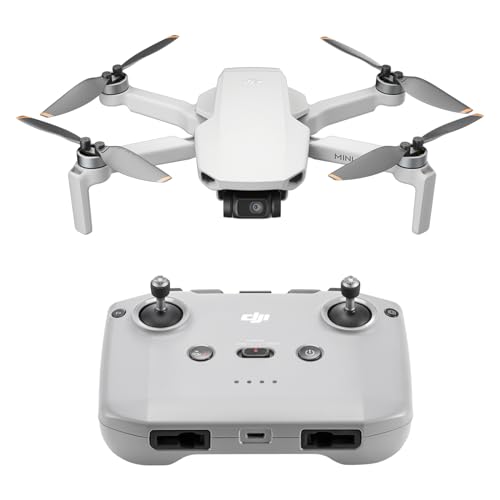
8.5/10Score
$299.00
as of Nov 16, 2026, 23:17 UTC

8.1/10Score
$259.00
as of Nov 16, 2026, 23:17 UTC

7.9/10Score
$319.99
as of Nov 16, 2026, 23:17 UTC
7.8/10Score
$879.00
as of Nov 16, 2026, 23:17 UTC

7.6/10Score
$1,599.00
as of Nov 16, 2026, 23:17 UTC

7.3/10Score
$269.99
as of Nov 16, 2026, 23:17 UTC
Product prices and availability are accurate as of the date/time indicated and are subject to change. Any price and availability information displayed on Amazon.com at the time of purchase will apply to the purchase of this product.
How we rank best drones for you?
We start with camera quality, because sharp, steady footage at sunrise and sunset is why you're buying a drone at all. Easy, safe flying comes next: obstacle sensing, prop guards and a dependable return home keep a first drone out of the trees. Then flight time and range, since real minutes in the air decide whether you finish the shot before the low-battery return. Design and build covers weight, which sets FAA registration, and how a drone copes with wind. Value checks you aren't paying for a camera you'll never use. That puts the DJI Mini 5 Pro first.
Camera Quality30%
Sharp, steady footage at sunrise and sunset is the reason most people buy a drone at all.
Easy, Safe Flying20%
Obstacle sensing, guards and a reliable return home keep a first drone out of the trees.
Flight Time and Range20%
Real minutes in the air decide whether you get the shot before the low-battery return kicks in.
Design and Build15%
Weight decides FAA registration and whether it fits a daypack; build decides how it copes with wind.
Value15%
The right drone covers your job without paying for a camera or range you will never use.
Best drones compared
Swipe sideways to see every spec.
| Product | Score | Camera | Flight Time | Range | Weight |
|---|---|---|---|---|---|
| 10.0 | 1-inch 50MP; 4K up to 120fps, 10-bit D-Log M and HLG | 36 min (standard battery), 52 min (Plus battery) | 20 km max transmission (FCC) | 249.9 g rated, units often weigh 252 g; Plus battery over 250 g | |
| 9.9 | 1-inch 50MP wide + 48MP 70mm tele; 4K up to 120fps, D-Log M | 45 min (maker rating) | 20 km max transmission (FCC) | 724 g (over 250 g, FAA registration needed) | |
| 9.6 | 4/3 100MP main + 70mm + 168mm tele; 6K/60fps, 4K/120fps | 51 min (maker rating), 45 min hover | 30 km max transmission (FCC) | 1,063 g (over 250 g, FAA registration needed) | |
| 9.0 | 1/1.3-inch 48MP sensor, 4K up to 60fps (100fps slow-mo), 3-axis | Up to 31 min claimed; about 27 min in reviewer tests | Up to 13 km (FCC) with remote; about 50 m on phone Wi-Fi | Under 249g | |
| 8.5 | 12MP; 4K up to 30fps, 2.7K up to 60fps, normal color only | 31 min (maker rating) | 10 km max transmission | Under 249 g (no FAA registration for recreational flying) | |
| 8.1 | 1/2-inch 12MP sensor, 4K up to 60fps (100fps with controller) | Up to 19 min claimed; about 12-15 min in reviewer tests | Up to 10 km (FCC) with controller or goggles; short on phone Wi-Fi | 151g; 160g with the Digital Transceiver | |
| 7.9 | 1/2-inch 48MP sensor, 4K/30fps HDR video | Up to 32 min claimed; about 20-22 min in reviewer tests | Up to 10 km (FCC) via PixSync 4.0 | Under 249g | |
| 7.8 | 1/1.3-inch, 8K/30fps, 4K/120fps, 48MP, 10-bit HLG and log | Up to 16 min claimed; reviewers saw about 8-14 min | App up to 800 m; up to 1 km with optional Beacon | 192 g (under 250 g), enclosed propellers | |
| 7.6 | Dual 1/1.28-inch 360 cameras: 8K/30, 5.2K/60, 4K/100, 55MP | 24 min claimed (39 min with high-capacity battery) | Up to 10 km (FCC); PCMag saw breakup near 2,200 ft | 249 g with standard battery; 291 g with high-capacity | |
| 7.3 | 1/2.3-inch 48MP Sony sensor, 4K/30fps, 3-axis gimbal | Up to 30 min claimed; about 22 min in TechRadar's windy tests | Up to 6 km claimed (3 km at 2024 launch) | 249g |
1. DJI Mini 5 Pro: Best Drone Overall
If you only buy one drone, make it this one. The 1-inch sensor is why: cleaner low light, more dynamic range and 10-bit color even in the Normal profile, from a body that folds into a hip pack. All-round vision plus a forward LiDAR keep watching for obstacles after sunset, and it came through drops and small crashes undamaged in a month of daily flying.
Say you hike to a ridge at blue hour and fly a slow reveal over the valley as the light fades. The footage stays clean, and the gimbal tilts fully for true vertical clips.
Battery is the sore spot: DroneXL's long-term tester gets 20 to 25 minutes per standard battery, so spares are close to essential. Amazon stock comes from third-party sellers, so confirm it's new and check which controller ships.
Weight is the other catch. Owners keep weighing their Mini 5 Pro at 252 to 253 g, which means FAA registration and Remote ID in the US, and the Plus battery adds more. Our verdict: buy it if you want the best footage from the smallest drone. Flying in strong coastal wind most weekends? The Air 3S (#2) holds steadier.
Best for: Travelers and hikers who want top image quality in a small drone with strong crash protection
Skip it if: You fly in strong wind most weekends and want longer flights. The DJI Air 3S (#2) is the better pick.
Pros
- 1-inch sensor gives clean low-light footage for its size
- Omnidirectional sensing plus LiDAR works in low light
- True vertical shooting with full gimbal tilt
- 42 GB internal storage if you forget a card
- Faster, more reliable ActiveTrack than the Mini 4 Pro
- Survives minor crashes with only broken props
Cons
- Most units weigh just over 250 g despite the marketing
- Real flight time 20-25 min, far below the rating
- Footage bounces in strong wind at this weight
- Sensors can miss thin bare branches
- Hard to get in the US; Amazon stock is third-party
Hands-on reviews behind this pick
- DroneXL
Show the verdict
A fantastic travel and creator drone whose 1-inch camera, LiDAR and wind handling impress, but real flights of 20-25 minutes and units weighing over 250 g are caveats to plan around.
- Potato Jet
Show the verdict
Improves on an already great mini drone in every way: better camera, faster flight, stronger obstacle avoidance and longer real flights; the main complaint is how hard it is to get in the US.
- Lenny Marti
Show the verdict
After a month of daily road-trip flying, the best mini DJI has made: image quality that is genuinely good, tough and dependable, with only its true weight and stiff ND filters to grumble about.
2. DJI Air 3S (RC-N3): Best Dual-Camera Drone for Enthusiasts
Outgrown a mini drone? This is the step up we'd make. You get a 1-inch main camera and a 70mm medium tele in one body, so the establishing shot and a compressed close-up come from the same flight. Real flights land between 30 and 38 minutes per battery, and The Drone Girl saw it hold position in sustained 20 mph wind.
Picture a breezy evening on the coast. You hold a long tele shot of a lighthouse, swing back to the wide camera for the surf, and still have charge for a second angle. The RC-N3 kit turns your phone into the screen, though we'd pay for the RC 2 screen controller kit.
ND filters only come in the Fly More Combos or separately, and with a fixed aperture you'll want them on bright days.
Size is the trade-off. At 724 g it needs registration, and owners repeatedly mention the bulk next to a Mini, plus a few gimbal-stuck errors and batteries that stopped charging. Recent owner feedback is clearly warmer, though. For coastal and dusk flying, it's the one we'd pick. Want something that disappears into a daypack? The Mini 5 Pro (#1) weighs about a third as much.
Best for: Enthusiast photographers who fly near coasts or in steady wind and want two focal lengths
Skip it if: You want a drone that vanishes into a daypack and skips the bulk. The DJI Mini 5 Pro (#1) is the better pick.
Pros
- 1-inch main camera with excellent dynamic range
- 70mm tele camera matched closely to the main camera
- Real 30-38 minute flights per battery
- Steady in 20 mph wind where minis struggle
- LiDAR makes dusk and night returns safer
- 42 GB internal storage
Cons
- Over 250 g, so registration and more rules apply
- Video capped at 4K; no 5K or higher mode
- LiDAR faces forward only
- Fixed apertures mean swapping ND filters often
- Small branches can still clip the props
Hands-on reviews behind this pick
- Amateur Photographer
Show the verdict
An excellent mid-range drone that bridges lightweight and premium models, with a versatile dual camera, strong safety features and impressive video and stills; flare can creep in on sunny days.
- DroneXL
Show the verdict
The best drone the reviewer owns, smooth to fly and close to Mavic 3 Pro footage, though the 4K cap, a lower measured bitrate and shorter flights than the Air 3 keep it from perfect.
- The Drone Girl
Show the verdict
A confident, stable drone built for people who fly often, with standout low-light images and strong wind handling; the screen controller combo is the setup she recommends for nearly everyone.
3. DJI Mavic 4 Pro (Fly More Combo, DJI RC 2): Best Professional Drone for Photographers
Here's the drone for people who sell their footage. The 4/3 main camera is the reason. In Digital Camera World's lab it resolved more detail than a Sony A7R V, and 6K at 60fps in full D-Log leaves a colorist plenty to work with. Add a 70mm and a 168mm tele, and one flight covers three focal lengths.
Imagine a client wants their mountain cabin at golden hour. You open on the wide camera, then switch to the 168mm for the chimney smoke without landing. Wind won't spoil it either: DroneXL logged 43 minutes in 15 to 20 mph wind and kept the video steady in 35 mph gusts.
The Fly More Combo brings the RC 2 screen controller, three batteries and a charging hub. Expect the teles to look softer than the main camera, and 4K/120 slow motion crops the sensor.
The real risk is support. DJI paused its US launch, so you're buying from third-party sellers, and the few owner reports that exist center on gimbal and camera-assembly reliability. For paid work in wind, it's worth that risk. For hobby flying, the Air 3S (#2) gets you most of the way in a lighter body.
Best for: Serious photographers and filmmakers who color grade and work in wind over coasts and mountains
Skip it if: You fly for fun rather than for clients. The DJI Air 3S (#2) is the better pick.
Pros
- Main camera out-resolved a Sony A7R V in lab tests
- 6K/60 video with full D-Log
- Real 39-43 minute flights per battery
- Rock steady in strong wind
- Three focal lengths from 28mm to 168mm
- Gimbal rotates for vertical and rolling shots
Cons
- Heavy and large; registration and stricter rules apply
- Tele cameras look softer than the main camera
- Never launched in the US; third-party listings only
- 4K/120 slow motion crops the main sensor
- ALL-I codec only on the 512GB Creator Combo
Hands-on reviews behind this pick
- Digital Camera World
Show the verdict
An exceptional, reliable flagship whose three cameras feel like a pro camera that flies; lab tests put its stills ahead of top mirrorless bodies, with only early-firmware file glitches to report.
- Amateur Photographer
Show the verdict
A major upgrade for the Mavic line: stable, fast and easy to fly, with a 100MP camera and rotating gimbal that open new shots, aimed at enthusiasts and pros who want to avoid heavier rigs.
- DroneXL
Show the verdict
Lives up to the hype in hands-on tests: the best flight-time percentage the reviewer has seen from DJI, flawless handling in strong gusts, and obstacle sensing that stopped for a thin stalk at night.
4. DJI Flip (RC-N3): Best Beginner Drone with Prop Guards
For nervous beginners, this is where we'd start. Every prop sits inside a built-in guard, so a bump into a person or a wall is far less scary, and the camera isn't a compromise. In Luke Maximo Bell's comparison, its D-Log M footage, 4K at 100fps included, was a match for the Mini 4 Pro, and it hovered for 27 minutes 28 seconds.
Think of a backyard barbecue. You fly a slow pass over the table, closer than you'd dare with open props, then let follow mode trail you to the grill at walking pace. The RC-N3 kit uses your phone as a screen, and with only 2GB inside, a microSD card is a must.
Shopping for a younger pilot? We cover safe, simple drones for kids in their own guide.
But calm days suit it best. The guards add drag, and a FlipPilots forum owner can barely make headway into 10 mph wind, even in Sport mode. Sensing is forward only, it has flown into branches it had already detected, and damage to the built-in guards means a repair. For flying near people, we'd buy it. Live by the coast? The Air 3S (#2) copes far better.
Best for: Beginners and vloggers who want a guarded drone with a serious camera for calm-weather flying
Skip it if: You fly near the coast or anywhere breezy. The DJI Air 3S (#2) is the better pick.
Pros
- Sharp, smooth 4K with 10-bit D-Log M
- Full built-in prop guards for people-safe flying
- About 27 minutes of real flight per battery
- Fold-out arms power it on and off instantly
- Controller-free follow mode and quickshots
Cons
- Forward-only sensing; off during smart tracking
- Struggles in wind because of the prop guards
- Bulkier to pack than a DJI Mini
- Gimbal broke in one reviewer's minor crash
- Not compatible with DJI goggles or Motion 3
Hands-on reviews behind this pick
 Engadget
Show the verdict
A bold new direction and one of the most useful creator drones, with sharp 4K, guarded props and long flights, but weak in wind and short on obstacle sensing in smart modes.
- Fstoppers
Show the verdict
A no-brainer for beginners and casual flyers who want easy flying and smart features, with reliable tracking and a great live feed, though wind and image-quality buyers should look up.
- DroneXL
Show the verdict
A harsh take from DC Rainmaker: tracking is so-so and slow, obstacle avoidance is useless in practice, and a minor crash in the woods broke the gimbal and ended the test.
5. DJI Mini 4K: Best Cheap Drone for First-Time Pilots
Want to learn to fly without spending much? Start here. You get 4K on a 3-axis gimbal, GPS and a real controller, and at under 249 g recreational flights skip FAA registration. The radio link punches above its class, too: Matty DC Collins flew 2,175 m out over the Andaman Sea before it dropped.
Spend a quiet weekday evening over an empty soccer field, practicing slow orbits before your first beach trip. That's exactly its turf. Real flights run 20 to 25 minutes against the 31 on the box, and the RC-N1C controller needs your phone as the screen.
We'd get the three-battery Fly More Combo, which FlytPath also suggests for beginners. Want more options at this level? See our guide to cheap drones that still shoot smooth video.
But safety is the big gap. Owners describe crashes into trees again and again, since nothing stops it, and there's no follow mode. Daylight color looks punchy, but blue hour turns noisy. Over fields, beaches and water, it's a bargain. Learning near trees or people? The guarded DJI Flip (#4) is the safer start.
Best for: First-time pilots on a tight budget who will fly over open fields, beaches and water
Skip it if: You'll learn near trees, buildings or people. The DJI Flip (#4) is the better pick.
Pros
- Cheapest way into stabilized 4K from DJI
- Under 249 g, so no registration for recreational flying
- Solid real range: 2.1 km over open sea in one test
- Easy QuickShots for automated moves
- Real controller included, not phone-only
- Good out-of-camera color for beginners
Cons
- No obstacle avoidance, so trees are a real risk
- No ActiveTrack or follow-me
- No D-Log or HDR, and noisy at blue hour
- Gimbal limited in Sport mode and heavy headwind
- Real flights of 20-25 minutes
- Needs your phone as the screen
Hands-on reviews behind this pick
- DroneXL
Show the verdict
A solid little drone for capturing good photos and footage with minimal fuss, ideal for beginners; no obstacle avoidance, no ActiveTrack and no log profile are fair trade-offs at its price.
- Matty DC Collins
Show the verdict
Still an easy first-drone recommendation in 2026 for daylight shooting: real 4K, good RAW photos and long range, with no collision sensors, no log and a small sensor as the honest trade-offs.
6. DJI Neo 2 (Drone Only): Best Selfie Drone for Solo Creators
We'd hand this one to the friend who's always behind the camera and never in the shot. It weighs 151 g, launches from your palm and steers with hand gestures, which work brilliantly. It also sees in every direction: in Luke Maximo Bell's video, the LiDAR halted it short of a rock that the first Neo flew straight into.
It's Saturday morning at a trailhead. You launch from your palm and let it trail you up the first climb while you just hike. Short flights are the trade: 12 to 15 minutes while recording, and his hover test ended at 12.
The Drone Only kit has one battery, so we'd get a combo with spares. Phone Wi-Fi range is short, too; a remote or goggles unlock much more.
And one setup step saves a scare. Grey Arrows forum members say shaky first flights came down to batteries that each want a firmware update of their own, plus a compass calibration. If filming yourself is the job, it's the easy choice. Want longer flights and a bigger camera behind guards? The DJI Flip (#4) is the step up.
Best for: Solo hikers, cyclists and creators who want to film themselves with no piloting
Skip it if: You want longer flights and a bigger camera you'll pilot yourself. The DJI Flip (#4) is the better pick.
Pros
- All-round sensing with front LiDAR prevented crashes
- Gesture control lets you reframe a follow shot mid-flight
- Clearly sharper, wider video than the original Neo
- Follows from any angle, not only from behind
- Flies by palm, phone, remote, motion controller or goggles
- Full prop guards and a tough, light body
Cons
- Only about 12-15 minutes per battery in real use
- No microSD slot; 49GB internal storage only
- Too underpowered for confident manual FPV flying
- Buffeted by wind; tiny front screen is hard to read
- Phone-only range fell short of DJI's claim in testing
Hands-on reviews behind this pick
- Camera Jabber
Show the verdict
A fun, light tracking drone and a practical tool for creators, with the most accurate subject tracking of its type so far, though wind, a tiny screen and short flights hold it back.
- DroneXL
Show the verdict
After a year of ownership this is the drone he flies most: portable, durable and flexible, and better after updates, but limited by short flights, a small sensor and no card slot.
- Luke Maximo Bell
Show the verdict
A definite upgrade over the original Neo in almost every way, with far better video, real obstacle avoidance and great gesture control; only battery life failed to improve.
7. Potensic Atom 2 (Standard Kit): Best DJI Alternative Drone for Beginners
Uneasy about DJI's US headlines? This is the drone we'd buy instead. It holds its position in wind, the gimbal kept Captain Drone's horizon level through gusts, and it took several hard crashes for Bax Tech without damage. It stays under 249 g, and DroneXL notes there are no DJI-type no-fly-zone locks, which also means checking airspace is entirely on you.
With a road trip a week out, you spend an evening over a quiet county park practicing your first return-to-home, starting in Beginner Mode with tutorials in Potensic's own app.
The controller uses your phone as the screen, and its battery ran about 4 hours for TechSource. Real flights run 20 to 22 minutes, not 32, and 4K needs a fast microSD card.
Still, two catches matter. There's no obstacle avoidance, and footage looks over-sharpened next to DJI's. A few Android owners hit failed updates and dropped connections, while iPhone owners report no issues. To learn away from DJI, we'd happily start here. Care more about the footage than the brand? The DJI Mini 4K (#5) does the same job with a better picture.
Best for: Beginners who want a non-DJI drone for open-space flying
Skip it if: You care more about the footage than the brand. The DJI Mini 4K (#5) is the better pick.
Pros
- Steady, stable flight that holds position in wind
- Beginner Mode on by default with in-app tutorials
- Solid build that survived hard crashes
- Fun AI tracking and quickshots like Dolly Zoom
- No DJI-style no-fly-zone locks
Cons
- No obstacle avoidance at all
- About 20-22 minutes per battery, not 32
- Over-sharpened, washed-out video in bright sun
- Overheat warning after an 11-minute summer flight
- Some owners report app and connection glitches
Hands-on reviews behind this pick
- The Drone Girl
Show the verdict
A tale of two drones: a well-built, steady airframe with a strong controller and beginner-friendly app, let down by a camera that washes out in sun; buy it to fly, not for footage.
- Fstoppers
Show the verdict
A capable, budget-friendly entry into the sub-249g class that holds steady in wind and tracks well, fine for casual creators and travelers but no replacement for high-end drones.
- TechSource
Show the verdict
The perfect beginner drone in the compact budget class, with 4K HDR, 8K stills and fun AI modes for the money, though obstacle detection is missed when running quickshots.
8. HoverAir X1 Pro Max: Best Follow-Me Drone for Action Sports
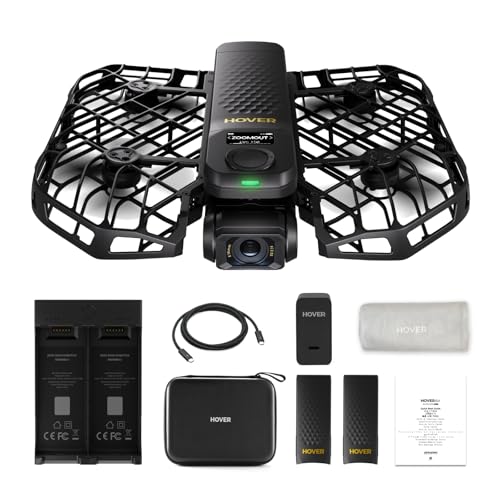
Nothing here films you in motion better. The 1/1.3-inch sensor records 8K at 30fps, with 10-bit HLG or log at lower resolutions, and it tracks you on foot, bike, ATV or paddleboard without a pilot. The caged props take real punishment: Jake Sloan clipped branches eight or nine times in three weeks and it kept flying.
Out on a gravel loop, it tracks behind you on the climb, you swap batteries at the halfway gate, and it's back on your tail for the descent. That swap matters: DroneXL's months-long owner review gets about 13 to 14 minutes a battery, and 9 in deep cold.
The standalone listing is just the drone; the Beacon, joysticks and spare batteries come in the Cycling or Fly Joy combos.
But know the limits before you ride into the woods. With no forward sensing, fast runs through trees end in collisions, one sudden gust can knock it off its line, and Ready Set Drone saw 8K recording stop and start. As a second camera for action days, it earns its place. Want simpler self-filming that also sees obstacles? The DJI Neo 2 (#6) does that in a lighter package.
Best for: Cyclists, paddlers and action creators who want the best follow footage
Skip it if: You want simple self-filming with sensing all around. The DJI Neo 2 (#6) is the better pick.
Pros
- Sharp 8K and strong low light from a 1/1.3-inch sensor
- 10-bit HLG and log for color grading
- Excellent hands-free follow tracking for bikes and ATVs
- Palm launch with no controller needed
- Very durable cage survives repeated crashes
- Omni Terrain lets it follow over water and snow
Cons
- Real flights often just 9-14 minutes per battery
- No forward obstacle sensing; still hits branches
- Gusts above about 20 mph can blow it away
- Some reports of 8K recording stops and overheating
- Beacon screen is tiny for manual flying
- Costs far more than the 4K X1 Pro
Hands-on reviews behind this pick
- DroneXL
Show the verdict
After seven months on his ATV and boat, the reviewer calls it a super fun, very durable, go-anywhere selfie drone with great video, wishing only for longer battery life and better gust handling.
- BIKEPACKING.com
Show the verdict
A months-long trail test finds it a great B-roll tool for riders: tiny, quick to launch and sharp, though it outruns its limit on fast descents and its obstacle sensing still clips trees.
- Jake Sloan
Show the verdict
A pro drone pilot calls it one of the most surprising gadgets of his year: very good 8K footage, easy use and real durability, with battery life of about 8 to 9 minutes in the cold as the main catch.
9. Antigravity A1 (Standard Bundle): Best 360 Drone for Immersive Flying
This one earns its spot by being different. It films everything around it in 8K 360, stitches itself and the props out, and lets you choose the angle in the app afterward. You fly through goggles with head tracking and a one-hand grip controller, and the controls are easy to pick up, though some pilots find them sluggish next to DJI's Avata 2.
Fly over a fall forest and you can look around through the goggles as you go. That evening, you pick the best angles on your phone. Battery life varies: DM Productions got about 20 minutes from the standard battery, and the 39-minute high-capacity pack pushes it over 250 g.
The Standard Bundle includes the goggles and grip, and 8K files call for a V30-rated microSD card.
Now the catches. Because you're wearing goggles, the FAA's line-of-sight rule means a spotter at your side. It struggles in breezy weather, and footage is 8-bit with no log profile. Support has been steady, though: a months-later owner report on DroneXL says firmware kept adding fixes and features. For creative 360 work, we're sold. For classic cinematic footage, the DJI Mini 5 Pro (#1) is the better camera.
Best for: 360 camera fans and creators who want reframable aerials and an immersive first flight
Skip it if: You want classic cinematic footage with grading room. The DJI Mini 5 Pro (#1) is the better pick.
Pros
- Only drone that films 8K 360: frame every shot later
- Drone and props stitched out of the footage
- Immersive goggles let you look around mid-flight
- Easy point-to-fly controls for beginners
- 249 g with the standard battery
- Good mobile and desktop reframing apps
Cons
- Goggles mandatory: you need a spotter to fly legally
- Real flight time short of the 24-min claim
- Struggles in breezy weather
- 8-bit, no log profile and no ND filters
- Reframed footage softer than a flagship drone
- Awkward for glasses wearers; can cause motion sickness
Hands-on reviews behind this pick
- PCMag
Show the verdict
An ambitious, largely successful debut that is a creative powerhouse for 360 fans and a joy to fly, held back by short real battery life, wind struggles, a high price and a steep editing curve.
- WIRED
Show the verdict
Praises the innovative 360 camera, light build, well-made goggles and strong apps, but finds the flying sluggish and the forced goggle setup fussy, so it falls short of a must-buy at its price.
- DM Productions
Show the verdict
After ten weeks he calls the immersive 360 goggle flight unlike anything else and the footage very good, but wants 10-bit or a flat profile, cheaper goggles and a non-goggle way to fly.
10. Holy Stone HS900 (Sirius): Best Budget Drone with a 3-Axis Gimbal
Smooth 4K for little money, with no DJI app involved? Start here. You get a true 3-axis gimbal, a 48MP Sony sensor shooting 4K at 30fps, and a 249 g body that handled 22 mph gusts for TechRadar. It stays calm and predictable in a stiff breeze, so a windy day isn't a write-off.
On a breezy afternoon at the cottage, you fly a slow pass along the shoreline, and the gimbal keeps the water calm in frame while the drone works against the wind. Follow Me, Cruise Control, waypoints and time-lapse are all here, though tracking can drop fast subjects.
The box includes a carry bag, spare props and a gimbal guard, and the app needs a free Holy Stone account.
So be clear on the limits. It can't sense a tree, real flights ran about 22 minutes rather than 30, and only auto white balance looks right. As a non-DJI step up from a toy drone, it's good value. Want DJI's app and a longer-range link? The Mini 4K (#5) is the safer bet. Spending even less? Browse our list of drones that cost under $200.
Best for: Budget buyers who want gimbal-smooth 4K under the 250 g line without buying DJI
Skip it if: You'd rather have DJI's app and a longer-range link. The DJI Mini 4K (#5) is the better pick.
Pros
- Real 3-axis gimbal keeps 4K video smooth
- Handled 22mph gusts in testing
- Full manual camera control from app and controller
- Follow Me, Cruise Control and time-lapse included
- Under 250g, so no FAA registration for hobby flying
- Solid build and a carry bag in the box
Cons
- No obstacle avoidance
- Real flight time nearer 22 min than 30
- White balance presets are off
- Subject tracking loses targets at times
- No histogram or exposure bracketing
- Account sign-up required in the app
Hands-on reviews behind this pick
- TechRadar
Show the verdict
Holy Stone's best drone yet: well made, very good if not perfect image quality, solid flight and step-up features like tracking and cruise control, but no obstacle sensing and average flight times.
- Digital Camera World
Show the verdict
A strong mid-range sub-250g drone with features its direct rivals lack and very good photos and video, held back by quirky white balance, no histogram and no obstacle avoidance. Great for beginners.
- Half Chrome
Show the verdict
Called it the best drone Holy Stone sells: a real 3-axis gimbal, solid 4K camera and decent range that held up on a windy day, with a usable Follow Me, though account setup was a pain.
Best drones buying guide for 2027
Which drones can you still buy new in the US?
You can still buy any drone model the FCC approved before December 2025. That month, new foreign-made drones went on the FCC's Covered List, which blocks approval for new models but not for ones already cleared. UAV Coach's list of FCC-approved models includes the Mini 5 Pro, Air 3S, Mavic 4 Pro, Flip, Neo 2 and Antigravity A1.
Approved doesn't always mean easy to find, though. The Mini 5 Pro and Mavic 4 Pro reach Amazon through third-party sellers, so check that the listing is new and the exact kit you want. Skip used DJI drones unless the seller can unbind the drone from their DJI account, or it may never activate for you. One more thing to watch: the FCC has also proposed blocking future sales of some approved drones with LiDAR, which could cover models like the Air 3S and Mini 5 Pro. It's only a proposal, and it targets future sales, not drones you own. If that worries you, the Potensic Atom 2 and Holy Stone HS900 are sensible non-DJI hedges.
Do you need to register a drone under 250g with the FAA?
No: for recreational flying, the FAA's rules for recreational flyers only require registration at 250 grams or more, and a registered drone must also broadcast Remote ID. Everyone still takes the free online TRUST test, carries proof of passing and keeps the drone in sight or uses a spotter standing next to them.
So which picks stay under the line? The DJI Mini 4K, Flip, Neo 2, HoverAir X1 Pro Max, Potensic Atom 2 and Holy Stone HS900 do. The Antigravity A1 does with its standard battery, but not the high-capacity one. The Mini 5 Pro is the trap: it's sold as 249.9 g, yet most owners weigh 252 to 253 g, so weigh yours on a kitchen scale before you skip registering. The Air 3S and Mavic 4 Pro are well over and always need it.
How long do drone batteries really last in the air?
Plan on about two-thirds of the number on the box. The Mini 5 Pro's standard battery is rated for 36 minutes but gives 20 to 25 in real flying, the Mini 4K manages 20 to 25 and the Potensic Atom 2 20 to 22. The Flip did better at about 27 minutes in calm air.
Bigger drones carry bigger batteries. The Air 3S averages 30 to 38 real minutes, and the Mavic 4 Pro flew 39 to 43 minutes even in wind, which is why they suit sunset shoots where you wait for the light. Self-flying cameras are the short end: the Neo 2 gets 12 to 15 minutes and the HoverAir X1 Pro Max about 9 to 14. Whatever you buy, a Fly More Combo with two extra batteries and a charging hub is the upgrade that pays off first.
Do you need obstacle sensing on your first drone?
You do if you'll fly near trees, buildings or people, and you can skip it over open fields, beaches and water. Losing sight of a drone behind a branch at a campsite is a classic first crash, and tree crashes come up again and again from owners of the sensor-free DJI Mini 4K.
The Mini 5 Pro, Air 3S, Mavic 4 Pro and Neo 2 sense in every direction, and all four add forward LiDAR for dusk flying. The Flip senses forward only and switches sensing off while it tracks you, so its guards do more of the protecting. The Antigravity A1 watches forward and down, the HoverAir X1 Pro Max only behind it, and the Mini 4K, Atom 2 and HS900 have none. Even the best systems can miss thin bare branches, so treat sensing as a safety net, not a reason to fly into the woods.
Is a sub-250g drone steady enough in wind?
Mostly yes in a moderate breeze, but light drones get pushed around when it gusts. The Holy Stone HS900 flew through 22 mph gusts, and the Potensic Atom 2 holds position well, though its body bounces while the gimbal keeps the horizon level. The Mini 5 Pro holds its spot too, but its footage can bounce in strong wind.
Prop guards make it worse. The Flip's guards catch the wind, and one owner says it barely moves forward around 10 mph. If you fly on the coast or in the mountains every weekend, step up in weight: the Air 3S stayed put in sustained 20 mph wind, and the Mavic 4 Pro kept its video stable in 35 mph gusts. Heading to the beach with a rod rather than a camera? Our guide to drones that can carry bait past the surf covers that job.
Which drone camera specs matter for travel video?
Sensor size matters most, then color depth, then frame rate. A bigger sensor keeps sunrise and blue-hour footage clean: the 1-inch sensors in the Mini 5 Pro and Air 3S are why they beat the 1/2-inch Neo 2 and Atom 2 when the light fades. The Mavic 4 Pro's 4/3 sensor goes further still.
Next, look for 10-bit color with D-Log M or HLG if you'll edit your clips, since it holds more detail in skies and shadows. The Mini 4K records normal color only, which looks punchy straight out of the drone but leaves little room to fix. Finally, 4K at 100 or 120fps gives you smooth slow motion, and true vertical shooting saves cropping for social posts. We go deeper on drones with the sharpest 4K footage in a separate guide.
Best drones: frequently asked questions
What is the best drone?
Our pick for most people is the DJI Mini 5 Pro: a 1-inch camera that stays clean at dusk, all-round obstacle sensing with LiDAR and a body that fits a hip pack. If you fly in strong wind or want a 70mm tele, get the DJI Air 3S. On a tight budget, the DJI Mini 4K gives you stabilized 4K for much less.
Is DJI banned in the US, and can I still buy a DJI drone?
New DJI models are blocked, but you can still buy ones the FCC approved before December 2025, including the Mini 5 Pro, Air 3S, Flip and Neo 2. Some, like the Mini 5 Pro and Mavic 4 Pro, come from third-party sellers, so confirm the listing is new. A proposal to pull some LiDAR models isn't final. To avoid DJI, the Potensic Atom 2 is our pick.
Do I need to register my drone with the FAA?
Only if it weighs 250 grams or more and you fly for fun; registered drones also need Remote ID. The DJI Mini 4K, Flip, Neo 2, HoverAir X1 Pro Max and Potensic Atom 2 stay under the line. Most Mini 5 Pro units weigh 252 to 253 g, so weigh yours. Every recreational pilot still takes the free TRUST test.
What is the best drone for beginners?
If you'll fly near people or trees, get the DJI Flip: its props sit inside full guards and the camera matches DJI's Mini line. Learning over open fields on a small budget? The DJI Mini 4K is the cheapest stabilized 4K from DJI. And if you want sensing in every direction from day one, the DJI Mini 5 Pro is worth stretching for.
What is the best alternative to DJI drones?
The Potensic Atom 2 is our pick: steady in wind, tough in crashes, under 249 g and free of DJI-style no-fly-zone locks. Want a 3-axis gimbal from another brand? The Holy Stone HS900. To film yourself, the HoverAir X1 Pro Max, and for 360 video, the Antigravity A1. Note that the FCC rules cover new foreign-made models from every brand.