
The 4 Best Fitbits for Kids in 2027
Kids lose chargers and teachers hate buzzing screens. We weighed fit, battery, swim laps and age rules to pick the best Fitbits for kids in 2027, by sport.

Affiliate Disclosure: As an Amazon Associate, we may earn a commission from qualifying purchases, and it never changes our picks.
Our picks at a glance

10.0/10Score

$85.00 $99.95 Save 15%
as of Nov 17, 2026, 18:32 UTC

9.3/10Score
View on Amazon
9.1/10Score
$179.99
as of Nov 17, 2026, 18:32 UTC
8.1/10Score
$164.95
as of Nov 17, 2026, 18:32 UTC
Product prices and availability are accurate as of the date/time indicated and are subject to change. Any price and availability information displayed on Amazon.com at the time of purchase will apply to the purchase of this product.
How we rank best Fitbits for kids?
We start with design and build, because a child's Fitbit has to fit a small wrist, stay comfy from first bell to bedtime and survive recess. Battery life comes next, since kids forget chargers and a flat band misses the night's sleep. Kid-friendly features matter just as much: simple controls, nothing to distract in class and lap counting for pool days. Then activity and sleep tracking, so steps and active minutes give your child goals and you a picture of their day. Value comes last, because kids lose and outgrow things. One heads-up: every pick needs your teen's own Google Account, so they suit kids 13 and up.
Design and Build25%
A child's Fitbit has to fit a small wrist, survive recess and stay comfortable all day.
Battery Life20%
Kids forget chargers, so a band that lasts through a sleepover saves arguments.
Kid-Friendly Features20%
Fewer distractions in class, simple controls and swim tracking matter more than smartwatch extras.
Activity and Sleep Tracking20%
Steps, active minutes and sleep give kids goals and give parents a picture of their day.
Value15%
Kids lose and outgrow things, so the price should match how long they'll use it.
Best Fitbits for kids compared
Swipe sideways to see every spec.
| Product | Score | Compatibility | Display | Battery | GPS |
|---|---|---|---|---|---|
| 10.0 | iPhone (iOS 16.4+) and Android 11+ via Google Health app | Color AMOLED touchscreen, Gorilla Glass 3 | Up to 10 days | None built in; uses your phone's GPS | |
| 9.3 | iPhone (iOS 16.4+) and Android 11+ via Google Health app | None (screenless tracker) | Up to 7 days; 5-minute charge gives about a day | None built in; routes come from your phone | |
| 9.1 | iPhone (iOS 16.4+) and Android 11+ via Google Health app | 1.3-inch AMOLED touchscreen, always-on option, Gorilla Glass 3 | Up to 7 days; 5-minute charge gives about a day | Built-in GPS + Galileo, plus barometric altimeter | |
| 8.1 | iPhone (iOS 16.4+) and Android 11+ via Google Health app | 1.58-inch AMOLED, 336 x 336, Gorilla Glass 3 | 6+ days (about 2.5 to 3 days with always-on display) | Built-in GPS + GLONASS |
1. Fitbit Inspire 3: Best Fitbit for Kids Overall
For most kids, this is the Fitbit we'd buy. It's tiny at about 18 g, so it disappears on a slim wrist, and Google packs small and large bands in the box, which means it still fits after a growth spurt. The battery is the other big win: up to 10 days, and DesFit got 11 with workouts.
Say your 13-year-old heads off to a two-night sleepover on Friday. Nobody packs a charger, and the band still logs both nights of sleep plus Saturday's backyard soccer. Sleep is its strongest feature, and in Trusted Reviews' comparison its steps and sleep matched an Oura Ring 3. At the pool, set the length once and it counts laps by itself. It pairs with iPhone or Android through the Google Health app.
The weak spot is the app. Owners on Google's Inspire forum keep reporting sync and connection problems since the move to Google Health, so expect the odd re-pair. There's no GPS either. Our call for a first tracker? Buy it. If your school bans screens, go to the Fitbit Air (#2) instead.
Best for: Parents of kids 13 and up who want simple steps, sleep and swim tracking on a small wrist
Skip it if: Your child's school doesn't allow screens on the wrist. The Fitbit Air (#2) is the better pick.
Pros
- Small, light and comfortable all day
- 10-day battery that holds up in use
- Color screen readable outdoors
- Good Fitbit sleep tracking for little money
- Heart rate, SpO2, HRV and skin temp sensors
- Small and large bands in the box
Cons
- No built-in GPS
- No altimeter for floors
- Heart rate wanders on runs and bumpy rides
- Can't reply to messages
- Touchscreen finicky with wet hands
- Owners report sync issues with the new app
Hands-on reviews behind this pick
 Digital Trends
Show the verdict
A new favorite: comfortable enough to forget, accurate on steps and heart rate, with battery well past a week and a vivid screen; the missing altimeter and fiddly charger are minor for the price.
- Trusted Reviews
Show the verdict
A slim, comfortable band with a long-overdue color screen and strong step, sleep and heart rate tracking for the money; the cramped display and Premium-locked insights hold it back.
2. Fitbit Air: Best Screen-Free Fitbit for School
If the school rule is no screens, the Air is the easy answer. It's a 12 g pod on a soft band with no display, so there's nothing for a teacher to spot and nothing for your teen to check mid-lesson. The one-size band fits wrists from 130 to 210 mm, and the pod pops out when you want a new band color.
Picture a Thursday math test. The band stays dark the whole hour, then that evening your teen opens the Google Health app and sees the day's steps, active minutes and how they slept before it. Battery runs about a week, and if it's flat at breakfast, five minutes on the USB-C charger covers the school day. Core tracking is free.
But a blank band has limits. It can't tell the time, and owners on Google's Air forum keep raising sync errors and workouts that don't log on their own. In the pool it records only how long the swim lasted. So is it right for your kid? If calm in class matters most, yes. If they want laps and a clock, the Inspire 3 (#1) does both.
Best for: Parents who want activity and sleep tracking for a teen without a screen buzzing during lessons
Skip it if: Your teen wants the time on the wrist or lap counts at swim practice. The Fitbit Inspire 3 (#1) is the better pick.
Pros
- Very light and thin, easy to wear to bed
- No subscription needed for core tracking
- Strong heart rate accuracy for the price
- About a week of battery with fast top-ups
- Pod pops out to swap bands in seconds
- Works with iPhone and Android
Cons
- No screen, so no time or notifications
- No built-in GPS or NFC
- AI Coach makes mistakes and costs extra
- Auto detection can miss weight sessions
- Must come off the wrist to charge
- Sync and app bugs reported by owners
Hands-on reviews behind this pick
 Engadget
Show the verdict
A light, versatile and cheap Whoop rival with fast charging and an easy app, no subscription required; the Gemini coach is helpful but glitchy, and the week of battery trails Whoop's.
 9to5Google
Show the verdict
Near-perfect hardware: tiny, comfortable, accurate on runs and heart rate, with battery beyond its week claim. The paid Health Coach invented workouts and isn't yet worth its monthly fee.
3. Fitbit Edge: Best Fitbit for Active Teens
A teen who trains needs more than a step count, and the Edge is the Fitbit built for that. It has built-in GPS and Galileo, a barometric altimeter for climbs, and a bright 1.3-inch screen they can read mid-run. In the pool it counts laps and shows heart rate live, which none of the other picks here do.
Here's where it pays off. Cross-country practice heads out on the trail behind the school, the phone stays in the locker, and the whole route is mapped when your teen gets back. Tom's Guide got eight days with a 45-minute GPS workout daily. A five-minute charge gives about a day, and small and large Active Bands come in the box.
Now, the catches. The new band latch needs a firm click, and two of three reviewers had it come loose. Early owners on Google's Edge forum report alerts that don't wake the screen. So would we buy it for a sporty teen? Yes. If they want a squarer, watch-style face, look at the Versa 4 (#4).
Best for: Sporty teens who train for cross-country, swim team or hiking and want to leave the phone behind
Skip it if: Your teen wants a bigger, watch-style screen. The Fitbit Versa 4 (#4) is the better pick.
Pros
- Bigger, brighter screen than the Charge 6
- Built-in GPS and altimeter for accurate climb data
- Battery lasts a full week or more
- Comfortable and light for sleep and workouts
- Physical button instead of a haptic one
- Works with both iPhone and Android
Cons
- No NFC, so no contactless payments
- New band connector is stiff and can come loose
- Auto workout detection is hit or miss
- Notifications were flaky at launch
- No speaker, mic or third-party apps
- Coach and some trend reports need Premium
Hands-on reviews behind this pick
- 9to5Google
Show the verdict
A solid fitness tracker and a real upgrade over the Charge, but stuck between the Pixel Watch and Fitbit Air; band drops, flaky notifications and no Wallet make it best for Charge owners who skip pay.
 Droid Life
Show the verdict
The tracker to buy if you want fitness data that stays out of the way: smart auto workout detection and over a week of battery, held back by a stiff band latch, slow charging and noisy sync alerts.
- Tom's Guide
Show the verdict
A near-perfect Charge 6 successor: bigger, brighter screen, real button, accurate GPS and climb data and a battery that beat its week rating; only lost NFC and weak smart features hold it back.
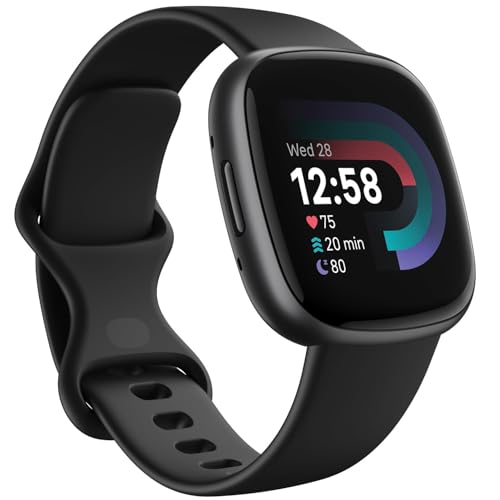
4. Fitbit Versa 4: Best Fitbit Smartwatch for Older Kids
Some teens won't wear a skinny band, and the Versa 4 is the Fitbit that looks most like a real watch. Its 1.58-inch AMOLED screen is roomy, built-in GPS maps a run without a phone, and its sleep tracking is among the best at this level. Small and large bands come in the box.
Band practice ends early, and your teen is waiting by the music room door. They glance down, read your text saying you're five minutes out, and check the time without digging for a phone. Battery is rated at six-plus days, but the always-on display cuts that to about two and a half to three. Expect a slow GPS lock before a run.
And there's a real risk right now. Owners on Google's Versa forum describe charge readings that jump and batteries that die within a day since a mid-2026 firmware update, with 118 marking the same problem. Workout heart rate also runs 8 to 15 bpm off. Is it worth the risk? Only if the watch look matters most. For training, the Edge (#3) makes more sense.
Best for: Older teens who want a bigger watch screen and smartwatch looks, mostly for sleep, steps and casual runs
Skip it if: Your teen trains seriously or you want battery you can count on. The Fitbit Edge (#3) is the better pick.
Pros
- Excellent sleep tracking and sleep profiles
- About 6 days to a week of battery without always-on
- Slim, light and comfortable for all-day and night wear
- Works with iPhone and Android
- Google Maps, Google Wallet and Alexa on the wrist
- Physical button is back
Cons
- Heart rate read 8 to 15 bpm off in workouts
- No third-party apps, music or Google Assistant
- GPS can take minutes to lock on
- Best insights need a Fitbit Premium subscription
- 2026 firmware bug drains battery on some units
- Proprietary USB-A charger
Hands-on reviews behind this pick
- Tom's Guide
Show the verdict
A good-looking, easy fitness tracker with a big screen, great sleep tracking and good battery, but too limited to call a true smartwatch, and its heart rate readings ran low.
- Trusted Reviews
Show the verdict
A solid, affordable fitness tracker in a smartwatch body with reliable sleep tracking and a week of battery, but it drops features from the Versa 3 and leans on a Premium subscription.
Best Fitbits for kids buying guide for 2027
What size Fitbit fits a child's wrist?
The lightest band with a choice of sizes fits best, and the Inspire 3 wins on both: about 18 g, with small and large bands in the box so it lasts through a growth spurt. The Fitbit Air is even lighter at 12 g, but its one-size band starts at a 130 mm wrist, so measure a slim wrist first. The Edge comes with small and large bands too and weighs 32 g, which a sporty teen won't notice on a run. The Versa 4 is the bulkiest here, a 40.5 mm case that suits an older teen who wants a watch look. If you're still deciding which Fitbit suits the whole family, the full Fitbit line-up compared covers the adult picks side by side.
Should a kid's Fitbit have a screen?
Only if your child will use it without it becoming a distraction. That's why the Fitbit Air works so well for school: there's no display, so it can't light up during a test, and everything shows in the app later. The downside is that it can't tell the time. The Inspire 3 is the middle ground, a small screen with the time and steps and alerts it can't reply to, so there's little to play with. The Edge and Versa 4 show notifications from the phone, which suits an older teen best. Want to compare non-Fitbit options first? Our list of low-cost trackers for a first-time wearer covers simple bands from other brands.
Are Fitbits waterproof enough for kids who swim?
Yes. Every Fitbit here is water resistant to 50 meters, so swim lessons, the beach and the shower are all fine. What differs is what they record. The Inspire 3, Edge and Versa 4 count pool laps, distance and pace on their own once you set the pool length, and water lock turns on so splashes don't press buttons. Only the Edge shows live heart rate during a swim, which makes it our pick for swim team. The Fitbit Air logs just how long the swim lasted, with no laps or distance. None of them lists an open-water swim mode, so lake and ocean swims won't map.
Do kids' Fitbits need a phone or a subscription?
They need a phone, but not a subscription. Every pick sets up and syncs through the Google Health app on an iPhone (iOS 16.4 or later) or Android 11 or later, and each needs a Google Account. Here's the catch for younger kids: Google's policy for children's accounts covers only select kids' devices, and when a parent asked why an Air wouldn't pair with an 11-year-old's supervised account, a product expert on Google's forum confirmed there's no workaround: the user must be 13 or older. So these four suit kids 13 and up on their own account. The good news on cost: Google Health Premium and its Coach aren't offered to anyone under 18, so there's nothing extra to buy. For more choices beyond Fitbit, see fitness trackers for every budget.
What happened to the Fitbit Ace LTE kids' watch?
It's out of stock new on both the Google Store and Amazon right now, which is why it isn't on this list. The Ace LTE was Google's watch for younger kids: built-in LTE for calls, messages and location through the paid Ace Pass plan, a School Time mode, a protective bumper and movement games. It also lasts only about 16 hours, so it charges every night. Because it works with a supervised child account, it's the Fitbit a child under 13 would use. If your child is 13 or older, you don't need it: the Inspire 3 covers steps, sleep and swims, and the Edge adds GPS for sport.
Best Fitbits for kids: frequently asked questions
What is the best Fitbit for kids?
The Fitbit Inspire 3 is the best Fitbit for most kids 13 and up. It's about 18 g, comes with small and large bands, lasts up to 10 days and counts pool laps. Choose the Fitbit Air if school bans screens, or the Edge for a teen who wants built-in GPS for practice.
Can a child use a Fitbit without a phone?
Not entirely. Every Fitbit here needs a phone with the Google Health app to set up and sync, though it keeps tracking between syncs. The Fitbit Edge has built-in GPS, so a teen can map a run with the phone left at home, and the route syncs later.
Is the Fitbit Inspire 3 good for kids?
Yes, for kids 13 and older. It's small and light, includes small and large bands, lasts up to 10 days, and its alerts are read-only, so there's little to fiddle with in class. It counts pool laps too. The catch is no built-in GPS, so for runs without a phone, get the Fitbit Edge.
Are Fitbits waterproof enough for kids who swim?
Yes. All four picks are water resistant to 50 meters. The Inspire 3, Edge and Versa 4 count pool laps automatically, and the Edge also shows live heart rate while swimming, so it's the one we'd pick for swim team. The Fitbit Air records only swim time.
Do kids' Fitbits need a subscription?
No. Steps, sleep and heart rate tracking are free on the Inspire 3, Air, Edge and Versa 4, and Google doesn't offer Google Health Premium to anyone under 18 anyway. The out-of-stock Fitbit Ace LTE was different: it needed a paid Ace Pass plan for calls and location.
