
The 10 Best Fitness Trackers in 2027
Trackers that need nightly charging or paywall your sleep data end up in a drawer. We weighed accuracy, battery and fees for 2027's best fitness trackers.

Affiliate Disclosure: As an Amazon Associate, we may earn a commission from qualifying purchases, and it never changes our picks.
Our picks at a glance

10.0/10Score

$179.99
as of Nov 18, 2026, 14:01 UTC

9.9/10Score
$249.00 $299.99 Save 17%
as of Nov 18, 2026, 14:01 UTC

9.7/10Score
View on Amazon
9.6/10Score
$65.99 $69.99 Save 6%
as of Nov 18, 2026, 14:16 UTC

9.3/10Score
$199.00 $249.00 Save 20%
as of Nov 18, 2026, 14:01 UTC

9.1/10Score
$139.99 $169.99 Save 18%
as of Nov 18, 2026, 14:01 UTC

9.0/10Score
$399.00
as of Nov 18, 2026, 14:16 UTC

8.8/10Score
$199.99
as of Nov 18, 2026, 14:16 UTC

8.7/10Score
$85.00 $99.95 Save 15%
as of Nov 18, 2026, 14:01 UTC
8.4/10Score
$148.90
as of Nov 18, 2026, 14:16 UTC
Product prices and availability are accurate as of the date/time indicated and are subject to change. Any price and availability information displayed on Amazon.com at the time of purchase will apply to the purchase of this product.
How we rank best fitness trackers for you?
We put tracking accuracy first, because steps, heart rate, sleep and GPS only help if they match what your body really did. Battery life comes next, since a band that needs the charger every night misses your sleep. Then phone fit and free features: some trackers skip iPhone support or lock your data behind a monthly fee. Design and build decides whether you'll actually wear it to bed, screen or no screen. And value checks that GPS or extras earn their cost. That puts the Fitbit Edge first, with the Garmin vivoactive 6 close behind for runners.
Tracking Accuracy30%
Steps, heart rate, sleep and GPS only help if the numbers match what your body really did.
Battery Life20%
A tracker that needs charging every night misses sleep data and ends up in a drawer.
Phone Fit and Free Features20%
It has to work with your phone and show your own data without a monthly fee.
Design and Build15%
You wear it all day and to bed, so weight, comfort and screen (or no screen) decide if it stays on.
Value15%
Most people need steps, sleep and heart rate; paying more only makes sense for GPS or extras you'll use.
Best fitness trackers compared
Swipe sideways to see every spec.
| Product | Score | Compatibility | Display | Battery | GPS |
|---|---|---|---|---|---|
| 10.0 | iPhone (iOS 16.4+) and Android 11+ via Google Health app | 1.3-inch AMOLED touchscreen, always-on option, Gorilla Glass 3 | Up to 7 days; 5-minute charge gives about a day | Built-in GPS + Galileo, plus barometric altimeter | |
| 9.9 | iPhone and Android (text replies from watch on Android only) | 1.2-inch AMOLED touchscreen, 390 x 390, optional always-on | Up to 11 days smartwatch mode (5 days always-on) | Built-in GPS (no multi-band), up to 21 hours GPS-only | |
| 9.7 | iPhone (iOS 16.4+) and Android 11+ via Google Health app | None (screenless tracker) | Up to 7 days; 5-minute charge gives about a day | None built in; routes come from your phone | |
| 9.6 | Android 8.0+ and iOS 14.0+ via the Mi Fitness app | 1.72-inch AMOLED, 212 x 520, up to 2,000 nits peak | Up to 21 days light use, 10 days normal, 6 days always-on | None built in; uses your phone's GPS | |
| 9.3 | iPhone 11 or later on iOS 27 or later (iPhone only) | 40mm or 44mm Always-On LTPO OLED, up to 1000 nits | Up to 18 hours; up to 32 hours in Low Power Mode | Built-in single-band L1 GPS | |
| 9.1 | iPhone (iOS 14+) and Android 7.0+ via the Zepp app | 1.32-inch AMOLED, 3,000 nits, sapphire glass | Up to 12 days typical, 7 days heavy use | Built-in single-band, 5 satellite systems, offline maps | |
| 9.0 | iPhone and Android via the Oura app | None: screenless ring, all data in the app | 6-9 days, depending on ring size and usage | None in the ring; app uses phone GPS for live workouts | |
| 8.8 | iPhone and Android via the Garmin Connect app | None: screenless band, data shown in the Garmin Connect app | Up to 10 days claimed; reviewers saw about 5 to 7 days | No built-in GPS; uses your phone's GPS (connected GPS) | |
| 8.7 | iPhone (iOS 16.4+) and Android 11+ via Google Health app | Color AMOLED touchscreen, Gorilla Glass 3 | Up to 10 days | None built in; uses your phone's GPS | |
| 8.4 | iPhone and Android via Garmin Connect; text replies on Android only | Monochrome (grayscale) OLED touchscreen plus one button | Up to 7 days; about 3-4 days with all-day Pulse Ox on | Connected GPS only (uses your phone); no built-in GPS |
1. Fitbit Edge: Best Fitness Tracker Overall
If you only buy one tracker, make it this one. The Edge replaces the Charge 6 with a bigger 1.3-inch AMOLED screen, a real clicky button, built-in GPS and an altimeter. Tom's Guide got eight days per charge with a 45-minute GPS workout every day, and its steps and climb almost matched an Apple Watch.
Say you walk the dog after dinner and leave the phone on its charger. You still come home to the route, your pace and the hill you climbed, counted in floors, in the Google Health app. Setup needs a Google Account and iOS 16.4 or Android 11 and later, and the box has small and large bands plus a USB-C cable. Old Charge straps won't fit.
But the weak spot is software. Owners on Google's Edge forum keep reporting notification glitches, from alerts that don't wake the screen to silent alerts that still vibrate. There's no NFC either. So would we buy it? Yes, for most people. Want Garmin's coaching and a watch screen instead? The Garmin vivoactive 6 (#2) is next, and Fitbit fans can see every current Fitbit ranked.
Best for: Most first-time and upgrading buyers who want one tracker for steps, sleep, heart rate and phone-free GPS runs
Skip it if: You want tap-to-pay, a watch-style screen and deeper running plans. The Garmin vivoactive 6 (#2) is the better pick.
Pros
- Bigger, brighter screen than the Charge 6
- Built-in GPS and altimeter for accurate climb data
- Battery lasts a full week or more
- Comfortable and light for sleep and workouts
- Physical button instead of a haptic one
- Works with both iPhone and Android
Cons
- No NFC, so no contactless payments
- New band connector is stiff and can come loose
- Auto workout detection is hit or miss
- Notifications were flaky at launch
- No speaker, mic or third-party apps
- Coach and some trend reports need Premium
Hands-on reviews behind this pick
 9to5Google
Show the verdict
A solid fitness tracker and a real upgrade over the Charge, but stuck between the Pixel Watch and Fitbit Air; band drops, flaky notifications and no Wallet make it best for Charge owners who skip pay.
 Droid Life
Show the verdict
The tracker to buy if you want fitness data that stays out of the way: smart auto workout detection and over a week of battery, held back by a stiff band latch, slow charging and noisy sync alerts.
- Tom's Guide
Show the verdict
A near-perfect Charge 6 successor: bigger, brighter screen, real button, accurate GPS and climb data and a battery that beat its week rating; only lost NFC and weak smart features hold it back.
2. Garmin vivoactive 6: Best GPS Fitness Watch for Runners
Here's the pick for anyone who trains, not just counts steps. The vivoactive 6 is really a light Garmin watch: a sharp 1.2-inch AMOLED screen, built-in GPS, and coaching tools like PacePro and suggested workouts you'd usually find on pricier Garmins. And all of it lives in Garmin Connect for free, on iPhone or Android.
Picture a lunchtime run where the watch tells you when to push each interval and when to ease off. You get back to your desk without touching the phone, and Garmin Pay covers the coffee on the way. Battery is the honest asterisk: Garmin rates 11 days, but Lexy Savvides averaged 4 to 4.5 days with the always-on screen, and about 3 with frequent GPS runs.
And heart rate is fine for everyday training, though The Quantified Scientist suggests a chest strap if exact zones matter. There's no mic, ECG or altimeter, and owners on Garmin's forums report that auto-dimming can't be disabled, leaving the screen dim in dark rooms. Is it worth the step up? Only if you'll use the coaching. If not, the Fitbit Edge (#1) gives you GPS in a smaller band.
Best for: Runners and gym-goers on iPhone or Android who want pacing, training data and multi-day battery in a light watch
Skip it if: You want a smaller band with ECG and an altimeter. The Fitbit Edge (#1) is the better pick.
Pros
- Light 36 g build that is easy to wear in bed
- Sharp AMOLED screen at a mid price
- Runner tools like PacePro and suggested workouts
- Longer battery than Apple Watch SE or Galaxy Watch
- Easiest Garmin interface yet, with font size options
- Works with both iPhone and Android
Cons
- No speaker or mic, so no calls on the wrist
- No ECG and no barometric altimeter
- Older Elevate V4 heart rate sensor
- No multi-band GPS
- Always-on display is dim with some watch faces
- Only one 42mm size
Hands-on reviews behind this pick
- TechRadar
Show the verdict
A light, slim pocket rocket packed with runner tools and a smart wake alarm, and a great-value Apple Watch alternative, though the older heart sensor, single size and lack of a mic hold it back.
- Lexy Savvides
Show the verdict
After a month it is the nicest Garmin interface yet with better battery than similarly priced rivals, but with no speaker, ECG or altimeter it suits fitness-first buyers more than smartwatch fans.
- The Quantified Scientist
Show the verdict
Far from perfect but one of Garmin's most undervalued watches: decent GPS and okay heart rate for the price, a better deal than costlier Garmins, as long as you ignore sleep stages and add a strap.
3. Fitbit Air: Best Screenless Fitness Tracker
If a screen is the thing you don't want, buy the Air. It's a 5.2 g pod on a soft band, with heart rate, SpO2 and skin temperature sensors and nothing to light up. And it's surprisingly accurate: in Marques Brownlee's sessions its heart rate tracked in line with a Whoop 5.0, and DesFit found it strong even in weights and HIIT.
Say you want to know if that late Friday dinner really cost you sleep. You wear the Air to bed, and on Saturday the app lays out your night and how recovered you are. Reviewers got 5 to 8 days per charge, and five minutes on the cable adds about a day. The free app covers core tracking; Google Health Premium's AI Coach is optional, and 9to5Google caught it inventing workouts.
Here's the trade-off: everything happens on your phone, and the app is where owners struggle. Recurring threads on Google's Air forum cover sync errors, SpO2 not tracking and steps missing during workouts. So would we buy it? As a sleep tracker or a second band beside a watch, yes. Want Garmin's training data in the same screenless form? Look at the Garmin Cirqa (#8).
Best for: Sleep- and recovery-focused buyers, and smartwatch owners who want a second band for bed
Skip it if: You want Garmin's training readiness data and a button to start workouts. The Garmin Cirqa (#8) is the better pick.
Pros
- Very light and thin, easy to wear to bed
- No subscription needed for core tracking
- Strong heart rate accuracy for the price
- About a week of battery with fast top-ups
- Pod pops out to swap bands in seconds
- Works with iPhone and Android
Cons
- No screen, so no time or notifications
- No built-in GPS or NFC
- AI Coach makes mistakes and costs extra
- Auto detection can miss weight sessions
- Must come off the wrist to charge
- Sync and app bugs reported by owners
Hands-on reviews behind this pick
 Engadget
Show the verdict
A light, versatile and cheap Whoop rival with fast charging and an easy app, no subscription required; the Gemini coach is helpful but glitchy, and the week of battery trails Whoop's.
- 9to5Google
Show the verdict
Near-perfect hardware: tiny, comfortable, accurate on runs and heart rate, with battery beyond its week claim. The paid Health Coach invented workouts and isn't yet worth its monthly fee.
4. Xiaomi Smart Band 11: Best Cheap Fitness Tracker
On a tight budget, this is the band that feels least cheap. You get a big 1.72-inch AMOLED screen that peaks at 2,000 nits, plus heart rate, SpO2, overnight HRV and pool swim tracking. The Mi Fitness app works on iPhone and Android and charges nothing for your data.
Now picture packing for a three-day weekend. The charger stays in the drawer, because Xiaomi rates 10 days with tracking on, and an owner moving up from the Band 9 and 10 reports roughly weekly charging even with the always-on screen on by day. Ignore the 21-day headline, though; that assumes most tracking is switched off.
Two things to know first. There's no GPS, so runs need the phone for route and pace, and Xiaomi hasn't launched it in the US, so Amazon listings are imports. If you own a Band 10, the upgrade is small. Is it still the best value? For first-time buyers, yes. We cover more cheap fitness trackers that still track sleep well in their own guide. Prefer a US-launched brand? The Fitbit Inspire 3 (#9) is the safer gift.
Best for: First-time buyers on a tight budget who want a real screen and rare charging
Skip it if: You'd rather have a US-launched band from a known brand with Fitbit's sleep tracking. The Fitbit Inspire 3 (#9) is the better pick.
Pros
- Big, bright 1.72-inch AMOLED screen
- Rated up to 21 days of battery
- Thin and light at under 10 mm
- Works with iPhone and Android
- Adds overnight HRV tracking
- No subscription needed
Cons
- No built-in GPS
- No ECG or skin temperature sensor
- Little upgrade over the Smart Band 10
- Not officially launched in the US
- Owners report short NFC payment range
Hands-on reviews behind this pick
- Bazot Tech
Show the verdict
After four days beside the Band 10, a modestly better band: thinner, a comfier textured strap and sharper sleep-onset detection. Worth it coming from a Band 7 or older; Band 10 owners can skip it.
5. Apple Apple Watch SE 3 (40mm, GPS): Best Fitness Tracker for iPhone Owners
For iPhone owners, a cheap band is a compromise and this is the fix. The SE 3 gives you Apple's workout tracking, notifications and health apps, and it's accurate: Mike O'Brien measured an R of 0.988 against a Polar H10 strap on intervals, ahead of the Garmin Venu 4 and Whoop he wore at the same time.
So say you hit a Thursday HIIT class. Your heart rate zones hold up, and on Saturday built-in GPS maps your run with the iPhone left at home. You'll need an iPhone 11 or later on iOS 27, the 40mm case weighs just 26.3 g, and the box has a USB-C fast charger cable but no power adapter.
Battery is the price of all that. Apple rates 18 hours and DesFit usually got 20 to 24, so plan a daily top-up, ideally while you shower, to keep sleep logged. SE 3 owners on the MacRumors forums praise its lighter weight, though one who also has a Series 11 calls battery its limit. There's no ECG or blood oxygen either. So would we buy it? With an iPhone, yes. Want several days per charge on an iPhone? The Garmin vivoactive 6 (#2) gets about four, and the Fitbit Edge (#1) about a week.
Best for: iPhone owners who want accurate workouts, notifications and safety features in one device
Skip it if: You want more than a day per charge or might switch to Android. The Garmin vivoactive 6 (#2) is the better pick.
Pros
- Same speed as pricier models in daily use
- Always-on display finally comes to the SE
- Heart rate tracked a Polar H10 closely in testing
- Fast charging and tougher Ion-X glass
- Smallest, lightest Apple Watch option
Cons
- No ECG, blood oxygen or hypertension alerts
- 18-hour rating means charging every day
- Older design with thicker bezels, two colors
- No Readiness score; that needs a Series 12 or Ultra 4
- Works only with an iPhone
Hands-on reviews behind this pick
- Engadget
Show the verdict
Good enough to replace the Series 11 for most people and the way to go on a tight budget, though the pricier Series 11 buys a tougher build and a brighter display.
- TechRadar
Show the verdict
The best Apple Watch for most people if you can skip the newest design and advanced health tools: as fast as the Series 11 and Ultra 3, with solid battery and an always-on screen.
6. Amazfit Active 3 Premium: Best Budget GPS Tracker for Beginner Runners
This is the most affordable way to get real maps on your wrist. The Active 3 Premium has built-in GPS, free offline maps with turn-by-turn directions, and Zepp Coach plans from 5K to marathon, all with no subscription. It also feels pricier than it is, with sapphire glass, a steel frame and a 3,000-nit screen you can read in full sun.
Picture a work trip to a town you don't know. You plan a round-trip 5K from the hotel, leave the phone in the room, and the directions bring you back in time for breakfast. Battery won't worry you on that trip either: Tom's Guide was at 6% after 8 days of heavy use, and Live Science averaged about 10 days. The box has a charging base but no USB-C cable.
But the catch is precision. Single-band GPS wanders near walls and in dense cover, and The Quantified Scientist saw heart rate read low until he warmed up, then struggle on outdoor rides and lifting. For casual runners, that's fine. For anyone chasing exact splits or training zones, the Garmin vivoactive 6 (#2) is the steadier pick.
Best for: Beginner and casual runners who want maps and coaching on the wrist with any phone
Skip it if: You want Garmin's coaching tools and steadier training data. The Garmin vivoactive 6 (#2) is the better pick.
Pros
- Sapphire glass and steel frame at a budget price
- Bright 3,000-nit screen readable in direct sun
- Offline maps with turn-by-turn and rerouting
- Deep running metrics with beginner-friendly plans
- About 8 to 10 days per charge in real use
- Four buttons work with sweaty hands or gloves
- No subscription for any data
Cons
- Single-band GPS drifts near walls and trees
- Heart rate lags at workout start and on outdoor rides
- Screen picks up fingerprints easily
- Small 1.32-inch face may feel tiny on big wrists
- Few color and strap options
- No charging cable in the box
Hands-on reviews behind this pick
 Gadgets & Wearables
Show the verdict
A compact, premium-feeling running watch with sapphire glass, four buttons and data that matched a Garmin closely on a test run. It lacks dual-band GPS and has a smaller screen than the Active Max.
7. Oura Ring 5: Best Smart Ring Sleep Tracker
If wristbands drive you mad, a ring is the answer, and this is the one to get. The Oura Ring 5 is 40% smaller than Ring 4 and weighs about 2 g, so it's easy to forget it's on. Sleep and readiness are its strength, with data that ranks among the most believable of any wearable.
Say you type at a desk all day. A ring stays out of the way on the keyboard, and at night there's nothing on your wrist at all. In the morning the app turns your sleep into a Readiness score. Battery runs about a week: DC Rainmaker got 6 to 7 days and CNET about 8. Sizes run 6 to 13, and you'll find yours with a sizing kit first.
Now the catches. The membership feels mandatory, since without it you only see the Readiness, Activity and Sleep scores. And owners repeatedly report the ring fitting looser or tighter than their sizing-kit size, with some swapping sizes. Workouts are weak too, with no live heart rate on the ring. And if you mainly want the smaller size, Oura still sells the Ring 4 for less with the same software updates. Don't want a membership at all? The Fitbit Air (#3) tracks sleep for free.
Best for: Sleep- and recovery-focused buyers who want a ring instead of a band
Skip it if: You don't want to pay a membership for your own sleep data. The Fitbit Air (#3) is the better pick.
Pros
- Much smaller and lighter than Ring 4
- Most comfortable Oura yet, easy to forget it's on
- Excellent sleep, readiness and cycle tracking
- About a week per charge in testing
- Tougher finish resists scratches better
- Works with iPhone and Android
Cons
- Best features need a paid Oura membership
- Very basic workout tracking, no live HR on the ring
- Workout heart rate not sent to Strava
- Costs more than Ring 4, which gets the same software
- Sizes 6-13 only; sizing kit needed even for owners
- Symptom Radar still slow to flag illness
Hands-on reviews behind this pick
 DC Rainmaker
Show the verdict
Clearly the best Oura yet and really good for discreet sleep and daily tracking, but woefully behind basic bands for sports; if you already wear a watch or band there's little reason to buy one.
- WIRED
Show the verdict
The best smart ring for most people: dramatically smaller and more comfortable, with believable sleep data and smarter software, though Ring 4 owners gain little and the subscription feels mandatory.
- CNET
Show the verdict
The best smart ring CNET has tested, nearly invisible on the finger with a tougher finish, longer battery and a great app, especially for women; still a costly leap if you're unsure you want a ring.
8. Garmin Cirqa Smart Band: Best Subscription-Free Recovery Tracker
Garmin fans, this is your Whoop without the fee. The Cirqa is a screenless band that feeds Garmin Connect the same daily metrics as a full Garmin watch, minus stair counts, and DC Rainmaker rates its Training Readiness and Training Status far ahead of rivals. None of it needs a subscription.
Here's where it fits. Say you're at a wedding and your chunky sports watch looks wrong with a suit. Swap to the Cirqa, and your sleep, HRV and Body Battery keep flowing to the same account. Its button starts workouts, and in Mike O'Brien's interval run its heart rate hit an R of 0.975 against a Polar H10.
But it launched rough. Auto workout detection split or missed rides for DC Rainmaker, and owners on Garmin's forums report battery well short of the 10-day claim, some at four nights. A pool swim logged zero yards in Mike O'Brien's test, so don't buy it for swimming. Would we buy it? As a second device for a Garmin owner, yes. For a fuss-free first tracker, the Fitbit Air (#3) is simpler.
Best for: Garmin watch owners who want a lighter band for sleep and workdays, and anyone avoiding Whoop-style fees
Skip it if: You want a lighter, simpler screenless band that just works. The Fitbit Air (#3) is the better pick.
Pros
- Full Garmin health and training stats with no subscription
- Training Readiness and Training Status lead the category
- Physical button starts and stops workouts without a phone
- Vibrating smart alarm wakes you in a light sleep phase
- Broadcasts heart rate to bikes, apps and gym machines
- Works with both iPhone and Android
- Optional bicep band gives near chest-strap accuracy
Cons
- Real battery life about 5 to 7 days, not the claimed 10
- Buggy launch: missed or split auto-detected workouts
- Swims logged without laps or distance in testing
- No built-in GPS; distance depends on your phone
- Live workout screen in the app is very basic
- Pod is bulkier than Fitbit Air or Whoop
- Fiddly pins make band swaps slow
Hands-on reviews behind this pick
- DC Rainmaker
Show the verdict
Does what a Whoop rival should, with deeper training data than anyone and no fee, but it launched as Garmin's buggiest product in years, with spotty auto workout detection.
- Mike O'Brien
Show the verdict
A solid, accurate and comfortable band that is the cheapest way into Garmin, best for Garmin fans, though swim tracking and the app's workout screen feel rushed at launch.
9. Fitbit Inspire 3: Best Simple Fitness Tracker for Beginners
Not everyone needs GPS or coaching, and this is the band for them. The Inspire 3 is Fitbit's simplest tracker with a screen: steps, heart rate, SpO2, skin temperature and sleep tracking that The Quantified Scientist recommends over pricier Fitbits, because it does the same for far less.
Picture a busy commuting day. On the walk back from the bus stop you glance down, see you're short of your step goal, and take the long way home. A charge really lasts about 10 days, the box has small and large bands, and it works with iOS 16.4 or Android 11 and later through the Google Health app. It makes an easy gift, and for a child, see our picks of Fitbits that suit a child's wrist.
But it's a 2022 design, and it shows. There's no GPS, outdoor heart rate wanders, and the screen is fussy with wet hands. Owners on Google's Inspire forum mostly report syncing trouble since the switch to the new app, with one thread passing 60 replies. So would we buy it? For simple steps and sleep, yes. Want a bigger, brighter screen? The Xiaomi Smart Band 11 (#4) is the pick.
Best for: Beginners and gift buyers who want simple steps and sleep tracking from a known brand
Skip it if: You want a bigger, brighter screen for the money. The Xiaomi Smart Band 11 (#4) is the better pick.
Pros
- Small, light and comfortable all day
- 10-day battery that holds up in use
- Color screen readable outdoors
- Good Fitbit sleep tracking for little money
- Heart rate, SpO2, HRV and skin temp sensors
- Small and large bands in the box
Cons
- No built-in GPS
- No altimeter for floors
- Heart rate wanders on runs and bumpy rides
- Can't reply to messages
- Touchscreen finicky with wet hands
- Owners report sync issues with the new app
Hands-on reviews behind this pick
 Digital Trends
Show the verdict
A new favorite: comfortable enough to forget, accurate on steps and heart rate, with battery well past a week and a vivid screen; the missing altimeter and fiddly charger are minor for the price.
- Trusted Reviews
Show the verdict
A slim, comfortable band with a long-overdue color screen and strong step, sleep and heart rate tracking for the money; the cramped display and Premium-locked insights hold it back.
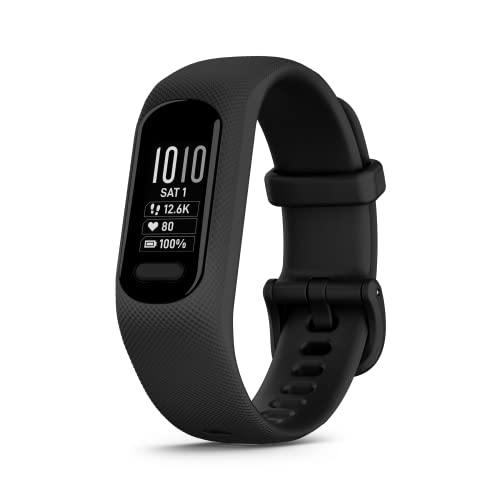
10. Garmin vivosmart 5: Best Slim Tracker for Garmin Watch Owners
Think of this as Garmin's quiet band. The vivosmart 5 has a small monochrome touchscreen, a button and no GPS chip, but every stat it collects lands in Garmin Connect for free. Its workout heart rate is a strength for a band, too: The Quantified Scientist measured 0.87 correlation with a chest strap on indoor rides.
Its best job is nights. Say your Garmin watch feels like a brick on your wrist at bedtime. Swap to the vivosmart 5, and your sleep score, Body Battery and morning report are waiting when you wake. Garmin rates up to 7 days per charge, or about 3 to 4 with all-day Pulse Ox on. It comes in small-medium and large, and quick text replies work only on Android.
The age shows, though. It dates from 2022, runs and walks need the phone for GPS, and Tom's Guide saw a 5-mile run read 5.2. In 2026, owners on Garmin's forums report battery roughly halving after software 3.32, with some charging daily. Would we buy it today? Only as a Garmin sleep band. For newer Garmin training data, the Garmin Cirqa (#8) is the better band.
Best for: Buyers who refuse subscriptions and Garmin owners who want a slim band for nights
Skip it if: You want Garmin's Training Readiness and newer hardware. The Garmin Cirqa (#8) is the better pick.
Pros
- No subscription: all Garmin Connect data is free
- Accurate sleep detection and handy morning report
- Workout heart rate better than most bands
- Physical button and bigger, easier-to-tap screen
- Swappable bands; small-medium and large sizes
- Incident detection and LiveTrack safety features
Cons
- No built-in GPS; phone must come along for maps
- Monochrome screen is hard to read mid-workout
- No altimeter, so no stair or floors tracking
- No contactless payments or ECG
- 2026 owner reports of battery drain after firmware 3.32
- Hardware dates from 2022
Hands-on reviews behind this pick
- DC Rainmaker
Show the verdict
Better than the Vivosmart 4 in every way, with a strong optical sensor for workouts, but a cautious, minor update that rivals with color screens, GPS and payments beat on nearly everything else.
- Tom's Guide
Show the verdict
A good, light everyday tracker with free, deep data in Garmin Connect and a welcome new button, but its small mono screen and lack of onboard GPS leave it behind GPS-equipped rivals for runners.
- TechRadar
Show the verdict
A lean, data-first tracker that puts a lot of insight on the wrist and in a free app; it looks plain and has no onboard GPS, but for daily wellbeing and recovery it is still a good buy.
Best fitness trackers buying guide for 2027
Should you get a fitness band, a screenless tracker, a ring or a watch?
Decide what you want to see on your wrist, because that sorts this list fastest. A band with a screen shows steps, time and alerts at a glance and lasts about a week or more: the Fitbit Edge, Xiaomi Smart Band 11, Fitbit Inspire 3 and Garmin vivosmart 5. Screenless bands like the Fitbit Air and Garmin Cirqa put everything in the app, so nothing glows at night.
A ring goes further. The Oura Ring 5 leaves your wrist bare, but its best insights need a membership. And a watch, like the Garmin vivoactive 6, Amazfit Active 3 Premium or Apple Watch SE 3, trades more frequent charging for a bigger screen on runs. If you want a Fitbit that's easy to read on a bigger wrist, see Fitbits with bigger screens for larger wrists, and if you swim, we picked out the trackers that count laps in the pool.
Which fitness trackers work with iPhone and which with Android?
Almost everything here works with both, with one big exception. The Apple Watch SE 3 needs an iPhone 11 or later on iOS 27 and won't pair with Android at all. So if you might switch phones, skip it.
The Fitbit Edge, Air and Inspire 3 need iOS 16.4 or Android 11 and later, plus a Google Account and the Google Health app. Garmin's vivoactive 6, vivosmart 5 and Cirqa work with either phone through Garmin Connect, but quick text replies on the vivoactive 6 and vivosmart 5 work only on Android. The Xiaomi Smart Band 11 needs iOS 14 or Android 8, the Amazfit Active 3 Premium iOS 14 or Android 7, and the Oura Ring 5 works with both.
Quick match: on an iPhone and fine charging daily, get the SE 3. Want a week per charge on any phone? Get the Fitbit Edge.
Do you need built-in GPS in a fitness tracker?
Only if you run, ride or hike without your phone. A tracker with built-in GPS maps your route on its own; one with connected GPS borrows your phone's, so the phone has to come along. And connected GPS isn't always accurate: Mike O'Brien saw the Cirqa overstate distance by up to about 10%, and Tom's Guide's 5-mile run on the vivosmart 5 read 5.2.
Built-in GPS on this list: the Fitbit Edge, Garmin vivoactive 6, Amazfit Active 3 Premium and Apple Watch SE 3. Only the Amazfit adds free offline maps with turn-by-turn directions, which helps on new trails or trips.
The Xiaomi Smart Band 11, Fitbit Inspire 3, vivosmart 5 and Cirqa rely on your phone, and the Fitbit Air and Oura Ring 5 have no GPS at all. If you walk with your phone anyway, save the money and skip it.
How much battery life should a fitness tracker have?
Aim for at least five days, so the tracker doesn't skip nights while it charges. Sleep data is the first thing you lose with a short battery, and it's often why people buy a tracker at all.
In real use, the Fitbit Inspire 3 runs about 10 days, the Amazfit Active 3 Premium 8 to 10, the Fitbit Edge about 8, and the Xiaomi Smart Band 11 roughly a week with the always-on screen by day. The Fitbit Air, Oura Ring 5 and Garmin Cirqa land around 5 to 8 days. The Garmin vivoactive 6 gets about 4 days with its screen always on, and the Apple Watch SE 3 needs charging daily.
Two habits stretch any tracker: turn off the always-on display, and top up during your shower. The Edge and Air get about a day from five minutes on the cable.
Which fitness trackers lock features behind a subscription?
None of these trackers need a subscription for core tracking, but two brands push one. Fitbit's core data is free on the Edge, Air and Inspire 3, while Google Health Premium adds the AI Coach, custom plans and some trend reports, with a three-month trial on the Edge and Air. Oura's membership is technically optional, but without it the Ring 5 shows only its Readiness, Activity and Sleep scores.
Everyone else gives you the lot. Garmin Connect is free for the vivoactive 6, Cirqa and vivosmart 5, with an optional Connect+ plan for extras like structured workouts on the Cirqa. Amazfit's Zepp app and Xiaomi's Mi Fitness charge nothing, and the Apple Watch SE 3 needs no plan unless you buy the cellular model.
So if fees are a deal-breaker, the Fitbit Edge, Garmin vivoactive 6 and Xiaomi Smart Band 11 are safe buys.
Best fitness trackers: frequently asked questions
What is the best fitness tracker?
For most people, it's the Fitbit Edge: built-in GPS, an altimeter, a bright 1.3-inch screen and about a week per charge, with core tracking free on iPhone or Android. Runners who want Garmin's coaching should get the Garmin vivoactive 6, and iPhone owners who can charge daily should get the Apple Watch SE 3.
Do fitness trackers need a subscription?
Not for core tracking on this list. Garmin, Amazfit, Xiaomi and Apple charge nothing for your data. Fitbit's Google Health Premium is optional and adds the AI Coach and some trend reports. The Oura Ring 5 is the exception in practice, since its membership unlocks most insights. To avoid fees completely, buy the Garmin vivoactive 6 or Xiaomi Smart Band 11.
Is a fitness tracker or a smartwatch better for me?
Get a tracker if you mainly want steps, sleep and heart rate with about a week per charge; the Fitbit Edge is our pick. Get a watch-style tracker if you want a bigger screen, coaching or Apple's apps: the Garmin vivoactive 6 for training on any phone, or the Apple Watch SE 3 if you carry an iPhone and charge daily.
Which fitness tracker works best with an iPhone?
The Apple Watch SE 3, if you're happy to charge it every day. Its heart rate nearly matched a chest strap, it has built-in GPS and it works with Apple's health apps. If you'd rather not charge daily, the Fitbit Edge lasts about a week on iPhone, and the Garmin vivoactive 6 about four days, though it can't send text replies on iOS.
Do I need built-in GPS in a fitness tracker?
Only if you run, ride or hike without your phone. Connected GPS borrows the phone's signal, so it has to come along. For phone-free routes, buy the Fitbit Edge or Garmin vivoactive 6; for offline maps with turn-by-turn directions, the Amazfit Active 3 Premium. Walk with your phone anyway? The Xiaomi Smart Band 11 is enough.
