
The 10 Best Turntables for Vinyl in 2027
Records sounding smaller than the stream? Blame the deck. We weighed sound, speed and isolation to match the best turntables for vinyl in 2027 to you.

Affiliate Disclosure: As an Amazon Associate, we may earn a commission from qualifying purchases, and it never changes our picks.
Our picks at a glance

10.0/10Score

$799.99
as of Nov 12, 2026, 12:32 UTC

9.6/10Score
$799.00
as of Nov 12, 2026, 12:32 UTC
9.3/10Score
$549.00
as of Nov 12, 2026, 12:32 UTC

9.1/10Score
$549.99
as of Nov 12, 2026, 12:32 UTC

9.0/10Score
$599.00
as of Nov 12, 2026, 12:32 UTC

8.8/10Score
$999.00
as of Nov 12, 2026, 12:32 UTC

8.7/10Score
$399.99
as of Nov 12, 2026, 12:32 UTC

8.5/10Score
$899.00
as of Nov 12, 2026, 12:31 UTC

8.4/10Score
$349.00 $449.00 Save 22%
as of Nov 12, 2026, 12:32 UTC

7.9/10Score
$1,099.00 $1,299.00 Save 15%
as of Nov 12, 2026, 12:31 UTC
Product prices and availability are accurate as of the date/time indicated and are subject to change. Any price and availability information displayed on Amazon.com at the time of purchase will apply to the purchase of this product.
How we rank best turntables for vinyl?
Sound quality comes first, because you're upgrading to hear more detail, scale and silence between the notes on a good stereo. Speed and isolation come next: a steady platter keeps piano from wavering, and a deck that ignores footsteps won't skip mid-chorus. Then the cartridge upgrade path, since a removable headshell and adjustable arm let the deck grow with your collection and treat your records gently. Design and build matters at this level, where a heavy platter and stiff arm last for decades. Value closes it out, counting the phono stage many of these decks still need.
 Sound Quality40%
Detail, scale and a quiet background are the whole point of a sound-first deck on a good stereo.
Speed and Isolation20%
Speed and Isolation20%Steady speed keeps piano and vocals from wavering, and good isolation stops footsteps and speakers from causing skips.
Cartridge Upgrade Path15%
Cartridge Upgrade Path15%A removable headshell, adjustable arm and good stylus options let the deck improve with your collection and protect your records.
 Design and Build15%
A heavy platter, stiff tonearm and solid plinth are what you pay for at this level, and they last for decades.
 Value10%
Many sound-first decks need a separate phono stage, so the full cost should still beat the alternatives.
Best turntables for vinyl compared
Swipe sideways to see every spec.
| Product | Score | Drive Type | Speeds | Operation | Preamp |
|---|---|---|---|---|---|
| 10.0 | Belt drive, servo DC motor, 4.1 lb acrylic platter, dual plinth | 33 1/3, 45 and 78 RPM via speed switch | Manual with switchable auto-stop; no auto lift or return | None; needs a phono preamp or amp with phono input | |
| 9.6 | Belt drive, damped die-cast aluminum platter | 33 1/3 and 45 RPM, electronic switch under plinth | Manual | None; needs a phono stage or phono input | |
| 9.3 | External belt drive, grooved acrylic platter | 33/45 RPM, electronic speed knob | Manual, with cue lever | Optional built-in Pluto 2, bypassable | |
| 9.1 | Belt drive, servo DC motor, 3 lb acrylic platter | 33 1/3 and 45 RPM via speed knob (no 78) | Manual with switchable auto-stop; arm is lifted by hand | None; needs a phono preamp or amp with phono input | |
| 9.0 | Direct drive DC motor, die-cast aluminum platter | 33 1/3, 45 and 78 RPM (78s need a 78 stylus) | Fully manual, cue lever | Built-in switchable MM/MC phono preamp | |
| 8.8 | Belt drive, speed-sensor DC servo motor, acrylic platter | 33 1/3 and 45 RPM (no 78) | Fully manual, cue lever | Built-in switchable MM/MC phono preamp | |
| 8.7 | Belt drive, servo-controlled DC motor, aluminum platter | 33 1/3 and 45 RPM via speed knob (no 78) | Manual with switchable auto-stop; no auto lift or return | None; needs a phono preamp or amp with phono input | |
| 8.5 | Belt drive, DC motor | 33 1/3, 45 and 78 RPM | Semi-automatic: auto tonearm lift and stop at record end | Built-in switchable MM phono EQ | |
| 8.4 | Direct drive, DC servo motor, aluminum platter | 33 1/3, 45 and 78 RPM, with pitch control | Fully manual, cue lever | Built-in switchable phono preamp | |
| 7.9 | Belt drive with optical speed control | 33 1/3, 45 and 78 RPM | Fully automatic or manual, plus app control | Built-in, switchable |
1. Fluance RT87 Reference: Best Turntable for Vinyl Overall
If you've got a phono stage and want the biggest step up in sound, this is the deck we'd buy. It sounds lively, wide and detailed, with bass that's there without taking over. The carbon fiber arm, 4.1 lb acrylic platter and 0.06% wow and flutter feel well above its class.
Say you're hosting on a Saturday night, volume up, friends dancing on a wood floor. The dual plinth puts the motor and feet on one layer and the platter and arm on another, so the stylus doesn't twitch. It plays 78s too, with a suitable stylus. You get a bubble level and a VTA wrench, but no 45 adapter.
But setup asks for patience. Take out the transit screws first or it will skip, then level the feet and balance the arm, and the hanging anti-skate weight is fiddly. Auto-stop halts the platter but leaves the stylus in the run-out. It's new for 2026, so there's no long owner track record yet, though a two-year warranty covers it. Worth it? If you'll give it an evening of setup, yes. Want the phono stage built in? The Audio-Technica AT-LP7X (#6) has one.

Best for: Collectors and upgraders with a phono stage who play records near foot traffic or speakers

Skip it if: You have no phono input and want setup done in minutes. The Audio-Technica AT-LP7X (#6) is the better pick.
Pros
- Wide, detailed sound with a big soundstage
- Dual plinth shrugs off bumps and footfalls
- Carbon fiber arm with adjustable VTA
- Choice of Ortofon 2M Blue or AT-VM95ML cartridge
- Heavy acrylic platter and premium build
- Plays 33, 45 and 78 RPM without moving the belt
Cons
- No built-in phono preamp
- Hanging anti-skate weight is fiddly
- Setup and fine-tuning take time
- Transit screws must come out before it sounds right
- Thin belt and flimsy power adapter
- No 45 adapter in the box
Hands-on reviews behind this pick
- Tom's Guide
Show the verdict
A five-star deck and incredible value: it looks and sounds far pricier than it is, with a lively, wide, detailed sound and a dual plinth that truly kills vibration; only the anti-skate irritates.
- TechRadar
Show the verdict
Sounds glorious once dialed in, with sweet, spacious analog sound and a heavy, sturdy build; setup takes patience and there is no preamp, so it is a step-up deck rather than a first one.
- Channel 33 RPM
Show the verdict
Fluance knocked it out of the park: once the transit screws are out it holds speed, slays vibrations and sounds big and musical; the thin belt and flimsy power adapter are the only nitpicks.
2. Pro-Ject Debut EVO 2: Best Carbon-Arm Turntable for Detail
Here's the deck for listeners who live for voices and piano. It's lively and detailed with a lovely midrange, and the build explains why: an 8.6-inch one-piece carbon fiber arm on an aluminum bearing block, plus a heavy, damped die-cast platter that doesn't ring.
Picture a quiet ballad with long, held piano notes. StereoNET's strobe showed a steady 33.3 RPM with no audible drift or rumble, so those notes don't waver and the gaps between them stay silent. Switching to 45 is a rocker switch under the plinth, not a belt swap. You get a felt mat, a single adapter and a grounded phono cable, and setup takes minutes. Later, a better power supply or sub-platter lifts the sound noticeably.
But it's fully manual, so the stylus keeps riding the run-out if you walk away. There's no preamp, and the motor groans a little on start-up. Reviews split on whether the stock cartridge sounds bright or sweet, so make it your first upgrade if your system already leans bright. So would we buy it? With a phono stage and an upgrade plan, yes. Want the arm to lift by itself? The Denon DP-500BT (#8) does that.
Best for: Hi-fi owners with a phono input who love voices and piano and plan to upgrade over time
Skip it if: You want the arm to lift and the platter to stop at the end of a side. The Denon DP-500BT (#8) is the better pick.
Pros
- Lively, detailed sound with a lovely midrange
- Stiff one-piece carbon fiber tonearm
- Electronic speed change, no belt swapping
- Rock-steady speed and very low rumble
- Ten finishes at no extra cost
- Clear upgrade path (sub-platter, PSU, cartridge)
Cons
- No built-in phono preamp
- Fully manual, no auto stop
- Audible motor start-up noise
- Stock cartridge can sound a bit bright or coarse
- No arm clip on the rest
- No USB or Bluetooth
Hands-on reviews behind this pick
- What Hi-Fi?
Show the verdict
A friendly, enthusiastic deck with a fluid delivery and a sweet, delicate way with voices; Rega's rival is more precise, but the Evo 2 is a solid recommendation and upgrades lift it further.
- StereoNET
Show the verdict
A winner with outstanding value: fast, lively and lean, with rock-steady speed and none of the rumble or motor noise of lesser decks, though the stock cartridge lacks some refinement.
- Tom's Guide
Show the verdict
Excellent, well-isolated sound and quality parts that feel like a pricier deck; quick to set up, but purely manual, with no USB or Bluetooth and a motor that groans at start-up.
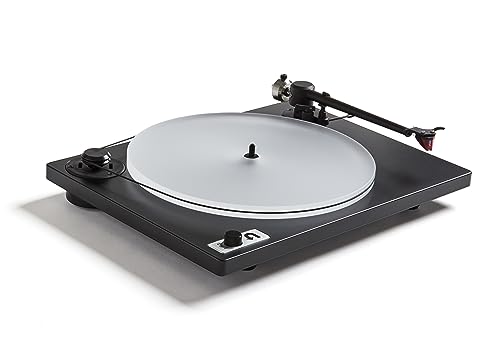
3. U-Turn Audio Orbit Special (Gen 2): Best Turntable for Collectors Who Play 45s
So you play singles as often as albums? This is the manual deck that makes that painless. The knob on the front switches 33 and 45 and doubles as the power switch, and the grooved acrylic platter holds the one-piece silicone belt in place. The sound is clear, quiet and dynamic, with the Ortofon 2M Red's elliptical stylus in the groove.
Imagine you're digging through your collection to build a mixtape, a 45 here, an album track there. You turn the knob between records and keep going. The arm, cartridge alignment and cue lever come ready, so setup is about 10 minutes of counterweight, platter and belt. When the stylus wears, a 2M Blue stylus slots onto the same body for more detail, and a three-year warranty covers the deck.
But you give up adjustment. Anti-skate is fixed, there's no arm-height setting, and the counterweight is stiff to tweak. Next to the Pro-Ject (#2) it's a touch less energetic, and the lid can drop shut on your fingers. Is it for you? For LPs and 45s with little fuss, yes. Want auto-stop and a removable headshell? Try the Fluance RT83 (#7).
Best for: Collectors who play LPs and 45s and want a set-and-forget manual deck
Skip it if: You want auto-stop and a removable headshell for cartridge swaps. The Fluance RT83 (#7) is the better pick.
Pros
- Excellent, dynamic sound with the Ortofon 2M Red
- Electronic speed knob, no belt swapping
- Quiet one-piece magnesium tonearm
- Acrylic platter and cue lever included
- Optional built-in preamp that reviewers rate well
- 3-year warranty and US-based support
Cons
- No auto stop
- Counterweight is hard to adjust
- Dust cover can fall shut
- Some belt noise at start-up
- No adjustable anti-skate
- Preamp must be chosen at purchase
Hands-on reviews behind this pick
 Digital Trends
Show the verdict
The Gen 2 upgrades make it a near-perfect midrange turntable and a joy to use, with gorgeous, quiet, detailed sound and a handy speed dial; the only real miss is the lack of auto stop.
- Tom's Guide
Show the verdict
A very special deck with features from pricier turntables, punchy and revealing sound, great build and a strong optional preamp; a fiddly counterweight, wobbly lid and belt noise keep it off perfect.
- Audio Advice
Show the verdict
After time with an early Orbit 2 Special, the dealer says the new belt and speed control improve timing and the longer magnesium arm tracks hard passages better: a much better value than before.
4. Fluance RT85N: Best Warm-Sounding Turntable for Vinyl
We'd pick this one for warmth. The Nagaoka MP-110 sounds full, rich and relaxed, which is what many of us want when a good stereo still makes records feel thin. Behind it sit a 3 lb acrylic platter, a mass-loaded MDF plinth and a motor whose speed is checked 500 times a second.
Say you put on a favorite orchestral LP that always sounded smaller than the streaming version. Here the cellos and basses have weight, and turning it up doesn't bring feedback: Digital Trends found it quieter than a direct-drive AT-LP120 at high volume. A knob handles 45s, the 45 adapter is in the box, and setup takes 10 to 15 minutes.
Here's the catch. That warmth can tip into heavy bass that blurs detail on some systems, and the arm height is fixed for this cartridge, so swaps are limited. Auto-stop halts the platter, but you still lift the arm, and you'll need a phono stage. Should you get it? If you like a rich sound, yes. Prefer crisp detail? Go with the Pro-Ject Debut EVO 2 (#2).
Best for: Listeners who like a warm, rich sound and have a phono stage
Skip it if: You want crisp, neutral detail rather than warmth. The Pro-Ject Debut EVO 2 (#2) is the better pick.
Pros
- Nagaoka MP-110 cartridge comes fitted and aligned
- Heavy acrylic platter and solid MDF plinth
- Quiet and stable; little feedback at high volume
- Speed knob, no belt-swapping for 45s
- Switchable auto-stop saves the stylus
- Height-adjustable isolation feet
Cons
- No built-in phono preamp, Bluetooth or USB
- Bass-heavy tuning can sound uneven
- Glossy finish shows fingerprints and dust
- Arm doesn't lift itself at the end of a side
- Tracking-force numbers are hard to read
Hands-on reviews behind this pick
- Digital Trends
Show the verdict
A great-sounding mid-range deck: full, faithful sound from an outstanding Nagaoka cartridge, a quiet stable build and handy auto-stop, but no preamp, Bluetooth or USB.
- SoundStage! Access
Show the verdict
A worthy alternative to the 2M Blue RT85: lush, deep and broad sound with a reliable auto-stop, though highs are slightly muted and the stylus needs frequent cleaning.
- TechRadar
Show the verdict
Well specified and simple to set up, with a big soundstage, but the bass dominates and blurs detail, so several price rivals sound more even and convincing.
5. Audio-Technica AT-LP5X: Best Direct-Drive Turntable for Steady Speed
This is the steady-hands pick. A direct-drive motor spins the platter up almost at once and holds it there, and the sound is composed, controlled and detailed, with precise imaging that lets you place each player.
Put on an ambient record built from long, held synth drones, where any speed wobble would be obvious. Here they hold pitch from the first minute to the last. Inside is a switchable MM/MC phono stage that held its own against a far pricier external stage in What Hi-Fi?'s listening, so you can plug straight into an amp without a phono input. USB records your LPs to a computer with free software, and setup takes about five minutes with the AT-VM95E already on its headshell.
But the bass is a little soft and the scale a bit limited, and the plastic plinth sounds hollow if you tap it. It's fully manual, the warranty is one year, and 78s need a stylus sold separately. Our call? For steady speed and flexibility in one box, buy it. Want more punch? The U-Turn Orbit Special (#3) is more dynamic.
Best for: Upgraders from entry decks who want steady speed and a phono stage in one deck
Skip it if: You want more punch and scale and can add a phono stage. The U-Turn Orbit Special (#3) is the better pick.
Pros
- Composed, detailed, solid-sounding playback
- Direct drive: quick start and steady speed
- MM/MC phono stage and USB recording
- Sets up in about five minutes
- VM95E stylus upgrades are easy
- Plays 78s with the right stylus
Cons
- Bass a little soft; less scale than rivals
- Plastic plinth sounds hollow when tapped
- Tonearm clamp feels flimsy to some owners
- Fully manual, no auto-lift
Hands-on reviews behind this pick
- What Hi-Fi?
Show the verdict
A refined, well-built and easy deck with a composed, robust, detailed sound and a phono stage good enough to keep when you upgrade; worthy of any shortlist, though rivals are tough.
- Trusted Reviews
Show the verdict
A great mix of performance, convenience and features: it slots into almost any system, plays almost any record, makes decent digital copies, and sounds organized and controlled, if short on scale.
- TechRadar
Show the verdict
From a brief preview listen, a promising step up for new vinyl fans: wide, detailed sound, USB recording, 78 RPM support and a preamp built in, with little to fault beyond the lack of Bluetooth.
6. Audio-Technica AT-LP7X: Best Turntable with an MM/MC Phono Stage
This is the build-quality pick for systems without a phono input. A 40 mm MDF cabinet, a 20 mm acrylic platter and spring isolation feet make it feel solid, and the built-in phono stage switches between MM and MC, which is rare at this level.
Take that expensive first pressing you've played a hundred times. You want the cartridge sitting at the right angle, and here you set VTA and anti-skate yourself, with a 16 g subcounterweight included for heavier cartridges. The AT-VM95E comes pre-fitted on a removable headshell, so setup is a few minutes: counterweight, anti-skate, two rear switches, play. A dial changes speed, with no belt to move.
And the sound is smooth, neutral and detailed with a sure sense of rhythm, but also a bit matter-of-fact. An external phono stage adds life the built-in one lacks. Is it worth the step up? If your system has no phono input, yes. Already own a good phono stage? The Pro-Ject Debut EVO 2 (#2) sounds livelier.
Best for: Analog upgraders whose system has no phono input and who want to try MM and MC cartridges
Skip it if: You already own a good phono stage and want a livelier sound. The Pro-Ject Debut EVO 2 (#2) is the better pick.
Pros
- Even, detailed sound with good rhythm
- MM/MC phono stage built in
- Quick setup with pre-fitted VM95E cartridge
- Solid MDF plinth and isolation feet
- Easy stylus upgrades across the VM95 range
- Adjustable VTA and extra counterweight
Cons
- Sound is a little laid-back and uninvolving
- Built-in phono stage is only average
- No 78 RPM, no USB or Bluetooth
- Fully manual: no auto-lift or auto-return
Hands-on reviews behind this pick
- TechRadar
Show the verdict
Well specified, simple to set up and built to last, with balanced, detailed and rhythmic sound, but its laid-back character and average phono stage make it less of an all-rounder than it could be.
- Trusted Reviews
Show the verdict
Excellent spec, easy setup and bombproof build with even-handed, insightful sound, but it needs more animation to rival the best; it makes most sense in a system without its own phono stage.
7. Fluance RT83 Reference: Best Value Turntable for Vinyl Sound
Want the cartridge upgrade without the premium price? This is our value pick. The Ortofon 2M Red is the star, with a natural tonal balance and an unusually wide soundstage, and SoundStage! Access measured 33.4 and 45.05 RPM, about as close to exact as far pricier decks get.
You finally find a clean used copy of an album you grew up with and play it the minute you get home. Instruments spread wider than they did on your old deck, and small details step forward. It's simple to live with: a knob for off, 33 and 45, a cue lever, auto-stop, and a real walnut veneer that looks good on a sideboard. The box includes a 45 adapter, and the warranty runs two years.
Its weak spot, though, is isolation. A hard thump on the rack came straight through the speakers, so keep it off the shelf your speakers share. Auto-stop also missed records whose run-out ends early, and there's no preamp. So, buy or pass? On a solid stand with a phono input, buy. Near foot traffic? Step up to the Fluance RT87 (#1).
Best for: Stereo owners with a phono input who want a better cartridge for less
Skip it if: Your turntable shares a shelf with speakers or sits near foot traffic. The Fluance RT87 (#1) is the better pick.
Pros
- Ortofon 2M Red gives a wide, detailed soundstage
- Speed measured close to exact
- Auto-stop and simple speed knob are easy to use
- Real wood veneer and solid build
- Removable headshell invites upgrades
Cons
- No built-in phono preamp
- Picks up hard knocks on the shelf
- Tonearm and platter are the weak links
- Auto-stop missed some records with early run-outs
- Platter rings without its mat
Hands-on reviews behind this pick
- SoundStage! Access
Show the verdict
A solid-value deck with fine, wide-staged sound and handy auto-stop that sits at or near the top of its class; it is sensitive to knocks, so give it its own sturdy shelf.
- The Audiophile Man
Show the verdict
A well-made, easy lifestyle deck whose 2M Red brings real maturity over the RT81, with strong bass and dynamics; a Rega RP1 still wins on precision thanks to its better tonearm.
- Turntable Guy
Show the verdict
A well-built basic manual deck with a decent 2M Red, stable motor and good suspended feet; the platter is ringy and the arm merely serviceable, but it earns a pass and beats a Rega Planar 1 on build.
8. Denon DP-500BT: Best Semi-Automatic Turntable for Vinyl
Convenience usually costs you sound, but not much here. Wired, it's smooth and balanced, the die-cast platter and 13.6 lb build feel solid, and the switchable phono stage means it plugs into almost anything. Over Bluetooth, aptX Adaptive and aptX HD keep it close to the wired sound, with no dropouts on Denon Home speakers or aptX headphones.
Here's a typical evening: you drop the needle, the baby wakes up, and you're gone for half an hour. About 17 seconds after the music stops, the arm lifts and the platter stops, so the stylus isn't grinding away in the run-out. It plays 78s too, and the stock spherical stylus suits them. The twist-lock headshell makes a better cartridge a tool-free swap later.
Now the downsides. The stock stylus is good, not great, and an elliptical upgrade is a clear step up. The arm doesn't return to its rest, and restarting means turning the speed knob off and back on. Bottom line? If you use Bluetooth or often leave mid-side, buy it. Wired only? The Fluance RT83 (#7) gives more sound for less.
Best for: Vinyl fans who want top sound with some convenience and Bluetooth to wireless speakers
Skip it if: You only ever listen wired and want the most sound for the money. The Fluance RT83 (#7) is the better pick.
Pros
- Solid build with die-cast aluminum platter
- aptX Adaptive and aptX HD Bluetooth
- Arm lifts and platter stops at end of side
- Plays 78s as well as LPs and singles
- Switchable preamp; easy to bypass later
- Twist-lock headshell makes cartridge swaps easy
Cons
- Stock cartridge holds the deck back
- Arm lifts but does not return to its rest
- Stylus sits in the runout about 17 seconds
- No power button; speed knob doubles as power
- Wired-only rivals sound better for the money
- Matte black is the only finish
Hands-on reviews behind this pick
- eCoustics
Show the verdict
A gorgeous, well-built deck that sounds smooth and balanced and nearly as good as it looks; a strong pick for vinyl fans who want wireless, though wired rivals and better cartridges dig deeper.
- AV Nirvana
Show the verdict
A flexible, musically satisfying deck whose Bluetooth gets close to its wired sound with no dropouts; the semi-auto runout and restart are clunky, but newcomers will really like it.
- Future Audiophile
Show the verdict
A solid, premium-feeling deck with an organized, expansive sound and only a slight Bluetooth step down; the competent stock cartridge is the limit, so keen listeners will upgrade it.
9. Audio-Technica AT-LP120XUSB: Best Turntable for Archiving Your Vinyl
Think of this as the archivist's deck. A quartz-locked direct-drive motor holds speed, pitch control rescues off-speed pressings, and it plays 33, 45 and 78 RPM. The USB output is why it's here: it records straight to a computer with free software.
Got a rare pressing you'd rather not keep playing? Record it once over USB, save the file, and the original goes back in its sleeve. Recording is one-touch, but Louder caught a faint high-pitched whine in its USB files that wasn't there in normal playback, so listen back before you file one away. For playback, the arm is fully adjustable and the removable headshell takes better cartridges.
But setup is on you: balance the arm and set about 2 g of tracking force yourself, since the counterweight markings came out light. The body is mostly plastic, the platter rings a little without a better mat, and the built-in preamp and VM95E are only adequate. Right for you? To digitize a collection, yes. Want a quieter, better-sounding deck with USB? The AT-LP5X (#5) is the step up.
Best for: Collectors who want to digitize records and upgrade the cartridge later
Skip it if: You want a more composed sound and an MM/MC phono stage alongside USB. The Audio-Technica AT-LP5X (#5) is the better pick.
Pros
- Direct drive with steady, quartz-locked speed
- Plays 78s and has pitch control
- Built-in preamp plus USB recording
- Removable headshell for easy cartridge swaps
- Adjustable tracking force and anti-skate
- Detachable RCA cables
Cons
- Needs manual setup: counterweight and anti-skate
- Faint whine in USB recordings (Louder)
- Built-in preamp is only adequate
- Mostly plastic body; platter rings a little
- Fully manual: no auto return or stop
Hands-on reviews behind this pick
- Louder
Show the verdict
A remarkable, rock-steady direct-drive deck that sounds great even via its own preamp; only a faint whine in its USB recordings keeps it from top marks.
- TechGearLab
Show the verdict
Best for most people: clear, full sound close to the Pro-Ject Debut Carbon, very easy to use with pitch control and USB, though it skipped easily when the table was bumped.
10. Dual CS 529: Best Premium Automatic Turntable for Vinyl
If you want automatic play from a serious deck, this is the one. The automatics lift, cue, lower and return smoothly, with practically no drag on the record, and you can still play it by hand. A twin-gimbal aluminum arm, an Ortofon 2M Red, a damped subchassis and a five-year warranty make it a deck to keep.
Just inherited a stack of 78s? Fit Ortofon's 2M 78 stylus, switch speeds, and let the arm set down on each record by itself. The built-in phono stage is warm, slightly mellow and good enough to use, and aptX HD Bluetooth plus an app add start, stop and repeat from your phone. Setup takes about 15 minutes, with the belt pre-taped in place.
Speed is where it slips, though. SoundStage! Access measured wow well above Dual's own spec, and once it was audible. The 2M Red can also turn brittle on hot pressings, and the feet don't level. So who's it for? Anyone who wants hands-off play done right. Care most about sound for the money? The Fluance RT87 (#1) is the better buy.
Best for: Collectors who want hands-off automatic play from a quality deck, including 78s
Skip it if: You care more about sound for the money than automatic play. The Fluance RT87 (#1) is the better pick.
Pros
- Superb, low-drag fully automatic mechanics
- Ortofon 2M Red and twin-gimbal arm
- Plays 78s (with a 78 stylus)
- Built-in phono stage is better than most
- App control: start, stop, speed and repeat
- Five-year warranty
Cons
- Measured wow higher than Dual's spec
- 2M Red can sound bright on hot masters
- Bass a little light, staging somewhat shallow
- Feet aren't adjustable for leveling
- App is basic: start, stop and repeat only
Hands-on reviews behind this pick
- SoundStage! Access
Show the verdict
Superb, drag-free automatic mechanics, excellent build and one of the best built-in phono stages tested make this perhaps Dual's best automatic yet, despite wow figures above its spec.
- StereoNET
Show the verdict
A successful blend of slick, easy automatic operation and smooth, detailed sound with stable speed and clean tracking, though it never excels in one area and bass and drama are a touch light.
- PremiumHIFI in English
Show the verdict
Feels serious and solid, with refined automation and a cohesive, slightly warm, low-noise sound; the app is basic, but it is easy to recommend to music lovers and less demanding audiophiles.
Best turntables for vinyl buying guide for 2027
Does the cartridge matter more than the turntable for vinyl sound?
The cartridge makes the biggest change you can hear, but only on a turntable that holds speed and keeps vibration out. Its stylus is the one part touching the groove, so it decides how much detail and stereo width reach your speakers. The Ortofon 2M Red on the Fluance RT83 and U-Turn Orbit Special is a big reason those decks sound open and wide. On the Denon DP-500BT, swapping the stock spherical stylus for an elliptical one is a noticeable step up.
But a great cartridge on a wobbly deck still wobbles. That's why the arm matters too: a stiff arm like the Pro-Ject Debut EVO 2's carbon fiber tube, and a removable headshell like the AT-LP120XUSB's, let you upgrade later without replacing the deck. Want both done well from day one? The Fluance RT87 pairs a 2M Blue with the best arm and isolation here. For lighter listening and other budgets, see our top turntable picks at every price.
Is a built-in phono preamp worse than a separate one for vinyl?
Not always. A good built-in stage can be worth keeping, while an average one holds a fine deck back. A record's signal is tiny, so it needs a phono stage before your amp, and that stage is either in the deck, in your amp's phono input, or in a separate box.
That's why the Audio-Technica AT-LP5X's switchable MM/MC stage held its own against a far pricier external one, so it's the safest all-in-one buy. The Dual CS 529's is warm and good enough to use. The AT-LP7X's and AT-LP120XUSB's are only average, and an external stage adds life. Every switchable stage can be bypassed later, so you can upgrade without selling the deck.
Now the trap: the Fluance RT87, RT85N and RT83 and the Pro-Ject Debut EVO 2 have no phono stage at all. If your amp has a phono input, that's fine. If not, count a separate stage in your budget, or order the Orbit Special with its optional built-in one.
Belt drive or direct drive: which turntable is better for home listening?
Either can sound excellent at home, so pick by how you'll use it. Direct drive, as on the Audio-Technica AT-LP5X and AT-LP120XUSB, spins up almost at once and holds speed firmly. The AT-LP120XUSB adds quartz lock and pitch control, handy for 78s and off-speed pressings, and both record over USB.
Belt drive takes the other route, using the belt to keep motor vibration away from the platter, and most sound-first decks here use it. Speed can still be rock steady: the Pro-Ject Debut EVO 2 held 33.3 RPM on a strobe, and the Fluance RT87 is rated at 0.06% wow and flutter. The old belt-drive chore of moving the belt for 45s is gone on most of these, since the Orbit Special, Debut EVO 2, RT85N, RT83 and AT-LP7X all change speed with a knob, switch or dial.
If you'd like either type for less, we cover sound-first decks that cost under $500 in their own guide.
How do you keep a turntable from skipping or booming on a wood floor?
Buy a deck built to isolate vibration, then give it a solid, level home away from your speakers. On a springy wood floor, the Fluance RT87's dual plinth is the strongest answer here: the motor and feet sit on one layer and the platter and arm on another, so someone can dance right beside it without the stylus twitching. Take its transit screws out first, or it will skip.
After that, the Fluance RT85N's heavy acrylic platter and height-adjustable feet keep it quiet even when you turn it up. The cheaper Fluance RT83 is more sensitive: a hard thump on its rack came straight through the speakers, so don't put it on the shelf your speakers share. Placement matters for direct drive too, since even the AT-LP120XUSB can skip if the table takes a bump.
Last, level it. The Fluance decks come with a bubble level, while the Dual CS 529's feet don't adjust, so level the shelf instead.
How do you protect your vinyl records from wear on a turntable?
Set the tracking force and anti-skate correctly, keep the stylus fresh, and don't leave it sitting in the run-out. Most decks here ask you to balance the arm and set the force yourself. The AT-LP5X runs at 2.0 g with matching anti-skate, and the AT-LP120XUSB's counterweight markings came out light, so a cheap stylus scale is worth it.
And styli wear out, so budget for replacements: a Stylus 2M Red for the RT83, or a VM95 stylus for the Audio-Technica decks, where upgrades simply slide on. The adjustable VTA on the Fluance RT87 and AT-LP7X lets a better cartridge sit at the right angle.
Then there's the end of a side. Manual decks like the Debut EVO 2 and Orbit Special leave the stylus in the run-out until you lift it, and the Fluance auto-stop halts only the platter. The Denon DP-500BT lifts the arm for you, and the Dual CS 529 returns it. If that's the feature you want most, see automatic turntables that still sound like hi-fi.
Best turntables for vinyl: frequently asked questions
What is the best turntable for vinyl sound quality?
With a phono stage in your system, buy the Fluance RT87 Reference: a wide, detailed sound, a dual plinth that ignores footsteps and an arm with VTA adjustment. If voices and piano matter most, the Pro-Ject Debut EVO 2 is a close second. No phono input? Get the Audio-Technica AT-LP5X, whose built-in MM/MC stage is good enough to keep.
Does the cartridge matter more than the turntable?
The cartridge makes the biggest change you can hear, but only on a deck that holds speed and isolates vibration. So buy a turntable with a good cartridge and room to upgrade. The Fluance RT83 is the value way in, with an Ortofon 2M Red and a removable headshell. The Fluance RT87 gets both the cartridge and the deck right.
Will a cheap turntable damage my vinyl records?
Not if it's set up right. What protects your records is correct tracking force and anti-skate, a stylus you replace when it wears, and not leaving the stylus in the run-out. For a lower-cost deck that does this well, buy the Fluance RT83, with its Ortofon 2M Red and auto-stop. Want the arm to lift itself? The Denon DP-500BT does.
Is a built-in phono preamp worse than a separate one?
Not always. The Audio-Technica AT-LP5X's MM/MC stage held up against a far pricier separate one, so it's the deck we'd buy if your amp has no phono input. Built-in stages on the AT-LP7X and AT-LP120XUSB are only average, and an external stage adds life. Already own a phono stage? Skip the built-in kind and get the Fluance RT87.
Do I need to upgrade my speakers before my turntable?
Not if streaming already sounds good on your speakers and only records sound flat, because that points to the turntable. In that case, upgrade the deck first: the Fluance RT85N adds warmth and weight, and the Pro-Ject Debut EVO 2 adds detail. If streaming sounds thin on those speakers too, start with the speakers.


