
The 9 Best TVs for Bright Rooms in 2027
A 3,700-nit TV can still mirror your window back at you. We compared 23 expert reviews to rank the best TVs for bright rooms. Match one to your light.

Affiliate Disclosure: As an Amazon Associate, we may earn a commission from qualifying purchases, and it never changes our picks.
Our picks at a glance
Best TV for Bright Rooms Overall
TCL QM8L SQD-Mini LED (65-inch, 65QM8L)
Our top pick if daylight is your TV's main enemy. It hit about 3,700 nits on a 10% HDR window and stays bright enough in SDR to overcome glare, so a sunny afternoon film keeps its color. The catch: its screen still mirrors lamps and windows with a rainbow smear, so it suits rooms where light comes from the side. Check the 75 and 85-inch listings if your wall can take more screen.
9.9/10Score

$997.99 $2,499.99 Save 60%
as of Nov 26, 2026, 23:31 UTC
Best Value Matte TV for Bright Rooms
Hisense U7SG Mini-LED (65-inch, 65U7SG)
The value pick for rooms where windows face the screen. Its matte coating makes lamps and windows barely visible, and it measured about 2,866 nits on HDR highlights. Say your sofa sits in front of a sliding glass door: the glare patch that ruins glossy sets mostly disappears. The catch is a narrow viewing angle and some blur in fast action. Check the 75 and 85-inch sizes for bigger walls.
9.9/10Score
$797.99 $1,497.99 Save 47%
as of Nov 26, 2026, 23:31 UTC
Black Friday Deal
Best OLED for Bright Rooms
Samsung S90H OLED (65-inch, QN65S90HAEXZA)
Our OLED pick for sunny rooms. Its matte Glare Free screen nearly erases reflections, it reaches about 1,500 to 1,690 nits on HDR highlights, and color holds from wide angles. Picture watching from the kitchen island while light floods in behind you: the picture stays clean. The catch is no Dolby Vision and slightly lifted blacks in bright light. Compare the 55 and 77-inch listings too.
9.8/10Score
$1,397.99 $1,897.99 Save 26%
as of Nov 26, 2026, 23:31 UTC
Best Big-Screen TV for Very Bright Rooms
TCL X11L SQD-Mini LED (75-inch, 75X11L)
The brute-force answer for a huge, sunlit room. It's one of the brightest TVs ever measured, over 4,400 nits on a 10% window at max brightness, with barely any blooming. On a 75-inch wall facing a bank of windows, HDR still looks vivid at noon. The catches: reflections are dimmed but visible, motion blurs and the built-in sound is weak. It starts at 75 inches, so check the 85 and 98-inch listings.
9.6/10Score
$2,997.99
as of Nov 26, 2026, 23:31 UTC
Best Atmos-Speaker TV for Bright Rooms
Hisense U8QG Mini-LED ULED (65-inch, 65U8QG)
A 2025 set that still sells new and still punches hard. Highlights pass 4,000 nits and full-screen brightness reached about 733 to 853 nits, so a sunny morning news show stays vivid. Its Anti-Reflection Pro screen cut glare from overhead lights in one review, though lamps and windows still show. The 4.1.2 Atmos speakers are a bonus. Check the 75-inch listing if your room is large.
9.5/10Score
$899.99 $1,097.97 Save 18%
as of Nov 26, 2026, 23:31 UTC
Black Friday Deal
Best Mid-Range TV for Bright Living Rooms
TCL QM7L SQD-Mini LED (65-inch, 65QM7L)
The bright-room pick for buyers watching their budget. It measured 2,270 nits on a 10% HDR window and roughly 700 to 1,000 nits full-screen, so lunchtime shows don't look dim. Picture a family room with a skylight overhead: the picture holds up well. The catch is a glossy screen that shows mirror-like reflections in dark scenes. Sizes run from 55 to 98 inches, so check the one that fits your wall.
9.5/10Score
$847.99 $1,499.99 Save 43%
as of Nov 26, 2026, 23:31 UTC
Best Budget TV for Bright Rooms
Hisense U6SF Pro Mini-LED (65-inch, 65U6SF Pro)
The budget way to beat daytime glare. Its matte screen handles sun well, it hit 1,265 nits on HDR highlights, and color is very accurate, with a 1.58 Delta-E. Picture a rental with a big picture window and no curtains yet: the screen stays watchable. The catch is a very slow response time that blurs fast motion, and a red tint off-angle. It runs Fire TV, so make sure you're happy with Alexa.
9.2/10Score
$529.99 $1,099.99 Save 52%
as of Nov 26, 2026, 23:31 UTC
Black Friday Deal
Best OLED TV for Moderately Bright Rooms
LG C6 OLED evo (65-inch, OLED65C6PUA)
The pick for rooms that are bright by day but movie-dark at night. It reaches about 1,350 to 1,440 nits on HDR highlights, color is near-perfect out of the box, and the wide viewing angle suits a big sofa. The catch for sunny rooms is the glossy screen, which mirrors lamps and windows. Draw the curtains for films and it shines. Check the 55-inch listing if your room is smaller.
8.7/10Score
$1,299.98 $2,699.99 Save 52%
as of Nov 26, 2026, 23:31 UTC
Best Cheap TV for Rooms With Indirect Light
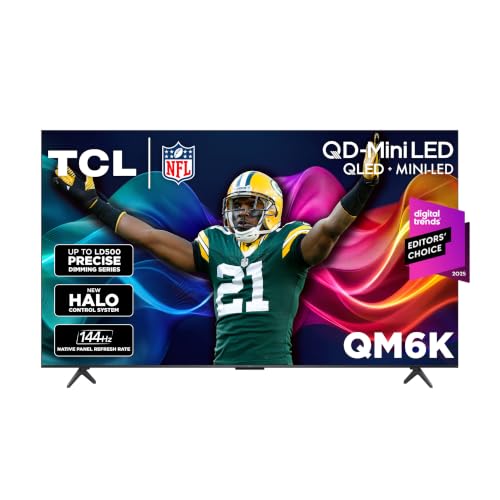
TCL QM6K QD-Mini LED (65-inch, 65QM6K)
The cheapest sensible choice when your light comes in from the side, not straight at the screen. It measured 688 nits in SDR and looked great in a sunny office in Tom's Guide's review, and contrast is deep for the money. The catch: the 50 to 75-inch screens are glossy, and HDR highlights lack punch. The 85 and 98-inch sizes add a matte finish, so check those listings for a big screen.
8.0/10Score
$597.99 $799.99 Save 25%
as of Nov 26, 2026, 23:31 UTC
Product prices and availability are accurate as of the date/time indicated and are subject to change. Any price and availability information displayed on Amazon.com at the time of purchase will apply to the purchase of this product.
How we rank best TVs for bright rooms?
We weigh daytime brightness first, because full-screen and HDR brightness are what keep a picture from washing out when the sun is up. Glare handling comes next, since a matte or low-reflection screen matters most when a window faces the TV. Value follows, because bright sets run from budget to flagship. Viewing angle counts in open-plan rooms where you watch from the kitchen or a side chair. Design and build covers sizes, ports, sound and how the set fits your wall. That puts the TCL QM8L first.
Daytime Brightness30%
Brightness is what keeps color and contrast from turning grey when sun fills the room.
Glare Handling25%
A matte or low-reflection screen stops windows and lamps from sitting on top of the picture.
Value20%
Bright sets run from budget to flagship, so you should only pay for the light your room really has.
Viewing Angle15%
Open-plan rooms mean watching from the kitchen or the end of the sofa, where weak panels fade.
Design and Build10%
Sizes, stand, ports and built-in sound decide whether the set fits your wall and your setup.
Best TVs for bright rooms compared
Swipe sideways to see every spec.
| Product | Score | Panel | Sizes | Refresh Rate | HDR |
|---|---|---|---|---|---|
| 9.9 | SQD-Mini LED, WHVA 2.0 Ultra VA, up to 4,000 zones | 65, 75, 85 and 98 inches | 144Hz native, 4x HDMI 2.1, VRR 48-288Hz | Dolby Vision IQ, HDR10+, HDR10, HLG | |
| 9.9 | Mini-LED VA LCD, full-array dimming, matte anti-glare screen | 55, 65, 75, 85, 100, 116 inches | 165Hz native at 4K, 330Hz at 1080p, 4x HDMI 2.1 | Dolby Vision, HDR10+, HDR10+ Adaptive, HDR10, HLG | |
| 9.8 | WOLED, matte Glare Free (48 and 77 in use RGB tandem OLED) | 42, 48, 55, 65, 77, 83 in | 165Hz native, 4K 165Hz on all four HDMI 2.1 ports | HDR10, HDR10+ (no Dolby Vision) | |
| 9.6 | SQD-Mini LED, WHVA 2.0 Ultra, up to 20,736 zones | 75, 85 and 98 inches | 144Hz native, 4x HDMI 2.1, VRR | Dolby Vision IQ, HDR10+, HDR10, HLG | |
| 9.5 | Mini LED ULED QLED, Anti-Reflection Pro screen | 55, 65, 75, 85 and 100 inches | 165Hz native; 1080p 288Hz; 3x HDMI 2.1 plus USB-C | Dolby Vision IQ, HDR10+, HDR10, HLG | |
| 9.5 | SQD-Mini LED, HVA 2.0 Pro panel, up to 2,100+ zones | 55, 65, 75, 85 and 98 inches | 144Hz native; 2 of 4 HDMI ports are HDMI 2.1 | Dolby Vision, HDR10+, HDR10, HLG | |
| 9.2 | Mini-LED VA LCD, full-array dimming, matte anti-reflection | 55, 65, 75, 85, 100 inches | 144Hz native, 2x HDMI 2.1 (4K 144Hz), 240Hz at 1080p | Dolby Vision, Dolby Vision IQ, HDR10+, HDR10+ Adaptive, HDR10, HLG | |
| 8.7 | WOLED, glossy (77 and 83 in are the C6H with RGB tandem OLED) | 42, 48, 55, 65 in (C6); 77, 83 in (C6H) | 165Hz native, 4K 165Hz on all four HDMI 2.1 ports | Dolby Vision, HDR10, HLG (no HDR10+) | |
| 8.0 | QD-Mini LED LCD, full-array local dimming (500 zones at 65in) | 50, 55, 65, 75, 85, 98 inches | 120Hz native, 144Hz VRR (2x HDMI 2.1), 288Hz at 1080p | Dolby Vision IQ, HDR10+, HDR10, HLG |
1. TCL QM8L SQD-Mini LED (65-inch, 65QM8L): Best TV for Bright Rooms Overall

- Daytime Brightness
- 9.5
- Glare Handling
- 7.6
- Value
- 8.8
- Viewing Angle
- 6.5
- Design and Build
- 8.6
$997.99 $2,499.99 Save 60%
as of Nov 26, 2026, 23:31 UTC
Key specs 5
- Panel
- SQD-Mini LED, WHVA 2.0 Ultra VA, up to 4,000 zones
- Sizes
- 65, 75, 85 and 98 inches
- Refresh Rate
- 144Hz native, 4x HDMI 2.1, VRR 48-288Hz
- HDR
- Dolby Vision IQ, HDR10+, HDR10, HLG
- Smart OS
- Google TV 14 with Gemini
For most bright living rooms, the QM8L is the TV we'd buy. Brightness is what beats daylight, and this set has more than nearly anything near its price: Tom's Guide measured 3,719 nits on a 10% HDR window, and CalebRated saw 804 nits across a full white screen. Local dimming still keeps blacks deep, with little blooming.
Picture a room with a big window on the side wall and the blinds up at 2 p.m. Brightness carries the picture there, so an afternoon movie keeps its color instead of turning milky. Setup is Google TV with a backlit voice remote, and four HDMI 2.1 ports take every console you own.
Here's the catch. The glossy screen still shows lamps and windows clearly, with a rainbow smear around bright lights, and colors fade fast from the sides. Owners on AVS Forum report firmware updates steadily improving the picture, though some still set an audio delay to fix lip sync. So would we buy it? If your windows sit beside the TV, yes. If they face it, the matte Hisense U7SG (#2) is safer.
Best for: Bright living rooms where windows sit beside or behind the seating, not opposite the screen.
Skip it if: A window faces the screen head-on. The Hisense U7SG (#2) has a matte screen that nearly erases reflections.
Pros
- Very bright: about 3,700 nits on a 10% HDR window
- Deep blacks with little blooming
- Four HDMI 2.1 ports and very low input lag
- Strong upscaling and stream cleanup
- Slim-bezel pedestal design
Cons
- Reflections stay clearly visible, with rainbow smear
- Mediocre viewing angle
- Blurry fast motion when gaming
- Out-of-box color accuracy lags rivals
Hands-on reviews behind this pick
- RTINGS
Show the verdict
An incredibly bright, high-contrast Mini LED with excellent color volume, upscaling and gaming features, let down by just okay reflection handling, a mediocre viewing angle and blurry fast motion.
- Tom's Guide
Show the verdict
Pushes LCD close to OLED with deep, detailed blacks, powerful HDR and brightness that holds up in well-lit rooms, measuring 3,719 nits, but Filmmaker-mode color accuracy is among the weakest tested.
2. Hisense U7SG Mini-LED (65-inch, 65U7SG): Best Value Matte TV for Bright Rooms

- Daytime Brightness
- 8.8
- Glare Handling
- 8.9
- Value
- 9.0
- Viewing Angle
- 6.0
- Design and Build
- 7.6
$797.99 $1,497.99 Save 47%
as of Nov 26, 2026, 23:31 UTC
Black Friday Deal
Key specs 5
- Panel
- Mini-LED VA LCD, full-array dimming, matte anti-glare screen
- Sizes
- 55, 65, 75, 85, 100, 116 inches
- Refresh Rate
- 165Hz native at 4K, 330Hz at 1080p, 4x HDMI 2.1
- HDR
- Dolby Vision, HDR10+, HDR10+ Adaptive, HDR10, HLG
- Smart OS
- Google TV with hands-free Gemini (U7SF: Fire TV)
Got a window right across from the TV? The U7SG is the set we'd point you to first. Its matte coating, a first for Hisense's standard line, makes lamps and windows barely visible, and it still measured about 2,866 nits on a 10% HDR window in two separate reviews. That pairing is rare in the mid-range.
Think of a sliding patio door behind the sofa on a sunny Sunday. On a glossy set, that door becomes a white box over the picture; here it fades to a faint glow. The 2.1.2 speakers tuned by Devialet include a subwoofer, so you can skip a soundbar at first, and four HDMI 2.1 ports run up to 165Hz.
The trade-offs are real, though. Its VA panel washes out from the sides, and fast scenes show blur. In the accurate Filmmaker mode, SDR drops to about 185 nits, so you'll want a brighter preset by day. So would we buy it? For a window-facing room on a mid-range budget, absolutely. Need a wide sofa covered? The Samsung S90H (#3) holds its color off-angle.
Best for: Living rooms with windows or lamps facing the screen, on a mid-range budget.
Skip it if: Your seating wraps around the room. The Samsung S90H (#3) keeps its color from wide angles.
Pros
- Very bright HDR: about 2,870 nits measured at 10%
- Matte screen tames lamps and windows
- Four HDMI 2.1 ports, 165Hz and very low lag
- Full sound with a built-in subwoofer
Cons
- Dim Filmmaker-mode SDR (about 185 nits)
- Motion blur and VRR flicker in fast scenes
- Narrow viewing angle from its VA panel
Hands-on reviews behind this pick
- RTINGS
Show the verdict
Lab-tested as excellent in HDR and SDR brightness with excellent contrast and a matte coating that nearly erases reflections; motion is blurry and VRR flickers at lower frame rates.
- TechRadar
Show the verdict
A 65-inch Google TV unit hit 2,866 nits HDR; one of 2026's best values for movies and gaming, with good sound, but some color bleed, vignetting and slightly lower accuracy.
- Tom's Guide
Show the verdict
Tested at 65 inches: great color, powerful sound and 9.8 ms input lag, but blacks and shadows never got dark enough, so HDR trails the best in its class.
3. Samsung S90H OLED (65-inch, QN65S90HAEXZA): Best OLED for Bright Rooms

- Daytime Brightness
- 7.4
- Glare Handling
- 9.4
- Value
- 7.2
- Viewing Angle
- 8.8
- Design and Build
- 8.2
$1,397.99 $1,897.99 Save 26%
as of Nov 26, 2026, 23:31 UTC
Key specs 5
- Panel
- WOLED, matte Glare Free (48 and 77 in use RGB tandem OLED)
- Sizes
- 42, 48, 55, 65, 77, 83 in
- Refresh Rate
- 165Hz native, 4K 165Hz on all four HDMI 2.1 ports
- HDR
- HDR10, HDR10+ (no Dolby Vision)
- Smart OS
- Samsung Tizen (One UI), 7 years of OS updates
If you want OLED but your room is bright, the S90H is the one to get. Glossy OLEDs struggle with windows, but this one's matte Glare Free screen does an outstanding job with direct reflections in RTINGS' measurements, and highlights reach about 1,500 to 1,690 nits.
Say you cook at an island while a show plays across an open-plan room, with daylight pouring in behind you. The wide viewing angle keeps color from that side spot, and the matte finish stops the windows from painting the screen. Four HDMI 2.1 ports run 4K 165Hz, and Samsung promises seven years of Tizen updates. You'll need a Samsung account for the built-in apps.
There are catches. It skips Dolby Vision, the matte coating lifts blacks a little in bright light, and full-screen brightness of about 300 nits sits well below the Mini LEDs here. So would we buy it? For a bright room with wide seating, yes. Want maximum punch instead? The TCL QM8L (#1) is far brighter.
Best for: Bright, open-plan rooms with wide seating, and buyers who want OLED contrast at night.
Skip it if: You stream mostly in Dolby Vision. The LG C6 (#8) supports it, though its glossy screen suits dimmer rooms.
Pros
- Matte screen nearly erases reflections
- About 1,500 to 1,690 nits on HDR highlights
- 4K 165Hz, VRR and about 9 ms input lag
- Wide viewing angle, judder-free 24p
Cons
- No Dolby Vision
- Blacks look a little lifted in bright light
- Panel type changes by size
Hands-on reviews behind this pick
- RTINGS
Show the verdict
Its matte coating does an outstanding job with direct reflections, making it a much better bright-room pick than the S85H, with perfect contrast and 165Hz gaming but no Dolby Vision.
- TechRadar
Show the verdict
An excellent mid-range OLED that stays great in a bright room thanks to an effective anti-glare screen, with 1,689 nits and 9.2 ms lag; a worthy LG C6 rival despite some black crush.
- Tom's Guide
Show the verdict
A great glare-free OLED for the money: a 55-inch hit 1,497 nits HDR with Delta-E 1.65 and fuller 40W sound, though the cheaper S85H comes close in picture quality.
4. TCL X11L SQD-Mini LED (75-inch, 75X11L): Best Big-Screen TV for Very Bright Rooms

- Daytime Brightness
- 9.8
- Glare Handling
- 8.0
- Value
- 6.0
- Viewing Angle
- 7.2
- Design and Build
- 8.4
$2,997.99
as of Nov 26, 2026, 23:31 UTC
Key specs 5
- Panel
- SQD-Mini LED, WHVA 2.0 Ultra, up to 20,736 zones
- Sizes
- 75, 85 and 98 inches
- Refresh Rate
- 144Hz native, 4x HDMI 2.1, VRR
- HDR
- Dolby Vision IQ, HDR10+, HDR10, HLG
- Smart OS
- Google TV 14 with Gemini
Brightness at this level is in a class of its own. The X11L is one of the brightest TVs ever made: RTINGS needed different equipment to measure it, and HDTVTest recorded over 4,400 nits on a 10% window and over 800 full-screen at max brightness. Dimming is outstanding, with blooming barely visible.
Picture a great room with floor-to-ceiling glass and the TV on the far wall. At noon most sets turn grey there; this one keeps HDR color vivid, and its uniformity keeps camera pans clean. The glossy coating cuts direct reflections a lot, and the viewing angle is okay, better than most VA panels. It's slim too, about 2.5 cm deep.
But it isn't perfect. Reflections are reduced, not gone, fast motion smears, and the built-in Bang & Olufsen soundbar lacks bass, so budget for speakers. Sizes start at 75 inches. So would we buy it? For a very big, very bright room, yes. For most homes, the TCL QM8L (#1) gets close for far less. More big screens sit in our 75-inch TV picks.
Best for: Very large, sunlit rooms that want a 75 to 98-inch screen and maximum brightness.
Skip it if: You need a 65-inch or smaller. The TCL QM8L (#1) comes in 65 inches with much of this brightness.
Pros
- One of the brightest TVs ever measured
- Outstanding dimming with barely any blooming
- Widest BT.2020 color of any LED TV RTINGS tested
- Excellent screen uniformity
- Four HDMI 2.1 ports
Cons
- Fast motion smears and blurs
- Weak built-in soundbar
- Glossy screen still shows dimmed reflections
- No 65-inch size; very expensive
Hands-on reviews behind this pick
- RTINGS
Show the verdict
One of the brightest TVs ever made, with outstanding zone precision, superb contrast and record BT.2020 color for an LED TV. Motion is blurry, sound is weak and reflections are reduced but not gone.
- Tom's Guide
Show the verdict
Outstanding picture with minimal blooming, class-leading color (91.77% Rec. 2020) and premium features; brightness punches through daytime light, though fast action shows some smearing.
5. Hisense U8QG Mini-LED ULED (65-inch, 65U8QG): Best Atmos-Speaker TV for Bright Rooms

- Daytime Brightness
- 9.2
- Glare Handling
- 7.4
- Value
- 8.6
- Viewing Angle
- 6.6
- Design and Build
- 7.2
$899.99 $1,097.97 Save 18%
as of Nov 26, 2026, 23:31 UTC
Black Friday Deal
Key specs 5
- Panel
- Mini LED ULED QLED, Anti-Reflection Pro screen
- Sizes
- 55, 65, 75, 85 and 100 inches
- Refresh Rate
- 165Hz native; 1080p 288Hz; 3x HDMI 2.1 plus USB-C
- HDR
- Dolby Vision IQ, HDR10+, HDR10, HLG
- Smart OS
- Google TV
Two seasons on, the U8QG is still one of the brightest TVs for the money. TechRadar measured 3,337 nits on a 10% HDR window and 733 nits full-screen, small highlights passed 4,000 nits in RTINGS' lab, and contrast gets close to OLED with little blooming. There's no 2026 U8 in the US, so this is the current model.
Imagine an east-facing room where breakfast TV fights the morning sun. Full-screen brightness this high keeps weather maps and tickers readable, and the anti-reflection screen cut glare from overhead lights enough for TechRadar to watch dark shows. The 4.1.2 Atmos speakers fill a room without a soundbar.
Now the downsides. RTINGS rated direct reflections only alright, HDR runs brighter than intended, and the subwoofer rattles on heavy bass. Owners in the AVS Forum U8 thread describe a panel lottery, with vertical banding on some units, so check yours early. So would we buy it? If you want peak brightness and big sound, yes. For a matte screen instead, the Hisense U7SG (#2) is cleaner.
Best for: Bright rooms where you want maximum brightness and built-in Atmos sound on a mid-range budget.
Skip it if: Lamps or windows face your screen. The Hisense U7SG (#2) has a matte coating that hides them.
Pros
- Exceptionally bright, highlights past 4,000 nits
- Superb contrast with minimal blooming
- 165Hz gaming, VRR and very low input lag
- Strong bright-room picture with anti-reflection
- Big 4.1.2 Atmos speaker system
Cons
- HDR runs brighter than the creator intended
- Built-in subwoofer rattles on heavy bass
- Average motion handling, blur trails in sports
- Panel lottery: owners report banding and dark spots
Hands-on reviews behind this pick
- RTINGS
Show the verdict
Exceptionally bright with superb, near-OLED contrast and outstanding HDR color, plus a deep gaming spec. HDR tracks too bright, reflections are only alright and fast motion leaves blur trails.
- TechRadar
Show the verdict
Brighter with better local dimming than the U8N, measuring 3,337 nits and accurate color, great for bright rooms and gaming. Motion is just average and the built-in subwoofer rattles on bass.
6. TCL QM7L SQD-Mini LED (65-inch, 65QM7L): Best Mid-Range TV for Bright Living Rooms

- Daytime Brightness
- 8.6
- Glare Handling
- 7.4
- Value
- 9.0
- Viewing Angle
- 6.3
- Design and Build
- 7.8
$847.99 $1,499.99 Save 43%
as of Nov 26, 2026, 23:31 UTC
Key specs 5
- Panel
- SQD-Mini LED, HVA 2.0 Pro panel, up to 2,100+ zones
- Sizes
- 55, 65, 75, 85 and 98 inches
- Refresh Rate
- 144Hz native; 2 of 4 HDMI ports are HDMI 2.1
- HDR
- Dolby Vision, HDR10+, HDR10, HLG
- Smart OS
- Google TV 14 with Gemini
Want plenty of brightness without flagship money? The QM7L is our pick. Tom's Guide measured 2,270 nits on a 10% HDR window, CalebRated saw roughly 700 to 1,000 nits full-screen, and RTINGS rated its SDR brightness exceptional for well-lit rooms. Contrast is deep, with modest haloing.
Say your family room has a skylight and the TV runs from lunch to dinner. That full-screen brightness keeps bright scenes, like a hockey rink or a snowy film, looking clean rather than dim. Google TV with Gemini is easy to use, though RTINGS found home-screen ads you can't turn off.
The weak spots matter in sunnier rooms. Reflections stay clearly visible in dark scenes, with a rainbow smear, and the viewing angle is mediocre. QM7L owners on AVS Forum say firmware keeps improving it but flag judder in 30fps console games. So would we buy it? For moderate to bright light, yes. For a window opposite the screen, the matte Hisense U6SF Pro (#7) costs less.
Best for: Family rooms with moderate to bright light, and value buyers who want 55 to 98 inches.
Skip it if: A lamp or window faces your screen. The Hisense U6SF Pro (#7) has a matte screen at a lower budget tier.
Pros
- Bright enough for well-lit rooms and day sports
- Deep contrast with modest haloing
- Very low input lag, 144Hz and VRR
- Great value for SQD Mini LED
- Easy Google TV with Gemini
Cons
- Reflections still visible in dark scenes
- Mediocre viewing angle
- Blurry motion in fast games
- Only two HDMI 2.1 ports; Wi-Fi 5
Hands-on reviews behind this pick
- RTINGS
Show the verdict
A bright, high-contrast mid-range Mini LED with excellent color volume and a full gaming feature set; HDR runs too bright and cool out of the box, reflections linger and fast motion blurs.
- Tom's Guide
Show the verdict
Resets what an affordable big TV should deliver: bright, vibrant SQD picture, very good accuracy (Delta-E 2.64), 9.4 ms input lag and barely visible blooming; Wi-Fi 5 is the main dated spec.
7. Hisense U6SF Pro Mini-LED (65-inch, 65U6SF Pro): Best Budget TV for Bright Rooms

- Daytime Brightness
- 7.4
- Glare Handling
- 8.6
- Value
- 9.2
- Viewing Angle
- 5.6
- Design and Build
- 7.4
$529.99 $1,099.99 Save 52%
as of Nov 26, 2026, 23:31 UTC
Black Friday Deal
Key specs 5
- Panel
- Mini-LED VA LCD, full-array dimming, matte anti-reflection
- Sizes
- 55, 65, 75, 85, 100 inches
- Refresh Rate
- 144Hz native, 2x HDMI 2.1 (4K 144Hz), 240Hz at 1080p
- HDR
- Dolby Vision, Dolby Vision IQ, HDR10+, HDR10+ Adaptive, HDR10, HLG
- Smart OS
- Fire TV with Alexa+ (press-to-talk remote)
On a budget and fighting sunlight? Start with the U6SF Pro. It's one of the few budget TVs with a matte anti-reflection screen, Tom's Guide measured 1,265 nits on HDR highlights and 358 nits in SDR Filmmaker mode, and it overcomes daytime glare in both Tom's Guide's and RTINGS' reviews.
Picture a rental with a big picture window and no curtains up yet. The matte finish keeps that window from glaring across the screen, and color stays accurate, with a 1.58 Delta-E, so faces look natural. It runs Fire TV with Alexa+, which puts ads and Prime content up front. The built-in subwoofer gives fuller sound than most budget sets.
But motion is its weak point. RTINGS measured a very slow response time that makes fast motion extremely blurry, and the viewing angle is poor, with a red tint off-axis. Only two ports are HDMI 2.1. So would we buy it? For a sunny room on a tight budget, yes. If brightness matters more than budget, the Hisense U7SG (#2) is much brighter and also matte.
Best for: Budget buyers with a sunny room who want Mini LED brightness and a matte screen at 55 to 75 inches.
Skip it if: You want more brightness and four HDMI 2.1 ports. The Hisense U7SG (#2) adds both.
Pros
- Bright: about 1,265 nits HDR and 358 nits SDR
- Very accurate color (Delta-E 1.58)
- Matte screen handles daytime glare well
- Low 9.3 ms input lag with FreeSync Premium Pro
Cons
- Very slow response time blurs fast motion
- Poor viewing angle with a red tint off-axis
- Only two HDMI 2.1 ports
Hands-on reviews behind this pick
- RTINGS
Show the verdict
Lab-tested with excellent contrast, good HDR and excellent SDR brightness and a matte screen, but a very slow response time makes fast motion extremely blurry and the viewing angle is sub-par.
- Tom's Guide
Show the verdict
A 65-inch hit 1,265 nits HDR with a 1.58 Delta-E and 9.3 ms lag; won over by its balance for films, World Cup sport and gaming, with only occasional blooming.
- TechRadar
Show the verdict
A budget TV reaching for the mid-range: vibrant color, smooth action, little blooming and decent sound, but a slightly flat picture, weak shadow detail and vignetting along the bottom.
8. LG C6 OLED evo (65-inch, OLED65C6PUA): Best OLED TV for Moderately Bright Rooms

- Daytime Brightness
- 7.2
- Glare Handling
- 6.4
- Value
- 7.6
- Viewing Angle
- 9.2
- Design and Build
- 8.6
$1,299.98 $2,699.99 Save 52%
as of Nov 26, 2026, 23:31 UTC
Key specs 5
- Panel
- WOLED, glossy (77 and 83 in are the C6H with RGB tandem OLED)
- Sizes
- 42, 48, 55, 65 in (C6); 77, 83 in (C6H)
- Refresh Rate
- 165Hz native, 4K 165Hz on all four HDMI 2.1 ports
- HDR
- Dolby Vision, HDR10, HLG (no HDR10+)
- Smart OS
- LG webOS 26, at least four years of webOS updates
Here's the honest case for an OLED that ranks low on a bright-room list. The C6 gets about 1,350 to 1,440 nits on small HDR highlights, color is close to calibrated out of the box, and its wide viewing angle suits a large sofa. In a room that's only moderately bright, it's superb.
Picture a living room with one window off to the side and curtains you close for movie night. By day the picture holds up as long as nothing bright sits opposite the screen; by night, perfect blacks take over. It supports Dolby Vision, runs 4K 165Hz on all four HDMI 2.1 ports and comes with LG's Magic Remote.
The glossy screen is the problem. RTINGS rated direct reflections only okay and found big bright scenes look dimmer, and full-screen brightness is about 245 nits. The speakers are thin too. So would we buy it? For a room with controllable light, yes. For real sun, the matte Samsung S90H (#3) is the OLED to get. For darker rooms, it moves much closer to the top.
Best for: Rooms that are bright only part of the day, with curtains you can close for films.
Skip it if: Sun hits the screen most afternoons. The Samsung S90H (#3) is the matte OLED for that.
Pros
- About 1,350 to 1,440 nits HDR on a 10% window
- Near-perfect color accuracy out of the box
- 4K 165Hz, VRR and Dolby Vision gaming on 4 HDMI 2.1
- Very low input lag, about 9 ms at 60Hz
Cons
- Glossy screen shows mirror-like reflections
- Weak built-in sound, plan on a soundbar
- 77 and 83 in are a different model (C6H)
Hands-on reviews behind this pick
- RTINGS
Show the verdict
Lab-tested with excellent HDR highlights, perfect blacks and superb accuracy, but only okay direct-reflection handling, so bright rooms and sports with big bright areas look dimmer.
- Tom's Guide
Show the verdict
A 65-inch measured 1,355 nits HDR and 9.1 ms lag; a near-flawless mid-range OLED with great gaming and a better Magic Remote, though only a small step over the C5.
- TechRadar
Show the verdict
Brighter and more accurate than the C5 at 1,438 nits and Delta-E 1.2, a best-in-class gaming TV with 4K 165Hz, held back by a reflective screen in bright rooms.
9. TCL QM6K QD-Mini LED (65-inch, 65QM6K): Best Cheap TV for Rooms With Indirect Light
- Daytime Brightness
- 6.6
- Glare Handling
- 6.0
- Value
- 9.2
- Viewing Angle
- 6.0
- Design and Build
- 7.6
$597.99 $799.99 Save 25%
as of Nov 26, 2026, 23:31 UTC
Key specs 5
- Panel
- QD-Mini LED LCD, full-array local dimming (500 zones at 65in)
- Sizes
- 50, 55, 65, 75, 85, 98 inches
- Refresh Rate
- 120Hz native, 144Hz VRR (2x HDMI 2.1), 288Hz at 1080p
- HDR
- Dolby Vision IQ, HDR10+, HDR10, HLG
- Smart OS
- Google TV with hands-free Google Assistant
If your budget is tight and the light is indirect, the QM6K still makes sense. Tom's Guide measured 688 nits in SDR and found it looked great in a sunny office, and its Mini LED dimming delivers deep blacks with little blooming for a budget set. Color is accurate in Filmmaker and Movie modes.
Say the TV sits in a corner, with windows on the next wall rather than behind you. Afternoon talk shows and the evening news hold up fine there. It runs Google TV with hands-free Google Assistant, handles 4K 144Hz on two HDMI 2.1 ports, and comes with two adjustable feet.
But bright rooms expose its limits. HDR highlights measured only about 560 to 695 nits, the 50 to 75-inch screens are glossy, so a facing window reflects badly, and the viewing angle is narrow. Only the 85 and 98-inch sizes get a matte finish. So would we buy it? For indirect light on a small budget, yes. For real glare, the Hisense U6SF Pro (#7) is matte at 65 inches.
Best for: Budget buyers whose windows sit to the side of the TV rather than opposite it.
Skip it if: A window faces the screen. The Hisense U6SF Pro (#7) adds a matte screen at a budget tier.
Pros
- Deep blacks and strong contrast for the price
- Little blooming thanks to Halo Control dimming
- 4K 144Hz gaming with VRR and Dolby Vision gaming
- Accurate color in Filmmaker and Movie modes
Cons
- HDR highlights lack punch next to brighter rivals
- Glossy screen shows lamps and windows (to 75in)
- Narrow viewing angle and some motion blur
Hands-on reviews behind this pick
- RTINGS
Show the verdict
Lab-measured as a big contrast step for a budget set: deep blacks and decent dimming, but mediocre real-scene HDR brightness, a glossy screen and a narrow viewing angle.
- TechRadar
Show the verdict
A 65-inch unit tested at about 560 to 695 nits HDR: vibrant, low-blooming picture and easy Google TV, held back by slight corner vignetting and boxy sound.
- Tom's Guide
Show the verdict
A purchased 55-inch measured 688 nits in SDR and looked great in a sunny office; great value overall, though 13.1 ms input lag and uneven sound hold it back.
Best TVs for bright rooms buying guide for 2027
How bright does a TV need to be for a sunny room?
Brighter than most people expect, and full-screen brightness matters more than the peak number on the box. Maker claims like 6,000 or 10,000 nits are series maximums for the biggest sizes. Measured numbers tell you more: the TCL QM8L held 804 nits across a full white screen, the Hisense U8QG about 733 to 853, and the TCL QM7L roughly 700 to 1,000. Those are the sets that keep a sunlit afternoon from looking grey.
OLEDs work differently. The Samsung S90H reaches about 1,500 to 1,690 nits on small highlights but about 300 nits full-screen, and the LG C6 about 245. That's fine with moderate light, less so when sun lands on the screen. And watch Filmmaker mode: it's accurate but dim on the Hisense U7SG (about 185 nits in SDR), so use a brighter preset by day.
Which TV fits your room: indirect light, side windows or facing windows?
Match the TV to where the light comes from, because brightness and glare handling solve different problems. Use this quick map.
Indirect light (windows behind you or around a corner, lamps off to the side): a glossy set is fine, so put the money into contrast. The TCL QM6K on a budget, the TCL QM7L for more punch, or the LG C6 if you close the curtains for films.
Windows to the side of the screen: raw brightness wins. The TCL QM8L is our pick, the Hisense U8QG adds big built-in sound, and the TCL X11L covers 75 inches and up.
Windows facing the screen: you need a matte or anti-glare screen first. The Hisense U7SG, the Samsung S90H for OLED and wide seating, or the Hisense U6SF Pro on a budget.
Do anti-glare and matte TV screens really work?
Yes, and they're the biggest single fix for a window opposite the TV. The Hisense U7SG's matte coating makes lamps and windows barely visible, the Samsung S90H's Glare Free screen does an outstanding job with direct reflections, and the Hisense U6SF Pro brings a matte finish to a budget set. The trade-off is small: blacks can look slightly lifted in a bright room, as on the S90H.
Glossy screens with good coatings help, but they don't erase reflections. The TCL X11L cuts them a lot and the QM8L and QM7L dim them, yet lamps and windows still show, often with a rainbow smear. Check sizes, too: the TCL QM6K is glossy up to 75 inches and only the 85 and 98-inch models get a matte finish.
Is an OLED or Mini LED TV better for a bright room?
Mini LED is better for most bright rooms because it gets much brighter across the whole screen. The TCL QM8L, TCL X11L and Hisense U8QG all push hundreds of nits more full-screen than any OLED here, which is what fights direct sun.
OLED still has a place. The Samsung S90H pairs a matte screen with a wide viewing angle, so it suits open-plan rooms where people watch from the side, and it looks superb at night. The LG C6 is the most accurate set on this list, but its glossy screen makes it a better fit for rooms where you control the light. If you mostly watch after dark, our full list of the best TVs is a better starting point.
What else should you check before buying a TV for a bright room?
Check viewing angle, motion and the extras you'll live with every day. Most Mini LEDs here use VA panels that fade from the sides, so for wide seating the Samsung S90H and LG C6 hold color best. Fast motion blurs on several bright sets, especially the Hisense U6SF Pro, so if weekend games are your main viewing, look at TVs with the smoothest motion for sports.
Count HDMI 2.1 ports: the QM8L, X11L, U7SG, S90H and C6 have four, the U8QG has three plus USB-C, and the QM7L, U6SF Pro and QM6K have two. Expect home-screen ads on most smart platforms, and the S90H needs a Samsung account for built-in apps. Finally, measure the wall. The X11L starts at 75 inches, and every other pick here comes in 65 inches.
Best TVs for bright rooms: frequently asked questions
What is the best TV for a bright room?
The TCL QM8L is our pick for most bright rooms. It measured about 3,700 nits on HDR highlights and 804 nits full-screen, so daylight rarely washes it out. If a window faces your screen, get the Hisense U7SG instead, since its matte coating makes reflections barely visible.
Is OLED or Mini LED better for a bright room?
Mini LED, for most rooms. Sets like the TCL QM8L and Hisense U8QG hold far more brightness across the full screen than OLED. If you want OLED anyway, the Samsung S90H is the one for daylight, because its matte Glare Free screen nearly erases reflections and its viewing angle is wide.
How many nits do you need for a sunny room?
There's no single number, but full-screen brightness matters most. We'd look for several hundred nits across the whole screen, like the TCL QM8L's 804 or the TCL QM7L's roughly 700 to 1,000. Small-window HDR peaks, such as the X11L's 4,400-plus, matter more for highlights than for fighting sun.
Do anti-glare TV screens really work?
Yes. Matte screens on the Hisense U7SG, Samsung S90H and Hisense U6SF Pro make windows and lamps barely visible, which glossy screens can't match. The trade-off is slightly lifted blacks in bright light. For a window facing the TV, a matte screen helps more than extra brightness.
Which TV handles reflections best?
The Samsung S90H and Hisense U7SG handle reflections best on this list. Both use matte screens that nearly erase windows and lamps. The S90H adds a wide viewing angle for open-plan rooms, while the U7SG is brighter and costs less. On a budget, the Hisense U6SF Pro is matte too.
