
The 4 Best 3D Projectors for Kids in 2027
Most "3D" kids' projectors play no movies. They paint stars and planets on the ceiling. Here are the best 3D projectors for kids in 2027, by age and need.

Affiliate Disclosure: As an Amazon Associate, we may earn a commission from qualifying purchases, and it never changes our picks.
Our picks at a glance

10.0/10Score

$39.99
as of Nov 9, 2026, 15:50 UTC

9.4/10Score
$109.99
as of Nov 9, 2026, 15:50 UTC

9.1/10Score
$133.00
as of Nov 9, 2026, 15:50 UTC
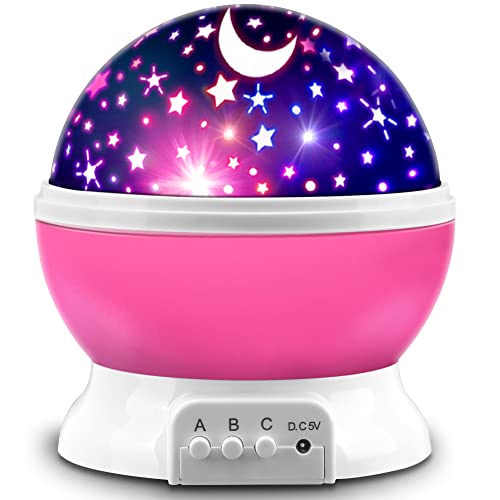
7.0/10Score
$18.99
as of Nov 9, 2026, 15:50 UTC
Product prices and availability are accurate as of the date/time indicated and are subject to change. Any price and availability information displayed on Amazon.com at the time of purchase will apply to the purchase of this product.
How we rank best 3D projectors for kids?
We rank these by what makes a kid's projector worth keeping past the first week. Projection Quality comes first, because sharp stars or planets hold a child's interest while a blurry glow gets ignored. Bedtime Features come next: a sleep timer, a quiet motor and no glaring lights help your child settle. Kid-Friendly Controls matter when you're pressing buttons in the dark. Design and Build decides whether it survives a kid's room and aims easily at the ceiling. And Value checks that a pricier projector really puts on a better show.
 Projection Quality30%
Sharp, bright stars, planets or scenes keep a child interested after the first week instead of a blurry blob.
Bedtime Features25%
Bedtime Features25%A sleep timer, a quiet motor and no glaring lights help kids settle and stop it glowing all night.
Kid-Friendly Controls15%
Kid-Friendly Controls15%Simple buttons, easy focus and safe power options mean kids and tired parents can run it in the dark.
 Design and Build15%
A sturdy body and stand survive a kid's room and aim easily at the ceiling or wall.
 Value15%
Kids' projectors run from pocket money to planetarium prices, so the extra cost must buy a better show.
Best 3D projectors for kids compared
Swipe sideways to see every spec.
| Product | Score | Light Effects | Coverage | Speaker | Timer |
|---|---|---|---|---|---|
| 10.0 | 10 image discs: Moon, planets, galaxies, jellyfish | About 135-256 sq ft from 6.5-9.8 ft (maker claim) | None | Built-in sleep timer | |
| 9.4 | 60,000 stars or 10,000 twinkling stars, shooting star | About 106-in circle from 59-90 in away | Built-in, 9 looping nature sounds | Built-in sleep timer | |
| 9.1 | 60,000 realistic stars, shooting stars, slow pan | About 106-in circle from 59-90 in away | None | 15, 30 or 60 minutes | |
| 7.0 | Cartoon stars and moons in several colors, rotation | Most of a ceiling from about 5 ft (Space.com) | None | Sleep timer with LCD countdown |
1. Hommkiety Galaxy Projector (10 Slides): Best 3D Projector for Kids Overall
This is the one we'd hand to most kids first, because it keeps the show fresh. Ten discs come in the box, among them a glass starry sky, the Moon, Earth, Saturn, the solar system, a spiral galaxy, the Virgo Supercluster, a wormhole and even jellyfish. Images come out bright and sharp after a few turns of the focus ring, and the build feels solid.
Now imagine your 8-year-old just finished a worksheet on the planets. Swap in the Saturn disc, tilt the telescope-shaped body up on its hinge, and the ringed planet sits right over the bed.
The base swings about 180 degrees, wall to ceiling. Six buttons run the projection, sleep timer, rotation speed and a soft night light with three brightness levels. It runs from USB-C, and the box lists only the cable, so keep a phone charger handy.
But there's no remote, app, speaker or battery. And buy the Hommkiety-branded listing: identical-looking projectors sold under other names may not perform the same. Is it the one to get? For a kid who wants planets and galaxies, yes. For a calmer, realistic bedtime sky, the Sega Toys Homestar Matataki (#2) is the softer choice.

Best for: Parents of school-age kids who want a different space scene every night and something educational.

Skip it if: You want a calm, realistic twinkling sky with nature sounds for bedtime. The Sega Toys Homestar Matataki (#2) is the better pick.
Pros
- Sharp, bright, vivid space images
- Ten discs in the box
- Solid build that tilts from wall to ceiling
- Easy focus ring and a built-in night light
Cons
- No remote, app or speaker
- Look-alike listings from other brands may differ
- No battery; needs USB-C power
Hands-on reviews behind this pick
- Space.com
Show the verdict
A no-name projector that hits the jackpot: sharp, vivid, scientific-looking space images from 10 discs and a premium build that beats rivals at twice the price, if you buy this exact brand.
- Live Science
Show the verdict
A budget best buy with crisp HD projections, ten interchangeable discs and excellent build; less realistic than Sega's sky and missing a remote or speaker, but an easy yes at its price.
2. Sega Toys Homestar Matataki: Best Kids' Star Projector for Bedtime
If bedtime is the battle in your house, this is the Homestar we'd put on the nightstand. It projects a real star field rather than cartoon shapes, from either a 60,000-star disc or a 10,000-star disc over a twinkle plate that makes some stars flicker. That twinkle looks more real than the hard pinpoints of Sega's pricier Flux.
Picture lights-out at 8 pm. Set the sky turning, tap the shooting-star button once, and start the sleep timer, so the room is dark before your own show begins. The motor stays quiet.
From 59 to 90 inches away it throws a circle about 106 inches across, and the stand clicks round a full 360 degrees. Sega lists it for ages 6 and up, with a two-year warranty.
That softness costs brightness. The 3W LED is dim, so it really wants a near-dark room, and its buttons don't glow in the dark. With no battery, it runs from a wall plug or power bank, and its nine nature sounds loop. Worth it for your house? For a 6-year-old who needs winding down, yes. For a toddler who wants colors and a cordless light, the MOKOQI Star Projector Night Light (#4) fits better.
Best for: Bedtime-routine parents of kids 6 and up who want a soft, realistic starry sky with a timer.
Skip it if: Your child is a toddler, or you want a cordless light with no cable running to the bed. The MOKOQI Star Projector Night Light (#4) is the better pick.
Pros
- Twinkle disc makes the sky feel more lifelike
- Quiet rotation motor
- Real star field from the Homestar line
- Swappable discs and a focus ring
Cons
- Dimmer than the Homestar Flux; needs a dark room
- Built-in sounds loop and feel generic
- No battery; must stay plugged in
Hands-on reviews behind this pick
- Space.com
Show the verdict
A softer, more toy-like Homestar whose twinkling stars feel more real than the Flux's, at a far lower price; the dimmer LED, generic sounds and mains-only power are the trade-offs.
- Live Science
Show the verdict
A perfectly adequate, quiet planetarium with subtle twinkling stars; unless you want the Flux's vivid pinpoint stars, the cheaper Matataki is the one to buy, despite its dated DC power cable.
3. Sega Toys Homestar Classic: Best Real Night Sky Projector for Kids
This is the planetarium for the kid who already asks what a light-year is. Instead of colors and cartoon shapes, it throws 60,000 sharp stars from a 3W white LED, and the second disc in the box adds constellation lines over the northern sky. With no rotation motor, it's close to silent; a move mode pans the sky slowly instead.
So say your 9-year-old points up and asks where Orion is. Switch to the lines disc and show them, then hand over the paper sky map from the box for tomorrow night.
The sturdy metal stand angles from 0 to 90 degrees, and shooting-star mode is the highlight. The sky covers an average bedroom ceiling, though the edges go a little soft.
But it asks for patience. The focus wheel is loose and slow to dial in, only two discs come in the box, and any lamp in the room washes the stars out. It runs on the included AC adapter, with no remote or speaker. Our call: for a young stargazer, yes. For colorful planets in a room that isn't pitch dark, the Hommkiety Galaxy Projector (#1) is the better fit.
Best for: STEM-minded parents and kids around 6 and up who want real constellations over colors and sounds.
Skip it if: You want colorful planets and galaxies, or the room never gets fully dark. The Hommkiety Galaxy Projector (#1) is the better pick.
Pros
- Sharp, realistic night sky with real constellations
- Almost silent: no rotation motor
- Sturdy metal stand angles 0 to 90 degrees
- Shooting star and slow-pan modes
- Large library of add-on discs
Cons
- Needs a fully dark room
- Focus wheel is loose and slow to dial in
- Only two discs in the box
- Mains power only, no remote or speaker
- Expensive for a kids' night light
Hands-on reviews behind this pick
- Space.com
Show the verdict
Gorgeous, sharp, near-silent projections of the real night sky make it worth the high price for anyone wanting realism, despite fiddly focus, two discs and a need for total darkness.
- Live Science
Show the verdict
A barebones but premium planetarium whose whisper-quiet, stunning star field is among the best for realism; buy it for accuracy, but skip it if a cheap pretty light show is all you need.
4. MOKOQI Star Projector Night Light: Best Cheap Projector for Toddlers
Here's the simplest light on this list, and for a 2-year-old that's the point. It throws chunky cartoon stars and crescent moons across most of a ceiling from about 5 feet away, in white, blue, red or green, or cycling through them. There's no focus, so the shapes look soft, but that bothers grown-ups far more than toddlers.
Picture a toddler who won't settle in a nursery with no outlet near the crib. Four AAA batteries run it cordless, and the panel needs a screwdriver, so small fingers can't get at them.
Batteries aren't in the box, just a USB-C cable for wall power, so grab a pack. And when stars feel too busy, the translucent cover turns it into a plain night light.
Expect a few rough edges, though. The rotation motor is noisy, so switch rotation off for a near-silent glow. The red timer countdown stays bright and can't be turned off, and the A to D buttons take some trial and error. Right for your little one? For a baby or toddler, yes, and it's the cheapest way in. Once they're 6 and want real stars, move up to the Sega Toys Homestar Matataki (#2).
Best for: Parents of babies and toddlers afraid of the dark who want something cheap, simple and cordless.
Skip it if: Your child is 6 or older, or sleeps lightly and wakes at motor noise. The Sega Toys Homestar Matataki (#2) is the better pick.
Pros
- Made for toddlers, with simple buttons
- Cover turns it into a plain night light
- Runs on USB-C or 4 AAA batteries
- Wide ceiling coverage
Cons
- Projections are blurry and can't be focused
- Rotation motor is noisy
- Bright red timer display can't be turned off
Hands-on reviews behind this pick
- Space.com
Show the verdict
Not one for adults, but a great, inexpensive bedtime light for preschoolers: cartoon stars cover the ceiling, though they blur, the motor is noisy and the red timer display distracts.
- Live Science
Show the verdict
A basic, plasticky sleep aid for babies and young kids with bold cartoon stars and wide coverage; no focus, a loud motor and a glaring LCD hold it back, but it's good value for little ones.
Best 3D projectors for kids buying guide for 2027
What does a 3D projector for kids actually show?
It shows pictures on the ceiling, not movies. Most projectors sold as 3D for kids are star, galaxy and image-disc projectors that wrap a bedroom in space scenes with a sense of depth. None of the picks here plays video or needs 3D glasses.
So you're really choosing between three kinds of show. Image discs, like the Hommkiety's ten slides, put the Moon, Saturn or a galaxy overhead. Planetarium discs, like the two Sega Homestars, project a real star field. And toddler lights, like the MOKOQI, scatter cartoon stars and moons. If what your kids really want is a whole movie on the wall, you need a video projector instead: browse our full-size movie projectors for family nights, or pick up an inexpensive movie projector for the kids.
Which kids' projector helps a child settle at bedtime?
The one that switches itself off and stays quiet. A sleep timer matters most, because nobody wants to check in at 2 am and find the room still glowing. All four picks have one, and the Homestar Classic lets you choose 15, 30 or 60 minutes.
Next, think about noise. The Classic has no motor and is almost silent, the Matataki's motor is quiet, and the MOKOQI's spin is noisy unless you turn rotation off. Watch for stray light too, since the MOKOQI's red timer display can't be switched off. And none of the four has a remote, so set it within arm's reach of the bed. For a calm routine, we'd pick the Sega Toys Homestar Matataki, with its twinkling sky and built-in nature sounds.
Do kids' star projectors need a fully dark room?
Most do, and the realistic ones need it most. The Homestar Classic wants total darkness, since even a dim lamp washes out its stars. The Matataki's dimmer LED needs a near-dark room too, so it suits a fixed lights-out time.
The Hommkiety is more forgiving. Its bright images still look good without full darkness, though blackout curtains make them pop. And the MOKOQI's soft cartoon stars work as a night light anyway, so a little light doesn't spoil much. That's why, if your child's room has a hall light left on or a streetlight outside, we'd start with the Hommkiety Galaxy Projector.
Which kids' projector is best for learning about space?
Pick by what your child is learning. For planets and galaxies, the Hommkiety Galaxy Projector wins: its discs show the solar system, Earth, Saturn, a spiral galaxy and the Virgo Supercluster, so a school project on the planets gets pictures to match.
For the real night sky, the Sega Toys Homestar Classic is the pick. One disc draws constellation lines, and a paper sky map comes in the box. Both Homestars take extra discs, so the lessons can grow with your child. Spare discs that fit the Hommkiety are hard to confirm, so count on the ten in the box. And once the ceiling show hooks them, family movie night is the natural next step, which is where our home projectors for family movie night come in.
Are laser star projectors safe in a child's room?
You can sidestep the question, because none of the picks here is sold as a laser projector. Both Sega Homestars use a 3W white LED shining through a disc, and neither the Hommkiety nor the MOKOQI lists a laser among its features.
So the safety checks that matter are power, placement and run time. The MOKOQI's battery panel needs a screwdriver, which keeps AAA batteries away from small hands. The other three run on a cable, so set them where a toddler can't pull the cord. And use the sleep timer every night, so nothing runs unattended until morning.
Best 3D projectors for kids: frequently asked questions
What is the best 3D projector for kids?
For most kids, the Hommkiety Galaxy Projector. It comes with ten sharp space discs, from the Moon and Saturn to galaxies and jellyfish, plus a sleep timer, a night light and a sturdy tilting body. For a calm, twinkling bedtime sky, get the Sega Toys Homestar Matataki. For toddlers, the MOKOQI Star Projector Night Light is the simple, cordless choice.
Are star projectors safe for kids to sleep with?
Pick one with a sleep timer so it isn't glowing all night; all four here have one. None is sold as a laser projector, and the MOKOQI's battery panel needs a screwdriver to open. For light sleepers, we'd buy the Sega Toys Homestar Classic, which is almost silent because it has no motor.
Which star projector shows real constellations?
The Sega Toys Homestar Classic. It projects 60,000 stars of the northern sky, and its second disc adds constellation lines, so your child can see how the stars join up into shapes. It needs a fully dark room. The Homestar Matataki also shows a real star field, with gentle twinkling, but no lines disc.
Do kids' projectors have a timer or turn off automatically?
All four picks here have a sleep timer, so they switch off after your child falls asleep. The Sega Toys Homestar Classic lets you choose 15, 30 or 60 minutes, while the MOKOQI shows its countdown on a bright red display. For a timer plus soft nature sounds at lights-out, get the Sega Toys Homestar Matataki.
What age is a planetarium projector good for?
Sega lists both Homestars for ages 6 and up, which fits kids old enough to care about real stars and constellations. For babies and toddlers, the MOKOQI is marketed for about ages 1 to 6, with bold cartoon stars and simple buttons. School-age kids who want a new planet every night will get the most from the Hommkiety Galaxy Projector.


