
The 10 Best Projectors in 2027
Many box lumen figures come from a green, noisy mode you'd never watch. Our best projectors for 2027 fit a pick to your room and budget, flaws included.

Affiliate Disclosure: As an Amazon Associate, we may earn a commission from qualifying purchases, and it never changes our picks.
Our picks at a glance

10.0/10Score

$2,599.00
as of Nov 9, 2026, 09:40 UTC

9.6/10Score
$2,497.97
as of Nov 9, 2026, 09:40 UTC

9.3/10Score
$2,299.00 $2,999.00 Save 23%
as of Nov 9, 2026, 09:40 UTC

9.3/10Score
$3,499.00 $3,699.00 Save 5%
as of Nov 9, 2026, 09:40 UTC

8.7/10Score
$799.00 $999.00 Save 20%
as of Nov 9, 2026, 09:40 UTC

8.5/10Score
$1,799.00
as of Nov 9, 2026, 09:40 UTC

8.1/10Score
$479.00
as of Nov 9, 2026, 09:40 UTC

8.1/10Score
$467.16 $499.99 Save 7%
as of Nov 9, 2026, 09:40 UTC

8.1/10Score
$1,799.00
as of Nov 9, 2026, 09:40 UTC
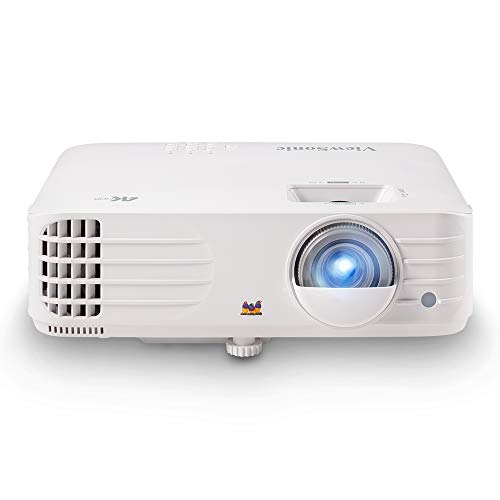
7.3/10Score
$975.99
as of Nov 9, 2026, 09:40 UTC
Product prices and availability are accurate as of the date/time indicated and are subject to change. Any price and availability information displayed on Amazon.com at the time of purchase will apply to the purchase of this product.
How we rank best projectors for you?
We start with picture quality, because sharpness, color and contrast decide whether a 100-inch image feels like a cinema or a faded wall. Brightness for your room comes next: usable lumens, not the box number, tell you if a lamp can stay on. Then setup and streaming, since auto focus, zoom, built-in Netflix and low lag save you fiddling and an extra stick. Design and build covers size, fan noise and where it can sit. Value checks that extra money buys a picture you'll notice.
 Picture Quality30%
Sharpness, color, contrast and HDR decide whether a 100-inch picture looks like cinema or a washed-out wall.
Brightness for Your Room20%
Brightness for Your Room20%Real, usable lumens decide whether you can watch with a lamp on or only after dark.
Setup and Streaming20%
Setup and Streaming20%Auto focus, zoom, licensed Netflix and low lag mean less fiddling and no extra streaming stick.
 Design and Build15%
Size, weight, fan noise and placement options decide where it can live: shelf, ceiling, backpack or console.
 Value15%
Projectors range from a few hundred to several thousand dollars, so the extra money has to buy a picture you'll notice.
Best projectors compared
Swipe sideways to see every spec.
| Product | Score | Resolution | Brightness | Throw | Smart OS |
|---|---|---|---|---|---|
| 10.0 | 4K via pixel shift on a 0.47-inch DLP chip | 5,700 ISO lumens (max mode) | Standard throw, 1.2-1.5:1 zoom, lens shift, 40-300 in | Google TV with built-in Netflix | |
| 9.6 | 4K UHD via pixel shift (0.47-in 1080p DLP chip) | 3,000 ANSI lumens (triple laser) | Ultra short throw, 0.22:1, 80-150 in | Google TV (US model) | |
| 9.3 | 4K (3840 x 2160) on a 0.47-inch DLP chip | 3,500 ANSI lumens | Standard throw, 0.9-1.5:1 zoom, gimbal, up to 300 in | Google TV with official Netflix | |
| 9.3 | 4K UHD via pixel shift (0.47-in DLP chip) | 3,500 ISO lumens (RGB triple laser) | 0.9-1.5:1 optical zoom, 40-300 in, lens shift | Google TV with licensed Netflix | |
| 8.7 | 4K via pixel shift on a 0.47-inch DLP chip | 1,700 ISO lumens (Upgrade Version) | Standard throw, 1.2:1, 40-200 in, no optical zoom | Google TV with built-in Netflix | |
| 8.5 | 4K UHD via pixel shift, 4LED light | 3,300 ANSI lumens (4LED) | 1.15-1.50:1, 1.3x zoom, 100 in from 2.5 m | Android TV 11 via included QS02 dongle | |
| 8.1 | Native 1080p (1920 x 1080), HDR10 | 450 ISO lumens (about 400 measured by Projector Central) | 1.2:1 throw, 60 to 120 in recommended | Google TV with licensed Netflix | |
| 8.1 | Native 1080p 3LCD; no 4K or HDR input | 3,000 lumens claimed; CNET measured 2,094 in Cinema mode | Standard throw up to 300 in; no optical zoom or lens shift | Bundled Android TV stick with Chromecast built in | |
| 8.1 | 4K UHD via 0.47-in DLP pixel shift | 2,100 ISO lumens claimed, laser phosphor (ALPD) | 0.23:1 ultra short throw, 80-150 in | Google TV with native Netflix | |
| 7.3 | 4K UHD via pixel shift (TI XPR) | 3,200 ANSI lumens (lamp) | 1.50-1.65:1, 1.1x zoom, 60-200 in | None; add a streaming stick (USB power port) |
1. XGIMI Horizon 20 Max: Best Projector Overall
This is the projector we'd buy to replace a TV, and real brightness is why. Its 5,700-lumen rating only holds in a loud, green-tinted mode, yet Projector Reviews still measured about 3,300 to 3,500 lumens in Movie and Dolby Vision, the modes you'll actually use. Colors stay rich with the room half lit, and calibrated color is very accurate.
Say the kids want a film at 3 p.m. on a Saturday and the blinds only half close. You set it on a bookshelf off to one side, nudge the motorized lens shift and zoom, and the 110-inch picture lands square without digital keystone.
Google TV has Netflix built in. The box holds the projector, power cord and a backlit remote, but no screen or mount. Gamers get 240Hz at 1080p, though 4K stops at 60Hz.
But in a fully dark room its blacks look charcoal, sensitive eyes may catch rainbow flashes, and de-judder drops the picture to 1080p. There's also just one HDMI 2.1 port and no Ethernet. So would we buy it? For a lit living room, yes. For a dedicated dark theater, the Valerion VisionMaster Max (#4) is the better buy.

Best for: TV replacers who want a 100-inch-plus picture in a living room with some light, plus streaming and gaming built in

Skip it if: You watch in a dedicated, fully dark theater and want the deepest blacks. The Valerion VisionMaster Max (#4) is the better pick.
Pros
- Measured over 5,600 lumens at peak, about 3,300 in Movie
- Real lens shift and optical zoom for flexible placement
- Very accurate color after calibration
- Dolby Vision and HDR10+ support
- Quiet fan in normal modes
- Low input lag and up to 240Hz at 1080p for gaming
Cons
- Brightest mode has a green tint and a loud fan
- Rainbow flashes visible to sensitive viewers
- Black level enhancement can pump brightness
- No 4K at 120Hz; high refresh rates are 1080p only
- Only one HDMI 2.1 port and no Ethernet
- Expensive
Hands-on reviews behind this pick
 Notebookcheck
Show the verdict
A very powerful projector with near reference picture and sound in a dark room, held back by thin connectivity and a green, noisy max mode; good value for what it does.
- RTINGS
Show the verdict
A top-tier do-it-all projector: extremely bright with deep contrast and natural color, but removing judder or color tearing forces the picture down to 1080p.
- Projector Reviews
Show the verdict
A very bright, feature-packed lifestyle projector that suits living rooms and gaming best; its charcoal blacks make it a weaker choice for a fully dark theater.
2. Hisense PX3-PRO: Best Ultra Short Throw Projector
A regular projector needs room behind the couch: the BenQ X3100i (#6) wants about 8 feet for a 100-inch picture. The PX3-PRO doesn't. It sits on your media console, 4.7 to 18.1 inches from the wall, and paints an 80 to 150-inch picture. ProjectorCentral measured about 99.8% of DCI-P3 and a near-perfect grayscale before any calibration, so movies look right on day one.
Picture a one-bedroom where the sofa backs onto the kitchen counter, so there's no shelf behind you.
The projector takes the TV stand's spot, Google TV has Netflix and Disney+ built in, and the 50W Harman Kardon system handles dialogue without a soundbar. Turn on DLP Turbo and lag drops to 14 ms at 120Hz and 7 ms at 1080p/240, at the cost of keystone and 3D. The box has a backlit remote, but no screen.
And that screen matters. With roughly 2,700 to 3,200 measured lumens, it needs an ALR screen for a lit room, and very sunny days still win. Hisense now sells the newer PX4-PRO above it. Is it worth it? For a TV-style setup, yes. On a tighter budget, the Formovie Cinema Edge (#9) costs less.
Best for: Apartment and living-room owners who want a TV-style setup against the wall with good sound and gaming
Skip it if: You want a wall-hugging projector without top-tier pricing. The Formovie Cinema Edge (#9) is the better pick.
Pros
- Rich, wide-gamut color that's accurate out of the box
- Sits inches from the wall for a 100-inch-plus image
- 50W Harman Kardon sound good enough to skip a soundbar
- Dolby Vision, HDR10+, 3D and Google TV with Netflix
- Low lag at 120Hz and 240Hz for console gaming
Cons
- Bright scenes look flatter than dark ones
- Rainbow flashes can bother sensitive viewers
- Fan is audible if you sit close to it
- Needs an ALR screen to hold up in daylight
- Some picture controls barely work
Hands-on reviews behind this pick
- ProjectorCentral
Show the verdict
Arguably the best ultra short throw for its price: accurate color, strong contrast for a UST and low lag, held back only by limited brightness above 120 inches and a few dead controls.
- RTINGS
Show the verdict
A decent home theater UST: remarkable depth in dark scenes, vivid color volume and enough brightness for some room light, but bright scenes look flat and the image runs warm out of the box.
- Projector Reviews
Show the verdict
Bright, beautifully colored and well built, with the best out-of-box color the reviewer saw that year, a strong speaker system and Google TV; black levels are only average for the money.
3. Nebula X1: Best Portable 4K Projector for Movie Nights
If your movie nights move between the living room and the backyard, this is the one to get. It's a 4K triple-laser projector with a gimbal and a retractable handle. Projector Reviews measured about 2,750 to 3,330 lumens in normal modes and native contrast near 4,700:1, which is rare for DLP.
So picture a July evening. You carry it to the patio, plug it into the outdoor outlet, and the gimbal, 0.9-1.5:1 zoom and auto focus aim the picture at the screen on the fence.
Google TV plays Netflix in 4K, and 40W of speakers cover a small yard, with Nebula's optional satellite speakers adding more. The box has the projector, power adapter and remote, while the carry case comes only in bundles.
The downsides are real, though. It weighs 13.7 pounds, has no battery, and menus can lag. Reds look oversaturated until you adjust them, and saved positions don't always recall correctly. Nebula now sells the brighter X1S above it. So would we buy it? For mains-powered movie nights, yes. Camping without an outlet? Take the XGIMI MoGo 4 (#7).
Best for: Families who move one bright 4K projector between the living room and the backyard
Skip it if: You need to watch away from an outlet. The XGIMI MoGo 4 (#7) is the better pick.
Pros
- Measured about 3,000-3,300 lumens in normal modes
- Measured native contrast near 4,700:1
- Very accurate color after calibration
- Built-in gimbal and optical zoom for easy placement
- Loud, clear built-in sound for a projector
- Google TV with native Netflix
Cons
- Expensive, especially with the speaker kit
- Heavy at 6.2 kg and no battery
- Google TV and picture menus can lag
- 4K tops out at 60Hz; no VRR or ALLM
- Reds oversaturated out of the box
- Auto screen-fit and saved positions can misfire
Hands-on reviews behind this pick
 Engadget
Show the verdict
The best indoor projector the reviewer has tested and, with its satellite speakers, the best portable one too, with a sharp, bright image; the steep price is the catch.
- Notebookcheck
Show the verdict
An impressive projector with a bright, sharp image and easy setup that works as an alternative to a fixed install; the high price and lack of a battery are the drawbacks.
- Projector Reviews
Show the verdict
A premium, cinema-grade lifestyle projector with excellent brightness, unusually good native contrast for DLP and great calibrated color; well worth it if the price fits.
4. Valerion VisionMaster Max: Best Projector for Dark Home Theaters
Got a room you can make truly dark? Then this is the picture to beat. Its Enhanced Black Level mode gave HDTVTest the inkiest blacks it had seen from DLP, and color covers about 99% of DCI-P3 and looks accurate without calibration. The fan barely rises above the room, so quiet scenes stay quiet.
Imagine a Saturday night epic on a 150-inch screen in the basement. Put it on a back shelf, and the 0.9-1.5:1 zoom and big vertical lens shift line it up without digital keystone. If rainbow flashes bother you, RBE Reduction nearly hides them, though it can add a faint whine.
The two 12W speakers play from the back of the room, so budget for a real sound system.
Here's the catch. Several ProjectorCentral commenters, owners among them, point out that High Refresh mode and 4K pixel shift can't run together, so 4K/120 gets downsampled. Bright scenes lose depth, and the cheaper VisionMaster Pro 2 comes close, so the Max pays off when you'll use its lens shift, iris and RBE Reduction. For a living room with daylight, get the XGIMI Horizon 20 Max (#1).
Best for: Home theater enthusiasts with a light-controlled room who care most about contrast, color and HDR
Skip it if: Your room has daylight or lamps you can't turn off. The XGIMI Horizon 20 Max (#1) is the better pick.
Pros
- Deep, convincing blacks for a DLP projector
- Accurate, richly saturated color without calibration
- Zoom and big lens shift make placement easy
- RBE Reduction nearly hides rainbow flashes
- Quiet fan and low 120Hz/240Hz gaming lag
Cons
- Bright scenes lose some contrast depth
- RBE Reduction can add a faint high-pitched whine
- High Refresh mode drops the 4K pixel shift to 1080p
- Built-in sound comes from behind you, not the screen
- Costs far more than the similar VisionMaster Pro 2
Hands-on reviews behind this pick
- RTINGS
Show the verdict
Excellent for a home theater: deep blacks and depth in dark and mixed scenes, accurate rich color without calibration, flexible setup and near-invisible rainbows, though bright scenes flatten.
- ProjectorCentral
Show the verdict
A solid, feature-packed home cinema projector that beats some pricier rivals, but its black-level processing, HDR clipping and color shifts need work, and the cheaper Pro 2 performs similarly.
5. JMGO N1S 4K: Best Cheap 4K Projector for Bedrooms
Want 4K without spending TV money? This is where we'd start. It's a tiny triple-laser projector with a carry handle and a built-in gimbal, and its contrast punches well above its price. The fan is so quiet you'll forget it's on.
Say it's a rainy Sunday and you'd rather stay in bed. Tilt the gimbal straight up, let auto focus and keystone square the image, and a film plays across the ceiling with nothing propped under it. Google TV runs Netflix natively, and the box includes the gimbal stand, a power brick and a remote that isn't backlit.
Get the Upgrade Version, the brighter current model, which RTINGS measured at about 1,400 lumens.
That's still modest, so this is a dark-room projector. Colors run oversaturated outside Movie mode, motion looks choppy with no judder removal, and sensitive viewers will spot rainbows. Lag on the original model measured 35 to 40 ms, well above JMGO's 17 ms claim, so keep gaming casual. So would we buy it? For a bedroom, yes. If your room stays lit, the Epson EpiqVision Flex CO-FH02 (#8) is brighter.
Best for: First-time buyers who want 4K and built-in streaming for a dark bedroom or small room on a modest budget
Skip it if: Your room has light you can't block. The Epson EpiqVision Flex CO-FH02 (#8) is the better pick.
Pros
- Excellent contrast for its price
- Very small, light and has a carry handle
- Gimbal makes ceiling projection easy
- Incredibly quiet fan
- Google TV with built-in Netflix
- Among the cheapest 4K projectors, per CNET
Cons
- Colors oversaturated, wildly so outside Movie mode
- Visible rainbow effect despite the triple laser
- No judder removal, so motion looks choppy
- No optical zoom or lens shift
- Only one HDMI input
- Small speakers sound thin
Hands-on reviews behind this pick
- RTINGS
Show the verdict
A great budget 4K projector that punches above its price, with excellent contrast, rich color and a near-silent fan; choppy motion and some rainbow flashes hold it back.
- CNET
Show the verdict
One of the smallest, cheapest 4K projectors around, with good contrast and quiet running; color and brightness are only adequate, but the size and price make that a fair trade.
6. BenQ X3100i: Best 4K Gaming Projector
Gaming comes first here, and it shows. ProjectorCentral's lag numbers matched BenQ's own: 5 ms at 1080p/240, 9 ms at 1080p/120 and 17 ms at 4K/60. Color is accurate out of the box, and about 2,950 lumens in Bright mode means a lamp or two can stay on.
Picture a late-night shooter on a 120-inch wall. Every flick of the stick lands on time, and the image stays sharp because you aimed it with the 1.3x zoom and vertical lens shift. Skip keystone here, since it costs about a frame of lag.
The QS02 Android TV dongle with licensed Netflix comes in the box and tucks inside the projector, along with a remote and power cords. It replaces the older X3000i.
Here's the trade-off. Contrast is weak, so dark movie scenes look gray, and the dongle sends everything in BT.2020, which oversaturates regular shows until you switch its output to 8-bit. Bright mode also runs hot and loud. Should you buy it? For a console setup, yes. Gaming on a tighter budget? The ViewSonic PX701-4K (#10) is the cheaper route.
Best for: PS5, Xbox and PC gamers who want 4K/60 and fast 1080p on a 120-inch wall
Skip it if: You want low-lag gaming for less money. The ViewSonic PX701-4K (#10) is the better pick.
Pros
- Very low lag: about 5 ms at 1080p/240Hz
- Very accurate color out of the box
- Bright enough for a room with a few lights on
- Zoom and vertical lens shift ease placement
- LED light source, no lamp to replace
Cons
- Contrast is weak; dark scenes look gray
- Dongle oversaturates SDR streaming color
- Runs hot and loud in its brightest mode
- Rainbow flashes for sensitive viewers
- Fails to pass through many lossless audio formats
Hands-on reviews behind this pick
- ProjectorCentral
Show the verdict
An excellent gaming projector with very low lag and accurate out-of-box color that also handles movies, though contrast is modest, it runs hot and the bundled dongle oversaturates SDR.
- RTINGS
Show the verdict
An acceptable home theater projector that shines brighter than most and is very accurate out of the box, but limited color volume, choppy pans and visible rainbows hold back movie nights.
7. XGIMI MoGo 4: Best Battery Projector for Backyard Movies
No outlet within reach? That's where the MoGo 4 earns its spot. It's a 2.9-pound 1080p projector with a built-in battery, a stand that turns 360 degrees, and Google TV with licensed Netflix, so there's nothing else to pack.
Say the kids want a backyard sleepover. Clip a bedsheet to the clothesline after dark, point the MoGo 4, and auto focus and keystone square it up, though you may need a manual touch-up. Plan on about two hours per charge: just under two in Standard, about two and a half in Eco.
So a kids' film fits and a three-hour epic doesn't. The Harman Kardon speakers are loud enough for a small group. The box has two remotes and the Sunset filter, while the PowerBase Stand costs extra and stretches play to about five hours.
But it's dim. About 400 lumens measured means dark rooms and nights only, and dark scenes lack contrast. Would we pack it? For after-dark movies anywhere, yes. If you can plug in and want brightness, the Nebula X1 (#3) is the step up.
Best for: Campers, renters and students who want a small projector that runs without an outlet for a couple of hours
Skip it if: You want a bright picture and can plug in. The Nebula X1 (#3) is the better pick.
Pros
- Tiny 360-degree stand aims at walls or the ceiling
- Google TV with licensed Netflix built in
- Loud, full sound for its size
- Quick auto focus and keystone setup
Cons
- Dim: best in a dark room, not daylight
- About 2 hours of video on battery, less when bright
- Weak black levels and contrast in dark scenes
Hands-on reviews behind this pick
 Expert Reviews
Show the verdict
A smart refinement of the MoGo 3 Pro: richer sound, a built-in battery and the best picture yet from so small a unit, though dark scenes lack contrast and it is no daylight projector.
 9to5Google
Show the verdict
Not groundbreaking, but it nails the basics: a big, decent picture almost anywhere with fast setup and Google TV. Battery life and brightness are modest, so plan to stay near power.
- Projector Central
Show the verdict
A stylish, very portable lifestyle projector with good battery life and excellent audio for its size, with near-accurate color, though mirroring is weak and it wants a darkened room.
8. Epson EpiqVision Flex CO-FH02: Best Budget Projector for Lit Rooms
Can't make your room dark? Then brightness matters more than anything, and this is the most affordable way to get it on our list. Three separate reviews measured about 2,000 to 2,100 lumens, including 2,094 in CNET's run of the fairly accurate Cinema mode, and Dynamic mode reached 3,261. Color stays natural, too.
Picture a weeknight movie while someone cooks dinner and the kitchen lights stay on. The picture holds up, and auto vertical keystone makes setup quick.
The bundled Android TV stick, with Chromecast built in, tucks behind a side panel, and the box also has an HDMI cable and two remotes, one for each device.
Here's what you give up. Blacks look gray, lag measured 50 to 80 ms, and the stick takes the only HDMI port, so a console means swapping cables. Audio out is Bluetooth only, and it uses a lamp that will need replacing someday. It also launched in 2022, so it's an older model. So is it for you? For a lit room on a budget, yes. For a dark bedroom, the JMGO N1S 4K (#5) looks better.
Best for: Budget first-timers whose room has light they can't block and who mostly stream
Skip it if: You watch in a dark bedroom and want 4K with better contrast. The JMGO N1S 4K (#5) is the better pick.
Pros
- Exceptionally bright, over 2,000 measured lumens
- Works in rooms with some light on
- Natural color for a budget projector
- Full Android TV apps on the bundled stick
- Compact 5.7 lb body that fits in a backpack
- Auto vertical keystone works well
Cons
- Washed-out blacks and modest contrast
- High input lag, 50 to 80 ms measured
- One HDMI port, used by the streaming stick
- No wired audio output, Bluetooth only
- No optical zoom, lens shift or auto focus
- Lamp light source; fan blows heat into the room
Hands-on reviews behind this pick
- Expert Reviews
Show the verdict
A good, practical budget projector with bright, vibrant images, easy setup and a worthwhile streaming stick, though weak sound and one hidden HDMI rule it out for gamers and home cinema fans.
- CNET
Show the verdict
A muscle car of a projector: cheap and astonishingly bright, but washed out with mediocre contrast. For big backyard movie nights on a small budget it is a decent, stupendously bright win.
- TechGearLab
Show the verdict
An entry-level cinema projector with smart features at a fair price: strong contrast and good picture for the money, but high input lag, few ports and washed-out color keep it away from gamers.
9. Formovie Cinema Edge: Best Affordable Ultra Short Throw Projector
Want the ultra short throw setup for less? The Cinema Edge is our cheaper way in. Its 0.23:1 lens sits about 19 inches from the wall for a 150-inch picture, and Mondoprojos measured native contrast above 3,000:1 on the European model, so evening films have real depth.
Say your den is shallow and the only flat surface is a low cabinet under the screen. That's exactly where this goes. Google TV has native Netflix, and three HDMI 2.1 ports, one with eARC, leave room for a console and a soundbar.
Plan on an ALR or Fresnel screen, which costs extra, and a level console, since only the front feet adjust.
But it isn't the PX3-PRO. There's no Dolby Vision or HDR10+, color looks drab next to triple-laser USTs, and default color needs calibration. Google TV is slow, motion smoothing is on by default (set it to Low or off), and Game mode lag measured about 47 ms. Measured brightness came in under the claim, so dim rooms suit it best. Is it the right UST for you? On a budget, yes. For daylight and Dolby Vision, get the Hisense PX3-PRO (#2).
Best for: Small living rooms that want a wall-hugging projector without top-tier UST pricing
Skip it if: You want Dolby Vision, richer color and sound good enough to skip a soundbar. The Hisense PX3-PRO (#2) is the better pick.
Pros
- Sits inches from the wall for a 100-inch-plus picture
- Google TV with native Netflix built in
- Strong native contrast for an affordable UST
- Three HDMI 2.1 inputs, one with eARC
- Deep picture controls for calibration
Cons
- No Dolby Vision or HDR10+
- Narrower color than triple-laser rivals
- Sluggish Google TV and pushy default motion smoothing
Hands-on reviews behind this pick
- TechRadar
Show the verdict
A compact, affordable UST that throws a big, sharp 4K image that shines in the dark, but limited HDR, narrower color, pushy motion smoothing and so-so speakers hold it back from rivals.
- Mondoprojos
Show the verdict
A disappointment: welcome Google TV, Netflix and full calibration tools, but low measured brightness, a soft image for DLP, fan buzz, poor default color and weak HDMI HDR handling.
10. ViewSonic PX701-4K: Best Cheap Gaming Projector
If lag is the only number you care about, this is the least expensive way to a big, fast screen on our list. RTINGS measured single-digit lag at 1080p/120Hz and 240Hz, and ProjectorCentral got about 17 ms at 4K/60. It's bright too, at about 2,580 lumens in Brightest mode.
Picture an online match on a 100-inch wall in a dorm common room with the overhead lights on. The image stays bright, the 1.1x zoom and auto vertical keystone keep setup simple, and your controller feels connected.
There's no smart OS, Wi-Fi or Ethernet, though, so plug in your own streaming stick, which a USB port can power.
And movies are its weak spot. Contrast is poor, color is washed out by default, and five ProjectorCentral commenters saw a yellow tint after copying the review's calibration settings, which the editor blamed on a firmware update. It's also an older lamp model from 2021. Worth it? For cheap gaming, yes. If you want better color, the BenQ X3100i (#6) is worth the step up.
Best for: Budget console gamers who already own a streaming stick and care about lag more than black levels
Skip it if: You want more accurate color and built-in streaming for games and movies. The BenQ X3100i (#6) is the better pick.
Pros
- Very low lag, single digits at 120Hz and 240Hz
- Bright enough for rooms with some light
- Sharp 4K pixel-shift image with HDR10 and HLG
Cons
- Poor contrast; games and films lack depth
- Washed-out, inaccurate color out of the box
- No built-in streaming or network
- Lamp light source needs replacing over time
- No 3D and no optical audio output
Hands-on reviews behind this pick
- RTINGS
Show the verdict
A good big-screen gaming pick thanks to clean 1080p at 120Hz and 240Hz with single-digit lag, but its colors are washed out and inaccurate and its contrast is poor, so games lack depth.
- ProjectorCentral
Show the verdict
Built for ambient light, for gaming or movies, and an inexpensive 4K home theater option once calibrated, though it favors brightness over default color accuracy and black level.
Best projectors buying guide for 2027
How bright does a projector need to be for a room with lights on?
Aim for about 2,000 measured lumens or more in a watchable mode if lamps or daylight stay on, and treat the box number with care. Brands quote ISO, ANSI or peak figures, and the peak often comes from a green, loud mode you won't watch. The Horizon 20 Max's top rating is one of those: its everyday modes measured far below it.
So go by measured figures. The XGIMI Horizon 20 Max (#1), Nebula X1 (#3) and Epson EpiqVision Flex CO-FH02 (#8) all hold about 2,000 to 3,300 lumens in their everyday modes, enough for a living room with some light. Down near 1,400, like the JMGO N1S 4K (#5), or 400, like the XGIMI MoGo 4 (#7), you'll want a dark room. For daytime viewing, pair a projector with an ALR screen, as the Hisense PX3-PRO (#2) needs. Our picks matched to living rooms and bedrooms sort this out room by room.
Which projector throw type fits my room: standard, short or ultra short throw?
Measure from the wall to where the projector can sit, because that decides the type. A standard throw model needs room behind or above the couch: the BenQ X3100i (#6) fills 100 inches from about 8 feet (2.5 m), and the XGIMI MoGo 4 needs about 10.5 feet for 120 inches. Short throw sits in between, and none made this list.
An ultra short throw sits on a console just inches from the wall. The Hisense PX3-PRO (#2) goes 4.7 to 18.1 inches out for 80 to 150 inches, and the Formovie Cinema Edge (#9) fills 150 inches from about 19 inches. That's the fix when your couch is against the back wall, though both look best on an ALR or Fresnel screen.
And zoom plus lens shift widen your options. The XGIMI Horizon 20 Max, Valerion VisionMaster Max and BenQ X3100i can sit off-center or on a shelf without relying on digital keystone.
Is a 4K projector worth it over a 1080p projector?
Yes for a 100-inch-plus screen in a movie room, but 4K alone won't rescue a dim or low-contrast picture. Most 4K models here use pixel shift on a 0.47-inch DLP chip to put 4K detail on screen, so brightness and contrast still decide how it looks.
That's why the 1080p XGIMI MoGo 4 (#7) and Epson CO-FH02 (#8) still earn spots: one runs on battery, the other stays bright on a budget. If you stream 4K Netflix or play 4K discs on a big screen, the JMGO N1S 4K (#5) is the budget way in and the Valerion VisionMaster Max (#4) is the dark-theater choice. Gamers, note that several 4K models drop to 1080p for 120Hz and 240Hz. We go deeper in our 4K projector rankings, and the low end lives in the cheapest 4K projectors worth buying.
Laser, LED or lamp: which projector light source lasts longer?
Laser and LED last far longer than a lamp, and you'll never shop for a replacement bulb. The Nebula X1's laser is listed at 30,000 hours, the Valerion's at over 25,000, and the BenQ X3100i's 4LED at up to 30,000. That's many years of nightly movies.
Lamps cost less up front but wear out. The ViewSonic PX701-4K's lamp lasts 6,000 hours in Normal mode and up to 20,000 in SuperEco+, and CNET lists 6,000 hours in Normal for the Epson CO-FH02. So set money aside for a new lamp eventually.
Triple-laser models like the XGIMI Horizon 20 Max, Hisense PX3-PRO and Nebula X1 also reach wider color. Whatever the light source, single-chip DLP can show rainbow flashes to sensitive viewers. Shopping for less? projectors that look good on a small budget covers cheaper lamp and LED options.
Do projectors with built-in streaming and speakers replace a soundbar and a stick?
For streaming, mostly yes. For sound, only a few. Most picks here run Google TV with licensed Netflix, which saves you a stick. The BenQ X3100i and Epson CO-FH02 include a streaming stick in the box, and the ViewSonic PX701-4K has none, so bring your own.
Speakers are a different story. The Hisense PX3-PRO's 50W Harman Kardon system is good enough to skip a soundbar in most living rooms, and the Nebula X1's 40W covers a small yard. The rest are fine for casual viewing, and the Valerion's sit behind you, so a sound system helps. Check ports too: the Formovie Cinema Edge and BenQ X3100i have eARC for a soundbar, while the Epson CO-FH02 only sends audio over Bluetooth.
Shopping for a child's room instead? Our starry ceiling projectors made for kids' rooms are a different kind of projector entirely.
Best projectors: frequently asked questions
What is the best projector?
For most living rooms, it's the XGIMI Horizon 20 Max: about 3,300 usable lumens, lens shift, Dolby Vision, Google TV with Netflix and low-lag gaming. With no room behind the couch, get the Hisense PX3-PRO. For a dark theater, the Valerion VisionMaster Max. On a budget, the JMGO N1S 4K suits a dark room and the Epson EpiqVision Flex CO-FH02 a lit one.
How many lumens does a projector need for a living room?
Look for about 2,000 to 3,000 measured lumens in a movie mode if lights stay on, not the peak claim. The XGIMI Horizon 20 Max holds about 3,300 in Movie mode, and the Epson EpiqVision Flex CO-FH02 measured about 2,100 in Cinema. Around 400 lumens, like the XGIMI MoGo 4, means nighttime only.
Is a projector better than a TV?
It's better if you want a 100-inch-plus picture and can control the light, and worse in a sunny room. The Hisense PX3-PRO comes closest to a TV, sitting on a console against the wall with 50W of built-in sound. For a dark home theater, the Valerion VisionMaster Max puts deep blacks on a 150-inch screen.
Do I need a projector screen or can I use a wall?
A smooth white wall is fine for casual viewing in a dark room. But an ultra short throw needs an ALR or Fresnel screen to hold up with lights on, which applies to the Hisense PX3-PRO and Formovie Cinema Edge. For a dark bedroom, the JMGO N1S 4K works on a plain white ceiling.
Is 4K worth it on a projector or is 1080p enough?
4K is worth it on a 100-inch-plus screen if you watch 4K movies, but contrast and brightness matter just as much. The JMGO N1S 4K is the budget way in. 1080p is enough for a portable or a lit room on a budget: the XGIMI MoGo 4 and Epson EpiqVision Flex CO-FH02 both stay 1080p.

