The 10 Best Cameras for Beginners in 2027
Most first cameras end up in a drawer because the menus win. These are the best cameras for beginners in 2027 for kids, travel or YouTube, and each catch.

Affiliate Disclosure: As an Amazon Associate, we may earn a commission from qualifying purchases, and it never changes our picks.
Our picks at a glance

10.0/10Score

$1,149.00 $1,248.01 Save 8%
as of Nov 9, 2026, 09:40 UTC

10.0/10Score
$799.00
as of Nov 9, 2026, 09:40 UTC

9.7/10Score
$956.95 $1,009.95 Save 5%
as of Nov 9, 2026, 09:40 UTC
9.7/10Score
$1,149.00
as of Nov 9, 2026, 09:40 UTC

9.3/10Score
$1,198.00
as of Nov 9, 2026, 09:40 UTC

9.1/10Score
$499.00 $679.00 Save 27%
as of Nov 9, 2026, 09:40 UTC
Limited time deal

9.0/10Score
$896.95 $1,096.95 Save 18%
as of Nov 9, 2026, 09:40 UTC

9.0/10Score
$999.00
as of Nov 9, 2026, 09:40 UTC

9.0/10Score
$1,896.95
as of Nov 9, 2026, 09:40 UTC

8.8/10Score
$749.00 $949.00 Save 21%
as of Nov 9, 2026, 09:40 UTC
Product prices and availability are accurate as of the date/time indicated and are subject to change. Any price and availability information displayed on Amazon.com at the time of purchase will apply to the purchase of this product.
How we rank best cameras for beginners?
We start with ease of use, because clear controls, guided modes and a touchscreen decide whether you keep shooting or go back to your phone. Photo quality comes next: your first camera has to beat your phone indoors and with moving kids. Then room to grow, so the dials, lenses and video tools are there when you're ready. Value covers the whole kit, from lens to spare battery, and design and build decides whether it's light enough to carry. That puts the Canon EOS R10 first.
 Ease of Use30%
Guided modes, a touchscreen and clear controls decide whether you keep learning or go back to your phone.
Photo Quality25%
Photo Quality25%Your first camera has to beat your phone in dim rooms and with moving kids, straight out of the box.
Room to Grow15%
Room to Grow15%Dials, lenses and video tools you can grow into mean you won't need a new body in a year.
 Value15%
The kit lens, spare battery and memory card all add up, so the whole package has to make sense.
 Design and Build15%
A light body with a good grip and a viewfinder or flip screen is one you'll actually carry.
Best cameras for beginners compared
Swipe sideways to see every spec.
| Product | Score | Sensor | Megapixels | Video | Stabilization |
|---|---|---|---|---|---|
| 10.0 | APS-C CMOS (22.3 x 14.9mm) with DIGIC X processor | 24.2MP | 4K 30p oversampled; 4K 60p with 1.56x crop; 10-bit HDR PQ | No IBIS; lens IS plus digital IS for video | |
| 10.0 | APS-C CMOS (22.3 x 14.9mm) with DIGIC X processor | 24.2MP | 4K 30p uncropped from 6K; 1080p 120p; 10-bit HDR PQ | No IBIS; lens IS plus digital IS for video | |
| 9.7 | APS-C (DX) CMOS with EXPEED 7 | 20.9MP | 4K 30p full width; 4K 60p cropped; 10-bit N-Log | No IBIS; lens VR and electronic VR for video | |
| 9.7 | APS-C X-Trans CMOS 4 | 26.1MP | 6.2K 30p, 4K 60p (1.18x crop), 10-bit 4:2:2 | No IBIS; digital IS for video only | |
| 9.3 | APS-C Exmor R CMOS (same as Sony FX30 and a6700) | 26MP | 4K/60p 10-bit 4:2:2 (1.1x crop), 4K/30p full width | None in body; electronic Active SteadyShot and lens OSS | |
| 9.1 | APS-C CMOS with DIGIC 8 processor | 24.1MP | 4K 24p with about 1.55x crop; 1080p up to 60p; 720p 120p | No IBIS; lens IS plus Movie Digital IS for video | |
| 9.0 | APS-C (DX) CMOS, 23.5 x 15.7 mm | 20.9MP | 4K/30p uncropped, Full HD up to 120p | None in body; lens VR and electronic VR for video | |
| 9.0 | APS-C X-Trans CMOS 4 | 26.1MP | 6.2K 30p open gate, 4K 60p (1.18x crop), 10-bit 4:2:2 | No IBIS; digital IS for video, OIS in 15-45mm kit lens | |
| 9.0 | Full-frame 24.5MP BSI-CMOS with EXPEED 7 | 24.5MP | 4K 30p full width; 4K 60p with 1.5x crop; 12-bit N-RAW | 5-axis in-body VR, rated up to 7.5 stops | |
| 8.8 | APS-C CMOS (22.3 x 14.9mm) with DIGIC X processor | 24.2MP | 4K 30p uncropped; 4K 60p with 1.56x crop; 10-bit C-Log 3 | No IBIS; lens IS plus digital IS for video |
1. Canon EOS R10: Best Camera for Beginners Overall
This is the beginner camera we'd buy first, because it won't hold you back once auto mode starts to feel limiting. You get a 24.2MP APS-C sensor, Dual Pixel AF II with eye detection and up to 15 fps with the mechanical shutter. The R50 gives you one control dial; the R10 gives you two plus a joystick.
So picture your first manual shoot at a youth basketball game in a school gym. You set a fast shutter on the front dial, nudge exposure on the rear one and never open a menu, and 15 fps catches the layup. When you do, stills and video settings are split, so there's less to wade through. The kit includes the RF-S 18-45mm lens, and EF lenses from an old Rebel fit with an adapter.
The downsides are real, though. There's no in-body stabilization or weather sealing, and the small LP-E17 battery means a spare belongs in your bag. Owners on the FM Forums are split: fans rave about the autofocus, while critics say the missing IBIS makes it feel overpriced. For stills, we side with the fans. So would we buy it? For photos of kids and sports, yes. Want something smaller and simpler? The Canon EOS R50 (#2) is the one.

Best for: Beginners who want easy auto modes now and proper manual controls to grow into, especially for kids and sports

Skip it if: You want the smallest, simplest body. The Canon EOS R50 (#2) is the better pick.
Pros
- 15 fps mechanical bursts for action on a budget
- Accurate, reliable stills AF tracking
- Beginner friendly but with full manual control
- Twin dials and a joystick, unlike the R50
- Sharp oversampled 4K 30p from the full width
- Menus split stills and video settings
Cons
- No in-body stabilization
- Significant rolling shutter in full-width 4K
- Video AF tracking is unreliable
- Short battery life from the small LP-E17
- No weather sealing and few native RF-S lenses
Hands-on reviews behind this pick
- DPReview
Show the verdict
After months with it, DPReview calls the R10 a beginner-friendly camera with real manual control, good images and reliable stills AF, well worth carrying over a phone, but weaker for video work.
- Tony & Chelsea Northrup
Show the verdict
The Northrups shot portraits, golf and wildlife and rate the R10 the best fast-action option at its price thanks to 15 fps mechanical bursts, while the kit lenses and slow-motion audio let it down.
2. Canon EOS R50: Best Small Camera for Beginners
Here's the camera for people who'll only carry something small. The R50 shares the R10's 24.2MP sensor and Dual Pixel AF II, in a body that weighs about 375 g with battery and card. And you still get an OLED viewfinder, a vari-angle touchscreen and a built-in flash.
Say you're on a weekend city trip. It sits in a small bag all day, the screen flips out for low shots of street food, and the green Auto mode now tracks moving subjects, so a skateboarder rolling past stays sharp. 4K 30p comes uncropped from 6K and looks sharp for travel clips. Just keep pans slow, since rolling shutter shows.
But the kit lens is the weak link. Early owners on the DPReview forums say the slow 18-45mm and the thin RF-S lens range limit it indoors more than the body does, and we agree: plan on a brighter lens later. Battery life is short too, so pack a spare. Would we buy it? As a first camera for travel, yes. If you'll learn full manual, the Canon EOS R10 (#1) gives you more dials.
Best for: Phone upgraders and travelers who want better photos and video from the smallest Canon with a viewfinder
Skip it if: You want two dials and fast bursts for kids' sports. The Canon EOS R10 (#1) is the better pick.
Pros
- Very small and light at 375g with battery and card
- Strong AF that sticks to people and animals
- Sharp uncropped 4K 30p
- Vari-angle touchscreen plus a viewfinder
- Good photo quality and Canon color
- Built-in flash for low light
Cons
- Small buffer limits long bursts
- Rolling shutter when panning in 4K
- One control dial and cramped rear buttons
- Weak battery life from the small LP-E17
- No IBIS and a soft 18-45mm kit lens
Hands-on reviews behind this pick
 Engadget
Show the verdict
Engadget's Steve Dent finds the R50 strikes a good balance of power and affordability for a hybrid that handles most jobs, though content creators may be better served by Sony's ZV-E10.
- DPReview
Show the verdict
DPReview calls the R50 a very capable compact camera that delivers where it counts, photo quality and AF, with full-width 4K, though tight controls, the kit lens and rolling shutter hold it back.
3. Nikon Z50 II: Best Beginner Camera for Photo and Video
If your camera roll is half photos and half videos, start here. The Z50 II pairs a 20.9MP APS-C sensor with EXPEED 7 subject detection, then adds full-width 4K 30p, 10-bit N-Log, waveforms, a tally lamp, and mic and headphone jacks. That's a lot of video tooling for a beginner body.
Think of your toddler chasing bubbles in the backyard at dusk. 3D-tracking stays with them as the light fades, and pre-release capture grabs the frame you'd otherwise miss as a bubble pops. Press the Picture Control button for an Imaging Recipe and the shots look done. The grip is comfortable, and you get an EVF, a flip-out touchscreen and a pop-up flash. Watch the mode dial and photo/video switch, which turn too easily in a bag.
But battery is the price you pay. Nikon owners moving up from DSLRs keep warning you to carry a charged spare, and we'd buy one on day one. There's no IBIS either, so a VR lens matters. So would we buy it? For families who shoot photos and video, yes. If you mostly film yourself, the Sony ZV-E10 II (#5) is built for that.
Best for: First-time buyers who want a camera that is easy for photos and capable for video, with a viewfinder and flash
Skip it if: You mostly film yourself for YouTube. The Sony ZV-E10 II (#5) is the better pick.
Pros
- Flagship-grade subject detection and 3D-tracking AF
- Strong raw image quality with good dynamic range
- 10-bit N-Log, waveforms, mic and headphone jacks
- EVF, built-in flash and flip-out touchscreen
- Pre-release capture for fast action
- Comfortable grip and easy Picture Control button
Cons
- Short battery life; carry a spare
- No in-body stabilization
- 4K 60p is cropped
- AF good rather than class-leading in tracking tests
- Mode dial and photo/video switch turn too easily
- Older 20.9MP sensor
Hands-on reviews behind this pick
- DPReview
Show the verdict
DPReview gives it Silver as a very competent, well-priced all-rounder for stills and video, with strong video features and easy AF, held back by short battery life and no in-body stabilization.
- PetaPixel
Show the verdict
PetaPixel calls it far more capable than the first Z50 and Nikon's best APS-C hybrid, with reliable 3D-tracking AF and 10-bit video, a body beginners can grow into despite having no IBIS.
4. Fujifilm X-T30 III (XC13-33mm kit): Best Beginner Camera with Manual Dials
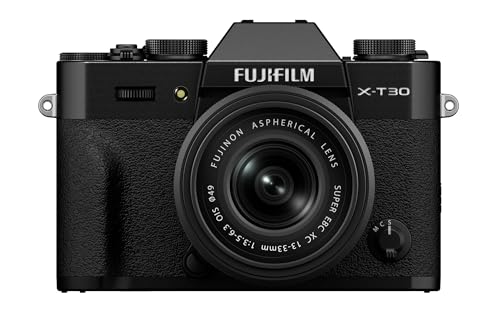
Want photography to feel like a craft, not a menu? This is the one. The X-T30 III puts shutter speed, exposure compensation and a new film simulation dial on top, next to an Auto switch that hands everything back to the camera when you just want the shot. Inside is a 26.1MP X-Trans sensor with subject detection for animals, birds and vehicles.
So on a family picnic, flick Auto on and enjoy lunch. Walking home, flick it off and try a slower shutter on a fountain. The EVF and screen stay readable in bright sun, and battery life beat its rating in Tom's Guide's testing, reaching the high 300s. The kit includes the XC13-33mm lens and a headphone adapter.
Still, two things bug owners. X-T30 owners on TalkPhotography report pressing the Q button by accident from the thumb rest, and this model keeps that layout. And without IBIS, slow handheld shots on the kit lens can blur. Would we buy it? For stills-first learners, yes. Want a tinier Fuji with better video ports? The Fujifilm X-M5 (#8) is the pick.
Best for: Beginners who want to learn exposure on physical dials and love Fuji colors straight out of the camera
Skip it if: You want a tiny Fuji for vlogging. The Fujifilm X-M5 (#8) is the better pick.
Pros
- Lovely 26MP images and film simulations
- Snappy subject-detect AF incl. birds, animals
- Retro dials plus a film simulation dial
- Battery beat its rating in testing
- Compact, well-built body with EVF and flash
Cons
- No in-body stabilization
- Q button sits where your thumb rests
- Tilt-only screen and 2.5mm mic jack for video
- Single card slot, no weather sealing
- Barely changed from the X-T30 II
Hands-on reviews behind this pick
- Tom's Guide
Show the verdict
Brings the X-T30 line up to date with Fuji's latest subject-detect AF, a film simulation dial and lovely 26MP images in a stylish compact body; the badly placed Q button is the main gripe.
- PetaPixel (YouTube)
Show the verdict
A familiar, fun and compact stills camera: the new processor brings better subject detection, battery life and film modes, but video handling is awkward with a tilt-only screen and small mic jack.
5. Sony ZV-E10 II: Best Beginner Camera for YouTube
For a new YouTuber filming indoors, this is the camera we'd pick. Sony put the 26MP APS-C sensor from the a6700 and FX30 into a light 377 g body with a flip-out touchscreen, and the subject-detect AF handles faces and products without fuss. Product showcase and background defocus are a button away.
Now you're recording a sit-down cooking video. You move from the stove to the counter and focus follows you, and the big NP-FZ100 battery covers the whole session on one charge. In a cool kitchen, heat is rarely a problem. Direct sun is different: Gerald Undone's 4K24 runs stopped after 22 to 73 minutes, and 4K60 lasted only about 10.
That's the trade. A two-year owner's long-term review says overheating rarely hit him indoors, but names the missing IBIS and electronic-only shutter as the real deal-breakers. We agree: walking shots need a gimbal, and fast action stills can warp. Would we buy it? For indoor creators, yes. Want a viewfinder and flash for photos too? The Nikon Z50 II (#3) does both.
Best for: Beginner YouTubers and social creators who film themselves indoors
Skip it if: You want a viewfinder for photos. The Nikon Z50 II (#3) is the better pick.
Pros
- Same 26MP sensor as the a6700 and FX30
- 10-bit 4K up to 60p with S-Log3 and LUTs
- Fast, reliable subject-detect autofocus
- Big NP-FZ100 battery, about 2 hours of 4K
- Good three-capsule built-in mic
- Vlog tools: product showcase, background defocus
- Light 377 g body with flip-out touchscreen
Cons
- No in-body stabilization
- Overheats in 4K60 and in hot or sunny conditions
- No viewfinder
- Electronic shutter only, no mechanical shutter
- Screen hard to see in bright sun
- Single card slot, micro HDMI
Hands-on reviews behind this pick
- DPReview
Show the verdict
Produces great 4K, especially in a controlled setting: a strong pick for indoor setups and everyday recording, but not for handheld outdoor vlogging or as a main stills camera given no IBIS.
- TechRadar
Show the verdict
A highly recommendable compact vlogging camera sharing pricier models' sensor, with superb AF and 10-bit 4K60, worth it if you can live without a viewfinder and with overheating in long 4K takes.
- Gerald Undone
Show the verdict
Basically an FX30 that overheats sooner: same sensor and 10-bit tools, a huge jump over the Mark I, but heat limits make it a cool-room camera, with 4K60 lasting only about 24 minutes in his studio.
6. Canon EOS R100 (RF-S 18-45mm kit): Best Cheap Camera for Beginners
On a tight budget, this is where we'd start. The R100 uses a 24.1MP APS-C sensor whose photos stand up to pricier 24MP bodies, with Dual Pixel AF and face and eye detection that work well for family shots and portraits. It weighs about 356 g and comes with the RF-S 18-45mm lens, battery and charger.
Take a cabin weekend. The camera rides in a daypack, and one charge covers the whole afternoon, since its battery life is one of the best in its class. You frame through the viewfinder while eye AF keeps the kids' faces sharp as they roast marshmallows. A mic input and full hot shoe leave room to grow.
Here's the thing, though. The screen is fixed and has no touch control, so moving the AF point means the four-way pad. R100 owners on the DPReview forums say mapping a button for AF area fixes most of that, but slow bursts and a small buffer hold it back for sports. 4K is heavily cropped too. Would we buy it? For photos on the smallest budget, yes. If you can stretch, the Canon EOS R50 (#2) is the better camera.
Best for: Phone upgraders on the tightest budget who mainly shoot photos of family, travel and pets
Skip it if: You want a touchscreen and better video. The Canon EOS R50 (#2) is the better pick.
Pros
- Cheapest way into Canon's RF mirrorless system
- Very good photo quality from the 24MP sensor
- Light, compact body at about 356 g
- Quick Dual Pixel AF with face and eye detection
- Mic input and a full hot shoe
- Strong battery life for its class
Cons
- Fixed rear screen with no touch control
- 4K is heavily cropped and uses slower contrast AF
- Only about 3.5 fps with continuous AF
- Small raw buffer fills in about a second and a half
- No in-body stabilization
- Few native RF-S lenses, no fast normal prime
Hands-on reviews behind this pick
- DPReview
Show the verdict
DPReview finds the R100 takes very good photos and is the cheapest RF entry, but says dated parts, a non-touch screen and weak cropped 4K add up to too many compromises to recommend it.
- Cameralabs
Show the verdict
Cameralabs says the R100 does what it sets out to do: a simple, light step up from a phone with good photos and Dual Pixel AF, though enthusiasts will find the R50 the better buy.
- PetaPixel
Show the verdict
PetaPixel likes the sensor, eye AF and quiet shutter, but calls the handling clunky and the missing touchscreen a big miss, and thinks the R50 is the better long-term buy for most.
7. Nikon Z fc: Best Retro Camera for New Photographers
Some people learn best when the camera feels special, and that's the Z fc. It's styled after Nikon's FM2 film camera, with dedicated shutter speed, ISO and exposure compensation dials. Inside, it's a 20.9MP APS-C camera with quick eye AF and pleasing JPEG colors and skin tones.
So your cat is curled on a sunny windowsill. Pet eye AF locks on, you turn the shutter dial to freeze a tail flick, and the bright flip-out touchscreen lets you shoot from cat height. 4K 30p is uncropped. The kit's 16-50mm VR lens matters here, because the body has no in-body stabilization.
But handling is where owners split. Z fc owners on the DPReview forums either love cradling it like an old FM or find it thin and slippery and add a third-party grip, so hold one in a store if you can. Battery life is about 300 shots, so pack a spare. Would we buy it? If dials and style keep you shooting, yes. If you want full-frame quality and IBIS, the Nikon Z5 II (#9) is the step up.
Best for: Beginners who want to learn with physical dials and care about style and low weight
Skip it if: You want full-frame image quality and IBIS. The Nikon Z5 II (#9) is the better pick.
Pros
- Retro film-camera look with real dials
- Quick, accurate eye AF for people and pets
- Sharp 4K video with no crop
- Light body, about 390 g
- Bright, sharp flip-out touchscreen
- Pleasing JPEG colors and skin tones
Cons
- No in-body image stabilization
- No grip; some owners find it slippery
- Average battery life, about 300 shots
- 20.9MP is lower than most APS-C rivals
- Noticeable rolling shutter in 4K
- No headphone jack or joystick
Hands-on reviews behind this pick
- DPReview
Show the verdict
A capable, if not class-leading, camera for photos and vlogging: essentially a Z50 in a classic shell, with strong images and reliable AF but no IBIS, no joystick and a limited DX lens range.
- Christopher Frost
Show the verdict
A joy to shoot: it looks great, focuses fast and is easy to use, with lovely colors, though the 20MP sensor feels limited for landscapes and the missing in-body stabilization is its biggest flaw.
8. Fujifilm X-M5 (XC15-45mm kit): Best Tiny Camera for Beginner Vloggers
If small is the whole point, this is your Fuji. The X-M5 is the smallest current X-mount body at about 355 g, yet it carries the 26.1MP X-Trans sensor, strong subject-detect AF, 6.2K open gate video and a film simulation dial.
Now spend an afternoon at a street fair. You hold it in one hand, flip the screen around, and vlog mode's product priority switches focus when you hold a churro up to the lens. Vertical video is built in for social. You get 3.5mm mic and headphone jacks, and Christopher Frost measured about 350 shots or 80 to 90 minutes of video per charge. The kit's 15-45mm power zoom has OIS.
But there's no viewfinder and no IBIS. Walking footage stays shaky even with lens OIS and digital IS, and rolling shutter is noticeable. Reddit owners mostly praise its portability, value and image quality, and the display is what they criticize most. Would we buy it? For screen-first creators and travelers, yes. Want a viewfinder in a small body? The Canon EOS R50 (#2) has one.
Best for: Beginner vloggers and travelers who frame on a screen and want a tiny camera with good audio options
Skip it if: You want a viewfinder in a small body. The Canon EOS R50 (#2) is the better pick.
Pros
- Tiny, light body that takes X-mount lenses
- 6.2K open gate and 10-bit video
- Strong subject-detect autofocus
- Vlog mode, flip-out screen and headphone jack
- Film simulation dial and Fuji color
Cons
- No viewfinder
- No in-body stabilization
- Noticeable rolling shutter in video
- Mediocre kit lens
- Small grip and fiddly Q button
Hands-on reviews behind this pick
- Digital Camera World
Show the verdict
A joy to shoot with: compact, stylish and well specced for the money, with impressive vlog-friendly video and top-notch images, though the lack of a viewfinder will put some photographers off.
- Christopher Frost (YouTube)
Show the verdict
Highly recommended: an affordable hybrid packed with video features, strong subject-detect AF and classic X-Trans quality, though it lacks an EVF and IBIS and shows clear rolling shutter.
9. Nikon Z5 II: Best Full-Frame Camera for Beginners
Ready to spend more so you never outgrow the body? This is the one. The Z5 II uses a proven 24.5MP full-frame BSI sensor with EXPEED 7, plus 5-axis IBIS rated up to 7.5 stops, dual SD slots and weather sealing. For pure photo quality, nothing else on this list matches it.
So imagine your son's school play, shot from row 12. You can't move, the stage lights are dim, and IBIS plus the big sensor keep handheld shots sharp and clean, while AF keeps working even several stops underexposed. Outdoors, the 3000-nit viewfinder stays clear in harsh sun. The kit includes the NIKKOR Z 24-50mm lens.
Now the catches: menus and battery. The menus are long and plain, and Z5 II owners on Nikonites say heavy viewfinder use drains the battery fast, with a spare or USB-C power as the fix. Would we buy it as a first camera? Only if image quality matters more than size and you'll take time with the menus. Otherwise, the Nikon Z50 II (#3) is lighter and easier.
Best for: Beginners with a bigger budget who want full-frame image quality and IBIS from day one
Skip it if: You want something lighter and easier to learn. The Nikon Z50 II (#3) is the better pick.
Pros
- Excellent image quality from a proven 24MP BSI sensor
- Very good autofocus, even several stops underexposed
- Very bright 3000-nit viewfinder works in harsh sun
- In-body stabilization and dual SD card slots
- Comfortable, weather-sealed body with a flip screen
- Internal 10-bit N-Log and raw video
Cons
- Battery life is reasonable, not great
- Video autofocus less dependable than for stills
- Noticeable rolling shutter in full-width 4K
- 4K 60p needs a 1.5x crop
- Long, plain menus and a stiff rear D-pad
- Micro HDMI port instead of full size
Hands-on reviews behind this pick
- DPReview
Show the verdict
DPReview gives it Gold: an impressive all-rounder with excellent image quality, very good AF and a comfortable body, so capable for the class that few buyers will truly need anything more.
- Gerald Undone
Show the verdict
Gerald Undone calls it great value with much better video and low-light AF than past models, while flagging quirks: a stiff D-pad, pseudo-raw N-RAW and a record-time bug he hopes firmware fixes.
- Fstoppers
Show the verdict
Fstoppers frames it as one of the best-value full-frame bodies around, with flagship-like specs, a sunlight-friendly EVF and internal raw video, after weeks of real portrait work with it.
10. Canon EOS R50 V: Best Budget Video Camera for Beginners
This is a video camera first, and it doesn't pretend otherwise. The R50 V takes a 24.2MP APS-C sensor and adds what creators want: oversampled 4K 30p, 10-bit Canon Log 3, a tally light, a front record button, a vertical tripod thread and a headphone jack. It weighs about 370 g with battery and card.
Set it on a tabletop tripod for a weekly guitar lesson video. The tally light tells you it's rolling, and the 14-30mm power zoom reframes silently between your face and the fretboard. False color and Log view assist help you nail exposure. Christopher Frost got about 80 minutes of 4K per charge in cool weather, though Canon says 4K can stop after about 55 minutes at room temperature unless you set the heat threshold to high.
Still, it's a weak stills camera. Early R50 V owners on the DPReview forums love the light kit and silent zoom, but note the record button can't be remapped for stills, there's no pre-record and no furry windscreen in the box. Pans show rolling shutter too. Would we buy it? For a static YouTube setup, yes. If you want photos as well, the Canon EOS R50 (#2) adds a viewfinder and flash.
Best for: New YouTubers and talking-head creators on a budget who rarely shoot stills
Skip it if: You want to take photos as much as video. The Canon EOS R50 (#2) is the better pick.
Pros
- Oversampled 4K 30p with Canon Log 3 and 10-bit 4:2:2
- Reliable autofocus for vlogging
- Tally light, front record button, vertical tripod mount
- Headphone and mic jacks
- Light at about 370g with battery and card
- Great kit lens choice in the 14-30mm power zoom
Cons
- Poor rolling shutter on pans and moving subjects
- 4K 60p needs a big 1.56x crop
- No viewfinder and clumsy stills handling
- No IBIS; digital stabilization is not the best
- Confusing resolution and frame-rate menus
Hands-on reviews behind this pick
- DPReview
Show the verdict
DPReview calls the R50 V a solid, good-value video camera with great image quality, reliable AF and useful assist tools, but slow rolling shutter and a heavy 4K 60p crop hold it back.
- Photography Blog
Show the verdict
Photography Blog says the R50 V is a great fit for budget content creators who want an upgrade path, praising its video controls, Canon Log 3 and value, while missing a viewfinder and IBIS.
- Christopher Frost
Show the verdict
Christopher Frost finds the R50 V impressively specced for video at its price, with sharp oversampled 4K, Log and good AF in a light body, though small controls and awkward menus frustrate.
Best cameras for beginners buying guide for 2027
How much should a beginner spend on a camera?
Spend enough to get a kit with a lens, then save a little for a spare battery and an SD card, because you'll want both soon. The Canon EOS R100 is the cheapest real camera here and takes very good photos. The Canon EOS R50 and R50 V add a touchscreen and better 4K. Step up to the Canon EOS R10, Nikon Z50 II or Fujifilm X-T30 III for more controls, and to the Nikon Z5 II only if full frame matters.
Watch body-only listings: the Nikon Z50 II and Sony ZV-E10 II links here are body only, so pick a kit if you have no lenses. If you just want a pocket point-and-shoot, see simple compact cameras for less than $200. To see how these compare with pricier models, read our full camera rankings at every budget.
Is a kit lens good enough on a beginner camera?
Yes, for your first few months outdoors and in good light. Kit zooms cover wide shots to portraits and keep the package light. They're slow, though, so indoors and at dusk they force higher ISO or slower shutter speeds. R50 owners say the 18-45mm is the real limit indoors, and the Canon EOS R10's kit zoom looks soft next to better glass.
Some kit lenses earn their place. The Canon EOS R50 V's 14-30mm power zoom is a great fit for video, and the Nikon Z fc's 16-50mm VR adds the stabilization its body lacks. Plan your second lens around what frustrates you first, usually low light. If you're buying into Canon RF and want lens advice, see which Canon to buy if you mostly shoot photos.
Does a beginner camera need a viewfinder or is a screen enough?
A viewfinder matters if you shoot outside in bright sun or want to brace the camera against your face. Screens wash out on a sunny boardwalk or a snowy hill, and the Sony ZV-E10 II's screen is hard to see in sun. Most picks here have one: the Canon EOS R10, R50 and R100, Nikon Z50 II and Z fc, Fujifilm X-T30 III, and the Nikon Z5 II with a very bright 3000-nit finder.
A screen is enough if you mostly film yourself or frame at arm's length like a phone. That's why the Sony ZV-E10 II, Fujifilm X-M5 and Canon EOS R50 V skip it and use flip-out screens instead. If you're unsure, get one with a viewfinder; the Canon EOS R50 has both in a tiny body.
Does a beginner camera need in-body stabilization?
Not for most photos, but it helps more than beginners expect. In-body stabilization (IBIS) steadies any lens, so slow shutter speeds indoors stay sharp and walking video wobbles less. Only the Nikon Z5 II has it on this list, rated up to 7.5 stops.
Everything else relies on stabilized lenses, or digital stabilization for video, which crops the frame. That's fine at normal shutter speeds in daylight. It bites at dusk and in dim rooms, where a long-term Fujifilm X-T30 III owner got blurred kit-lens frames at slow speeds. So pick a kit lens with IS, VR or OIS, like the Nikon Z fc's 16-50mm VR or the Fujifilm X-M5's 15-45mm OIS, and use a gimbal if you film while walking.
Which beginner camera is best for video and vlogging?
For filming yourself indoors, get the Sony ZV-E10 II: fast face and product AF, a good built-in mic and about two hours of 4K per battery. Its weak spot is heat in direct sun. On a tighter budget, the Canon EOS R50 V is built for talking heads, with a tally light, front record button, headphone jack and a silent power zoom.
If you travel and want the smallest kit, the Fujifilm X-M5 has vlog mode, vertical video and mic and headphone jacks. Want strong video and a viewfinder for photos? The Nikon Z50 II adds 10-bit N-Log and a tally lamp. Whichever you pick, check the mic jack and screen first: the Fujifilm X-T30 III's tilt-only screen and 2.5mm jack make it a poor vlogger.
Best cameras for beginners: frequently asked questions
What is the best camera for beginners?
We'd buy the Canon EOS R10. It's easy in Auto, has two dials and a joystick to grow into, and 15 fps bursts with reliable tracking for kids and sports. Want something smaller and simpler? Get the Canon EOS R50. Filming YouTube from home? Get the Sony ZV-E10 II.
Should a beginner buy a DSLR or a mirrorless camera?
We'd buy mirrorless. New DSLRs are a poor buy now, and every pick on this list is mirrorless. Eye and subject detection make sharp photos of people and pets much easier. Own old Canon EF lenses? The Canon EOS R10, R50 and R100 take them with an adapter, so they aren't wasted.
Is the Canon EOS R50 or R10 better for beginners?
The Canon EOS R10 if you want to learn manual control and shoot sports or kids: two dials, a joystick and 15 fps mechanical bursts. The Canon EOS R50 if size matters most: about 375 g, a vari-angle touchscreen and an Auto mode that tracks moving subjects. Both share a 24.2MP sensor and lack IBIS.
Is a kit lens good enough for a beginner camera?
Yes, to start, especially outdoors. Kit zooms are slow, so they struggle indoors, and Canon EOS R50 owners say the 18-45mm is the real limit there. The Canon EOS R50 V's 14-30mm power zoom and the Nikon Z fc's 16-50mm VR are kit lenses worth having. Plan a brighter lens as your second purchase.
Is a full-frame camera worth it for a beginner?
Only if image quality matters more than size and cost. The Nikon Z5 II takes the best photos here and adds IBIS, weather sealing and dual card slots, but it's about 700 g with long menus. Most beginners are happier with an APS-C camera like the Canon EOS R10 or Nikon Z50 II, upgrading lenses later.