The 8 Best Digital Cameras under $200 in 2027
Phone zoom turns a kid across the field into a blur. These are the best digital cameras under $200 in 2027 for zoom, water or no screen, catches included.

Affiliate Disclosure: As an Amazon Associate, we may earn a commission from qualifying purchases, and it never changes our picks.
Our picks at a glance
9.8/10Score

$139.99
as of Nov 9, 2026, 09:40 UTC

9.5/10Score
$179.00
as of Nov 9, 2026, 09:40 UTC

9.4/10Score
$179.00
as of Nov 9, 2026, 09:40 UTC

9.2/10Score
$109.99 $129.99 Save 15%
as of Nov 9, 2026, 09:40 UTC
9.1/10Score
$114.18
as of Nov 9, 2026, 09:40 UTC

8.6/10Score
$89.99 $99.00 Save 9%
as of Nov 9, 2026, 09:40 UTC

8.2/10Score
$84.99
as of Nov 9, 2026, 09:40 UTC

7.4/10Score
$34.99
as of Nov 9, 2026, 09:40 UTC
Product prices and availability are accurate as of the date/time indicated and are subject to change. Any price and availability information displayed on Amazon.com at the time of purchase will apply to the purchase of this product.
How we rank best digital cameras under $200 for you?
We start with photo quality, because a budget camera has to beat your phone somewhere, mostly in daylight and at a distance. Zoom and features come next: optical zoom, waterproofing, a flip-up screen or a screen-free look are things your phone can't give you. Ease of use matters just as much, since these cameras often go to kids, teens or a casual day out. Design and build decides whether it lives in a pocket or survives the pool, and battery and charging decides whether it's ready on day two of the trip. That puts the Kodak PIXPRO FZ55 first.
 Photo Quality30%
A cheap camera has to add something to your phone's photos, mostly in daylight and at a distance.
Zoom and Features20%
Zoom and Features20%Optical zoom, waterproofing, a flip screen or a screen-free look is what a phone can't give you.
Ease of Use20%
Ease of Use20%These cameras are often for kids, gifts or casual days out, so simple controls matter.
 Design and Build15%
Pocket size, grip and toughness decide whether it goes in a bag, a pocket or the pool.
 Battery and Charging15%
USB charging or easy AA swaps decide whether it is ready on the trip, not just at home.
Best digital cameras under $200 compared
Swipe sideways to see every spec.
| Product | Score | Megapixels | Video | Zoom | Screen |
|---|---|---|---|---|---|
| 9.8 | 16MP 1/2.3-inch CMOS (16.35MP effective) | 1080p at 30fps; 720p at 60fps | 5x optical, 28-140mm equivalent, f/3.9-6.3 | 2.7-inch 230K-dot LCD, fixed, not touch | |
| 9.5 | 16MP 1/2.3-inch BSI CMOS (16.35MP effective) | 1080p at 30fps | 4x optical, 27-108mm equivalent, f/2.0-6.6 | 2.7-inch LCD, fixed | |
| 9.4 | 16MP, 1/2.3-inch BSI CMOS sensor | 1080p at 30fps, 720p at 60fps | 25x optical, 24-600mm equivalent, with optical stabilization | 3-inch fixed LCD, no viewfinder | |
| 9.2 | 16MP 1/2.3-inch CMOS (16.35MP effective) | 1080p at 30fps; 720p at 60fps | 4x optical, 27-108mm equivalent, f/3.0-6.6 | 2.7-inch 230K-dot LCD, fixed, not touch | |
| 9.1 | 16MP, 1/3.06-inch CMOS sensor | Not listed; stills only | None; fixed-focus 22.5mm-equivalent f/2.2 lens | No screen; offset optical viewfinder and shot counter | |
| 8.6 | 13MP, 1/3-inch BSI CMOS sensor | 1080p at 60 or 30fps, no stabilization | None optical; fixed 26mm f/2 lens, 4x digital zoom | 2.8-inch LCD, flips up 180 degrees for selfies | |
| 8.2 | 20MP photos | 4K/30fps, 2.7K/30fps, 1080p/60fps, 720p/120fps | No optical zoom; wide, medium and narrow digital crops | 2-inch rear touchscreen | |
| 7.4 | 1.6MP stills (1440 x 1080 JPEG) | 1440 x 1080 in a 4:3 frame, built-in mic | None, fixed lens (claimed 35mm-equivalent f/2.4) | Tiny rear LCD (about 7/8 x 1/2 in) plus optical viewfinder |
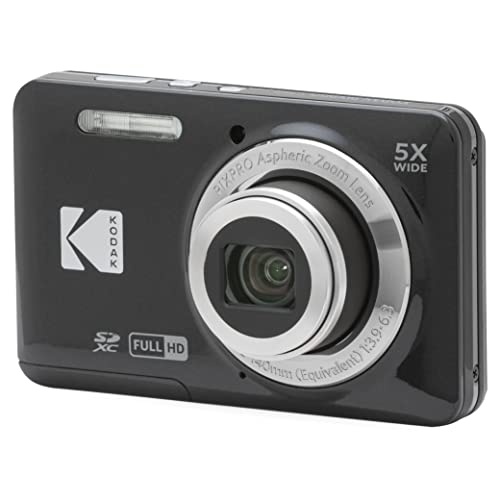
1. Kodak PIXPRO FZ55: Best Digital Camera Under $200 Overall
This is the camera we'd hand most people first. It's about the size of a credit card and weighs around 106g, yet its 5x optical zoom (28-140mm) reaches where your phone starts guessing. Daylight photos come out bright and colorful, and the controls are simple enough for a kid on a first camera.
So picture a Saturday at the zoo. The giraffes are across the enclosure, and a press of the zoom rocker brings them in close instead of leaving them as specks. Between exhibits, you can top up from a USB power bank, since it charges inside the camera, and it's rated at about 200 shots per charge. Add an SD card, because only 63MB is built in. And with no Wi-Fi, sharing means a cable or the SD card.
But the f/3.9 lens is slow, and owners on the DPReview forum agree that low light is its weak point, even while they praise its colors and quick startup. The screen also washes out in sun. So would we buy it? For daylight days out, yes. Need far more reach? The Kodak PIXPRO AZ255 (#3) zooms much farther. And if the day ends in the pool, read on.

Best for: Kids, teens and casual travelers who want a simple pocket camera with real optical zoom

Skip it if: You want to zoom across a bay or a stadium. The Kodak PIXPRO AZ255 (#3) is the better pick.
Pros
- Credit-card size, about 106g, fits any pocket
- 5x optical zoom, which phones lack
- Simple point-and-shoot use, good for a first camera
- Bright, colorful daylight photos
- Rechargeable battery charges in the camera over USB
- Dedicated video button and macro mode
Cons
- Screen is dim and hard to read in sunlight
- Slow f/3.9 lens struggles in low light
- Zoomed and moving shots often come out soft
- No Wi-Fi or Bluetooth, transfer by cable or card
- 1080p video is shaky when zoomed
- Easy to block the flash with a finger
Hands-on reviews behind this pick
- Digital Camera World
Show the verdict
A tiny, auto-everything snapper with colorful images and a handy 5x zoom; basic and dated to use, but a fair gift for young or first-time photographers who value simplicity.
- Tech to Remember
Show the verdict
Surprisingly nice daylight photos for casual shooters and kids, but the glary screen, soft zoomed shots and shaky 1080p video mean it is a fun snapshot camera, not a serious one.
2. Kodak PIXPRO WPZ2: Best Waterproof Digital Camera
If water is part of the plan, this is the one to pack. The WPZ2 is waterproof to 15m, dustproof and rated for 2m drops, and its double-locking door keeps the battery and card dry. It has come through saltwater rock pools without the lens fogging, and kept working after a dunk in a sink and a drop onto cobblestones.
Say you're snorkeling in a hotel pool on day three of the vacation. The kids dive down and you shoot them underwater, with no separate housing and no phone at risk. The 4x zoom and the macro mode cover wide splashes and close-up shells. It's rated at about 200 shots, and Tom's Guide got 189, enough for a casual day before a USB-C top-up. Bring a microSD card, since almost nothing is built in.
Image quality is where it gives ground. Photos can look flat and over-sharpened, low light is weak, and the Wi-Fi app is slow to connect. Still, kayakers on the DPReview forum call it rock solid in the wet. Is it the right camera for you? For families near water, yes. Want helmet or board video instead? The AKASO EK7000 Pro (#7) comes with mounts.
Best for: Families and outdoor fans who want a camera they don't have to baby near water
Skip it if: You mostly want helmet or handlebar video. The AKASO EK7000 Pro (#7) is the better pick.
Pros
- Waterproof to 15m, dustproof and drop-proof to 2m
- Survived drops and dunks in hands-on tests
- Pocketable at about 176g
- Impressive macro shots for the price
- Decent battery life with USB-C charging
- Double-locking battery and card door
Cons
- Flat, over-sharpened JPEGs with weak dynamic range
- Small, dim screen hard to read in daylight
- Digital zoom is effectively unusable
- Only 1080p/30 video with digital stabilization
- Fiddly microSD slot and stiff zoom rocker
- Wi-Fi app is slow and hard to connect
Hands-on reviews behind this pick
- TechRadar
Show the verdict
No image quality award winner and its 1080p video feels dated, but as a cheap waterproof camera for snorkeling, rock pools or kayaking it earns its keep, especially in good light.
- Tom's Guide
Show the verdict
A stylish, compact, rugged and cheap all-rounder that survived drops and dunks and takes surprisingly good daytime photos, though low-light shooting is only okay and features are basic.
- Tech to Remember
Show the verdict
Works fine underwater in shallow use and takes nice video and decent indoor shots without much motion, but the slow lens limits low light and the Wi-Fi app is a frustrating pain.
3. Kodak PIXPRO AZ255: Best Long Zoom Digital Camera
Back on dry land, distance is the problem phones can't fix. Their zoom falls apart a few steps past 1x, and this one doesn't. The AZ255's 25x optical zoom covers 24-600mm with optical stabilization, so wide landscapes and far-off details come from the same camera. It has a deep grip, P, S, A and M modes to learn with, and 22 scene modes for when you just want to point and shoot.
That's clear on a coastal vacation. You frame the whole beach at 24mm, then zoom across the bay until the lighthouse fills the 3-inch screen. In bright daylight the zoom holds up well across its range. And it runs on four AA batteries, with alkalines in the box, good for about 300 shots, or close to a week of light use. Add an SD card and a set of rechargeable AAs.
Now the honest part. It takes about 2.5 to 3 seconds to start, focus is slow, and dim rooms or moving subjects turn soft. Purple fringing shows on high-contrast edges, and there's no viewfinder for sunny days. Worth the bag space? For patient daylight travel, yes. If it has to fit a pocket, the PIXPRO FZ55 (#1) is the easier carry.
Best for: Beginners who want a big optical zoom for travel, landscapes and outdoor family events
Skip it if: You want a camera that fits a pocket. The Kodak PIXPRO FZ55 (#1) is the better pick.
Pros
- 25x optical zoom reaches far-off subjects
- Optical stabilization helps at long zoom
- Wide 24mm end fits landscapes and groups
- AA batteries can be bought anywhere
- Big grip and DSLR-style controls
- Manual and scene modes to learn with
Cons
- Image quality is mediocre, weak in low light
- Slow start-up, focus and mode changes
- No viewfinder; screen washes out in sun
- Purple fringing in high-contrast scenes
- Video tops out at 1080p/30
- No Wi-Fi or Bluetooth
Hands-on reviews behind this pick
- Digital Camera World
Show the verdict
A light, cheap bridge camera with manual controls and AA power, but photos range from mediocre to poor and it is slow to use. Worth a punt only if you really want a very cheap superzoom.
- Amateur Photographer
Show the verdict
Big zoom in a fairly compact body with easy handling and swappable AAs, but sluggish and prone to purple fringing; the reviewer suggests stepping up to Kodak's 40x AZ405 if you can.
- Tech to Remember
Show the verdict
Bought with his own money, he found the zoom impressively sharp across its range for outdoor travel and family shots, but too slow to focus for sports, birds or dim indoor events.
4. Kodak PIXPRO FZ45: Best AA-Powered Pocket Camera
Think of the FZ45 as the FZ55's AA-powered twin. It uses the same 16MP sensor and the same simple controls, but swaps the built-in battery for two AAs and the 5x zoom for a 4x (27-108mm). In return you get a slightly brighter f/3.0 lens at the wide end, a better grip and a flash that's easier to keep your fingers off.
Now say it's a camping weekend with no outlets. When the batteries die, you buy a pack at the camp store and keep shooting. That's the whole appeal. Two alkaline AAs, a USB cable and a wrist strap come in the box, but no SD card.
The trouble is that AAs don't last long here. Kodak rates a set at about 120 shots, and Tom's Guide got 105, so rechargeable NiMH cells are a smart add. For dim rooms, Pixpro owners comparing the pair pick the FZ45's brighter lens, though low-light shots still get soft. Our call: if outlets are rare, buy it. If you carry a power bank anyway, the FZ55 (#1) is the better buy.
Best for: First-time photographers and travelers who prefer AA batteries they can buy anywhere
Skip it if: You'd rather recharge over USB and want more zoom. The Kodak PIXPRO FZ55 (#1) is the better pick.
Pros
- Very easy to use, good for kids and beginners
- Pocket sized and light
- Runs on AA batteries you can buy anywhere
- Good, colorful photos in bright light
- Brighter f/3.0 lens than the FZ55 at the wide end
- Comfortable grip and well-placed flash
Cons
- Short battery life: Tom's Guide got 105 shots
- Disposable AAs unless you buy rechargeables
- Weak low-light and motion shots
- Low-res screen hard to see in sunlight
- No Wi-Fi or Bluetooth
- Plasticky feel
Hands-on reviews behind this pick
- Tom's Guide
Show the verdict
A very easy, highly portable compact that takes good, detailed photos in bright light and looks great, let down by disposable AA batteries, poor battery life and subpar low-light shots.
- Digital Camera World
Show the verdict
Dead easy to use and cheap enough to hand around to family, friends and kids for beach trips and snapshots; just don't expect much from its mediocre image quality and basic screen.
- Tech to Remember
Show the verdict
Pleasantly surprised: respectable photos for a bargain camera if you hold it steady, with a nicer grip and flash spot than the FZ55, though AA batteries give fewer shots per set.
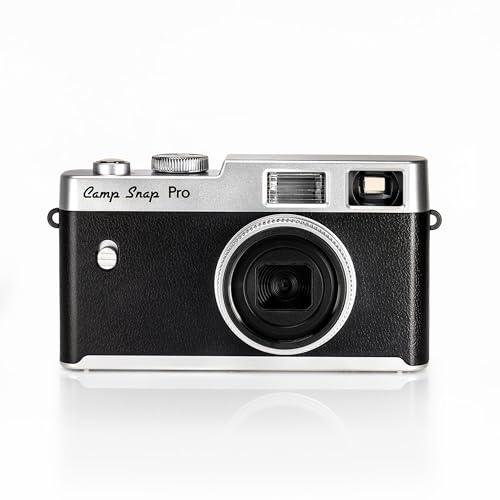
5. Camp Snap CS-Pro: Best Screen-Free Digital Camera
Most cameras here add something your phone lacks. This one takes the phone out of the moment. The CS-Pro has no screen at all, just an optical viewfinder, a shot counter and a dial with four looks: standard, two vintage styles and black and white. Its 16MP stills are a clear step up from the original Camp Snap, and the xenon flash gives that bright, flash-lit party look.
Take a night out with friends. Nobody huddles over a screen. You shoot, the counter ticks down, and the next morning you plug it in like a flash drive and see everything over coffee. A charge lasts about 500 shots, and a 4GB card comes fitted. Owners sharing CS-Pro shots on FM Forums say there's little noise in good light.
The trade-offs are real, though. The body is thin plastic, the viewfinder sits off to one side so framing is approximate, and at full power the flash can be too strong. There's no zoom and no video. Is it for you? If you want the experience more than the pixels, yes. If you want zoom and a screen, the PIXPRO FZ55 (#1) is the one.
Best for: Adults and hobbyists who want a phone-free, film-style camera for travel and nights out
Skip it if: You want to check your shots and zoom in. The Kodak PIXPRO FZ55 (#1) is the better pick.
Pros
- 16MP is a clear step up from the original Camp Snap
- Filter dial switches looks with no computer needed
- Real xenon flash and a tripod socket
- Very light, simple and battery lasts well
Cons
- Flimsy plastic build and scuff-prone finish
- Offset viewfinder makes framing imprecise
- No screen to check shots until you download them
- Small sensor: weak dynamic range and low light
Hands-on reviews behind this pick
- Tom's Guide
Show the verdict
A fun, easy screen-free point-and-shoot with sharper 16MP shots, four filters and far better battery life than the original, held back by some shutter delay and an offset viewfinder.
- Amateur Photographer
Show the verdict
An enticing update to a winning formula, with more resolution, easy filters and fixed shutter lag, but still a cheap small-sensor compact that won't convert anyone who disliked the first one.
- Cody Gregory
Show the verdict
Does exactly what it promises and brings back disposable-camera nostalgia, but it feels thin and toy-like, and any modern phone takes far better pictures, so it is hard to call good value.
6. Kodak PIXPRO C1: Best Selfie Digital Camera for Teens
A flip-up screen is rare at this level, and it's the reason this pick is here. The C1's 2.8-inch screen tilts up 180 degrees, so you can see yourself for selfies and quick vlogs. It's about 115g, fits a shirt pocket, and the buttons are simple enough for a teen to figure out in minutes. Video runs at 1080p and 60fps, smoother than most cameras on this list.
Here's where it earns its place: a sunny afternoon in a theme park line. You hold it out at arm's length, frame the whole group on the screen and take the shot. Daylight color has a pleasant, nostalgic feel, and macro mode focuses down to 8cm. It charges over USB-C, with a cable, an AC adapter and a wrist strap in the box, but no microSD card, so buy one up to 32GB.
The weak spots are just as clear. There's no optical zoom, focus is slow, and about a second of shutter delay makes moving friends hard to catch. With no stabilization, indoor shots blur. For a teen who lives on selfies, we'd buy it. For zoom on a trip, the PIXPRO FZ55 (#1) does far more.
Best for: Teens who want a simple, retro-looking camera for selfies and daytime snaps
Skip it if: You want real zoom for trips. The Kodak PIXPRO FZ55 (#1) is the better pick.
Pros
- Very small and light, fits a shirt pocket
- Flip-up screen makes selfies and vlogging easy
- Simple buttons and menus suit beginners and kids
- Rechargeable over USB-C, no AA batteries to buy
- Decent colors in bright daylight
- 1080p video at 60fps
Cons
- Digital zoom only; image falls apart past 1x
- Slow autofocus and noticeable shutter delay
- No stabilization, so low-light shots blur
- Screen is hard to see in bright sun
- Plasticky, hollow-feeling build
- No memory card in the box; 32GB card limit
- Battery is built in and can't be swapped
Hands-on reviews behind this pick
- Tom's Guide
Show the verdict
A cheap, pocketable camera with a handy flip-up selfie screen, smooth 1080p/60 video and a good macro mode, held back by hit-or-miss photos, a plasticky body, a dim screen and no stabilization.
- TechRadar
Show the verdict
It looks great and costs little, but the pictures would have disappointed on a cheap compact a decade ago and its sluggish focus and shutter make it worse; most phones take better shots.
- Amateur Photographer
Show the verdict
A slim, distraction-free snapshot camera with a flip-up screen that may tempt kids away from phones. Small-sensor image quality and digital-only zoom limit it, but it fulfils its fun brief.
7. AKASO EK7000 Pro: Best Action Camera for Snorkeling Trips
Here's the one for moving video rather than still photos. The EK7000 Pro is a GoPro-style action camera, and the box does most of the selling: a waterproof case rated to 40m, helmet and handlebar mounts, a wrist remote and two batteries with a charger. Nothing else on this list gives you that much to start with.
So clip it to your helmet for a Sunday trail ride. Each battery records about 45 to 55 minutes at 1080p, so you swap in the second one at the halfway snack stop and keep filming the ride home. Shoot at 1080p and 60fps, which looks decent for the money. It's light enough for a pocket, and you'll need to add a microSD card.
But the 4K is soft, and its view angles are just digital crops. Stabilization only works at 1080p, and in Digital Camera World's review it added a buzz to the audio while the Wi-Fi app never connected. It's also been on sale since 2019. As a first action cam, we'd buy it. For photos by the pool, the PIXPRO WPZ2 (#2) is the better tool.
Best for: First-time action-cam buyers who want a complete kit for water and bike clips
Skip it if: You want photos, not video, near water. The Kodak PIXPRO WPZ2 (#2) is the better pick.
Pros
- Big accessory kit: waterproof case, mounts, remote
- Two batteries included for longer shoots
- 1080p at 60fps footage is decent for the money
- Small and light enough for a pocket or helmet
Cons
- Each battery lasts about 45-55 minutes at 1080p
- EIS works only at 1080p and caused buzzing audio in DCW test
- Fiddly touchscreen; Wi-Fi app never connected for DCW
- 4K and stills are soft; view angles are just crops
Hands-on reviews behind this pick
- Digital Camera World
Show the verdict
A cheap and cheerful, archetypal budget action cam that covers the basics well enough, though the app and the stabilization weren't polished enough to be truly usable.
- Redskull
Show the verdict
Lots of value for very little: a touchscreen, two batteries, a remote and a full mount kit, with stabilization that is fine for the money but doubts that its 4K is true 4K.
8. Kodak Charmera Keychain Digital Camera: Best Keychain Digital Camera for Gifts
Treat the Charmera as a toy that takes pictures, and you'll enjoy it. It's small enough to hang from a keychain and comfortable to pinch and shoot with one hand. The color and pixel filters turn its 1.6MP shots into bold, graphic little images, which is half the fun.
It's happiest clipped to your backpack on a bright morning walk. You unclip it, snap friends through a pixel filter and clip it back. Strong sun and simple shapes suit it best, because the screen is too small to judge framing. PetaPixel got about 130 shots on one bar of battery, and it charges over USB-C. Budget for a microSD card up to 128GB, since internal memory holds only a couple of photos.
Now the downsides. Dim rooms turn to noise and blur, the flash is weak, video is blocky, and the power switch wants a hold of about three seconds. An owner and several commenters reported photos vanishing after a restart, and repairing the card's format fixed it. As a gift, it's an easy yes. For sharper screen-free shots, the Camp Snap CS-Pro (#5) is the step up.
Best for: Gift buyers and Kodak fans who want a fun, tiny camera for daytime snaps
Skip it if: You want sharper photos in a screen-free style. The Camp Snap CS-Pro (#5) is the better pick.
Pros
- Keychain size, easy to carry everywhere
- Comfortable to shoot one-handed
- Pixel color filters give a bold retro look
- Simple interface anyone can learn
- Long battery life for its size
Cons
- Very low 1.6MP resolution, soft detail
- Poor low-light results, weak flash
- Video is blocky with heavy rolling shutter
- Screen too small to judge framing
- Sold in blind boxes, so you can't pick a color
- No microSD card included, tiny internal memory
Hands-on reviews behind this pick
 Digital Trends
Show the verdict
A playful, nostalgic extra rather than a main camera: few complaints in good light and it sparks smiles, but low light, video and audio are rough, so anyone wanting sharp shots should use a phone.
- PetaPixel
Show the verdict
A marketing masterclass that is cute, pocketable and comfortable to hold, but image quality is mushy even for a toy camera and the video is barely worth showing anyone; buy it for fun only.
- Down the Road (Jim Grey)
Show the verdict
A toy that only works in strong light with bold shapes; default images are soft and low-res, but the pixel filters turn its flaws into graphic art, and it is light enough to forget on a belt loop.
Best digital cameras under $200 buying guide for 2027
Is a cheap digital camera better than your phone?
Only in a few specific ways, and those are the reason to buy one. Every camera here has a small sensor, so in a dim restaurant or a dark gym a recent phone usually takes the cleaner shot. Where a cheap camera pulls ahead is reach, water and focus on the moment.
So pick for the gap your phone leaves. Optical zoom is the big one: the PIXPRO FZ55 and FZ45 bring a kid across the playground or a zoo enclosure closer, and the AZ255 goes much farther. Water is next, where the WPZ2 goes in the pool while your phone stays dry. And some buyers want no screen at all, which is where the Camp Snap CS-Pro fits.
For a dim school auditorium or an evening gig, keep using your phone. If you want a camera that beats it in every light, you'll need a bigger sensor and a bigger budget, and our main camera guide covers those.
How much optical zoom do you need in a budget digital camera?
For most family days out, 4x to 5x is enough. That's the PIXPRO FZ45's 27-108mm and the FZ55's 28-140mm, which pull in a goalkeeper at the far end or an animal across an enclosure without leaving your pocket.
But if you shoot wildlife, far-off landmarks or the far side of a stadium, a pocket zoom runs out fast. The AZ255's 25x (24-600mm) is the only big zoom here, and its optical stabilization keeps long shots steadier. The trade is size and speed: it needs a bag, and focus is too slow for running kids.
One trap to watch: digital zoom is just a crop. The PIXPRO C1 has only digital zoom, and the Camp Snap CS-Pro and Charmera have none, so treat them as fixed-lens cameras.
AA batteries or rechargeable: which is better in a cheap camera?
Rechargeable is better for most people, while AA wins when outlets are scarce. The FZ55, WPZ2 and C1 charge inside the camera over USB, so a power bank or a car charger tops them up, and each is rated at about 200 shots.
AA cameras flip that. You never wait on a charger, and spares are sold at every gas station. The AZ255 gets about 300 shots from four AAs, but the FZ45 gets only about 120 from two, so a busy day can eat a set. Rechargeable NiMH cells cut that cost and waste.
The Camp Snap CS-Pro is the stamina champ at about 500 shots per charge. And whichever you pick, plan on a memory card: most of these cameras don't include one.
Why are screen-free digital cameras popular again?
Because they make taking photos feel like an event again, not another hour on a screen. With no display to check, you shoot, move on and see the results later, the way disposable film used to work. Flash-lit, slightly soft shots are part of the look.
The Camp Snap CS-Pro is the one we'd buy for that feel, with 16MP stills, a xenon flash, a filter dial and about 500 shots per charge. The Kodak Charmera is the playful keychain version, best as a gift, with far lower resolution. If you want the retro look but still like seeing your shots, the PIXPRO C1's flip-up screen gets you there.
Shopping for one of these on a tighter budget? We've rounded up the best picks if your budget is under $100 too.
Do you need a waterproof camera or an action camera?
Get a waterproof camera for photos and an action camera for video. The PIXPRO WPZ2 is a normal pocket camera that's waterproof to 15m with no case, dustproof and rated for 2m drops, so it's the easy pick for pool days, beaches and rainy hikes. It's made for snorkeling depth, not scuba.
The AKASO EK7000 Pro works the other way round. It needs its included case to reach 40m, but it comes with helmet and handlebar mounts, a remote and two batteries, so it's built for clips of rides and swims rather than framed photos. Stick to 1080p at 60fps for the best footage.
Buying for a younger child? We cover cameras a child can drop and still use in a separate guide.
Best digital cameras under $200: frequently asked questions
What is the best digital camera under $200?
For most people, it's the Kodak PIXPRO FZ55. It's credit-card size, adds a 5x optical zoom your phone lacks, takes bright daylight photos and charges over USB. If you'll be in the water, get the PIXPRO WPZ2 instead, and for a much longer zoom, the PIXPRO AZ255.
Is a cheap digital camera better than a phone camera?
Not in low light, where a modern phone usually wins. A cheap camera is better when you need optical zoom, waterproofing or a phone-free experience. Get the Kodak PIXPRO FZ55 for pocket zoom, the AZ255 for long zoom, the WPZ2 for water or the Camp Snap CS-Pro for screen-free shooting.
Are Kodak PIXPRO cameras any good?
Yes, for casual daylight shooting. PIXPRO models are simple, colorful in good light and cheap enough to hand to kids, but their small sensors struggle indoors and their screens are dim in sun. The FZ55 is the one we'd buy first, with the WPZ2 for water and the AZ255 for zoom.
Can you get a good zoom camera for under $200?
Yes. The Kodak PIXPRO AZ255 has a 25x optical zoom (24-600mm) with optical stabilization, and it runs on AA batteries. It's slow to focus and only looks its best in bright light, so it suits travel and landscapes. For a pocketable zoom, get the 5x PIXPRO FZ55.
Which cheap digital camera is waterproof?
The Kodak PIXPRO WPZ2 is waterproof to 15m with no case, plus dustproof and rated for 2m drops, so it's our pick for pools and beaches. If you want video instead, the AKASO EK7000 Pro reaches 40m inside its included case and comes with mounts.