
The 10 Best Drones for Travel in 2027
A drone too big to pack never leaves home, and a weak one dies before the light peaks. We compared 30 expert reviews to rank the best drones for travel.

Affiliate Disclosure: As an Amazon Associate, we may earn a commission from qualifying purchases, and it never changes our picks.
Our picks at a glance

10.0/10Score

$759.00
as of Nov 26, 2026, 12:46 UTC

9.7/10Score
$1,099.00
as of Nov 26, 2026, 12:46 UTC

9.4/10Score
Currently out of stock at Amazon.
View on Amazon
9.4/10Score
$479.00 $529.00 Save 9%
as of Nov 26, 2026, 12:46 UTC

9.4/10Score
$2,538.00 $2,899.00 Save 12%
as of Nov 26, 2026, 12:46 UTC

8.5/10Score
$299.99 $319.99 Save 6%
as of Nov 26, 2026, 12:46 UTC
8.4/10Score
$299.00
as of Nov 26, 2026, 12:46 UTC
8.4/10Score
$703.00 $879.00 Save 20%
as of Nov 26, 2026, 12:46 UTC
Black Friday Deal

8.4/10Score
$259.00
as of Nov 26, 2026, 12:46 UTC

7.8/10Score
$1,099.00 $1,599.00 Save 31%
as of Nov 26, 2026, 12:46 UTC
Black Friday Deal
Product prices and availability are accurate as of the date/time indicated and are subject to change. Any price and availability information displayed on Amazon.com at the time of purchase will apply to the purchase of this product.
How we rank best drones for travel?
We rank first by how easily a drone travels, because the one that stays in your bag shoots nothing, and the 250 g line decides whether you register it. Camera quality weighs just as much, since trip footage is shot at dawn and dusk when small sensors struggle. Flight time and wind handling come next, as exposed coasts and short batteries cut shots short. Safety and sensing matter in unfamiliar places full of trees and people. Design and build covers how it folds, survives bumps and copes with a long day.
Portability25%
A drone that folds small and stays under 250 g comes along on every trip, not just the big ones.
Camera Quality25%
Trip footage happens at sunrise and dusk, when small sensors turn grainy and big ones shine.
Flight Time and Wind20%
Coasts and ridges are windy, and a short battery means missing the moment the light breaks.
Safety and Sensing15%
New places mean unfamiliar trees, cliffs and crowds, so sensing and guards prevent costly crashes.
Design and Build15%
Folding, durability and what's in the box decide how well a drone survives a long, rough trip.
Best drones for travel compared
Swipe sideways to see every spec.
| Product | Score | Camera | Flight Time | Range | Weight |
|---|---|---|---|---|---|
| 10.0 | 1-inch 50MP; 4K up to 120fps, 10-bit D-Log M and HLG | 36 min (standard battery), 52 min (Plus battery) | 20 km max transmission (FCC) | 249.9 g rated, units often weigh 252 g; Plus battery over 250 g | |
| 9.7 | 1-inch 50MP wide + 48MP 70mm tele; 4K up to 120fps, D-Log M | 45 min (maker rating) | 20 km max transmission (FCC) | 724 g (over 250 g, FAA registration needed) | |
| 9.4 | 1/1.3-inch 48MP sensor, 4K up to 60fps (100fps slow-mo), 3-axis | Up to 31 min claimed; about 27 min in reviewer tests | Up to 13 km (FCC) with remote; about 50 m on phone Wi-Fi | Under 249g | |
| 9.4 | 1/1.3-inch f/1.7, 4K/60fps (4K/100 slow-mo), 48MP, 3-axis | Up to 32 min claimed; about 27.5 min in a cruise test | Up to 15 km claimed (SkyBridge) | Under 250 g (248 g measured by 51 Drones) | |
| 9.4 | 4/3 100MP main + 70mm + 168mm tele; 6K/60fps, 4K/120fps | 51 min (maker rating), 45 min hover | 30 km max transmission (FCC) | 1,063 g (over 250 g, FAA registration needed) | |
| 8.5 | 1/2-inch 48MP sensor, 4K/30fps HDR video | Up to 32 min claimed; about 20-22 min in reviewer tests | Up to 10 km (FCC) via PixSync 4.0 | Under 249g | |
| 8.4 | 12MP; 4K up to 30fps, 2.7K up to 60fps, normal color only | 31 min (maker rating) | 10 km max transmission | Under 249 g (no FAA registration for recreational flying) | |
| 8.4 | 1/1.3-inch, 8K/30fps, 4K/120fps, 48MP, 10-bit HLG and log | Up to 16 min claimed; reviewers saw about 8-14 min | App up to 800 m; up to 1 km with optional Beacon | 192 g (under 250 g), enclosed propellers | |
| 8.4 | 1/2-inch 12MP sensor, 4K up to 60fps (100fps with controller) | Up to 19 min claimed; about 12-15 min in reviewer tests | Up to 10 km (FCC) with controller or goggles; short on phone Wi-Fi | 151g; 160g with the Digital Transceiver | |
| 7.8 | Dual 1/1.28-inch 360 cameras: 8K/30, 5.2K/60, 4K/100, 55MP | 24 min claimed (39 min with high-capacity battery) | Up to 10 km (FCC); PCMag saw breakup near 2,200 ft | 249 g with standard battery; 291 g with high-capacity |
1. DJI Mini 5 Pro: Best Travel Drone Overall
The Mini 5 Pro is the travel drone we'd pack first, because it brings a 1-inch camera to a folding mini drone. That sensor is the difference at sunrise and dusk, when most trip footage is shot, and its 10-bit color holds up if you grade later.
Say you're on a ridge in Madeira at 7 a.m. with fog rolling through. Omnidirectional sensing and forward LiDAR keep it from drifting into the pines while you frame the shot, and true vertical mode means the clip is ready for your phone. Real flights run about 20 to 25 minutes, so the Fly More kit with extra batteries is worth it.
Here's the thing about the weight. Owners weighing their units keep finding 252 to 253 g, so treat it as a registered drone. So would we buy it? If image quality matters most, yes. If you want a drone that's truly under the line, the DJI Flip (#3) is the safer bet.
Best for: Travelers who want the best image quality they can fit in a small bag and don't mind registering.
Skip it if: You need a drone that's reliably under 250 g. The DJI Flip (#3) is the better pick.
Pros
- 1-inch sensor gives clean low-light footage for its size
- Omnidirectional sensing plus LiDAR works in low light
- True vertical shooting with full gimbal tilt
- 42 GB internal storage if you forget a card
- Faster, more reliable ActiveTrack than the Mini 4 Pro
- Survives minor crashes with only broken props
Cons
- Most units weigh just over 250 g despite the marketing
- Real flight time 20-25 min, far below the rating
- Footage bounces in strong wind at this weight
- Sensors can miss thin bare branches
- Hard to get in the US; Amazon stock is third-party
Hands-on reviews behind this pick
- DroneXL
Show the verdict
A fantastic travel and creator drone whose 1-inch camera, LiDAR and wind handling impress, but real flights of 20-25 minutes and units weighing over 250 g are caveats to plan around.
- Potato Jet
Show the verdict
Improves on an already great mini drone in every way: better camera, faster flight, stronger obstacle avoidance and longer real flights; the main complaint is how hard it is to get in the US.
- Lenny Marti
Show the verdict
After a month of daily road-trip flying, the best mini DJI has made: image quality that is genuinely good, tough and dependable, with only its true weight and stiff ND filters to grumble about.
2. DJI Air 3S (RC-N3): Best Dual-Camera Drone for Travel Photos
If your travel footage lives or dies by the photo, the Air 3S is the drone to bring. The 1-inch main camera gives wide dynamic range, and the 70mm tele is color-matched to it, so you can mix wide and tight shots in one edit without the second camera looking cheap.
Picture a windy headland in Iceland. Small drones bounce around in that air, but the Air 3S held position in sustained 20 mph wind in The Drone Girl's flights. Real flights land between 30 and 38 minutes, which means you can wait for the light to break without racing the battery. Reviewers strongly prefer the RC 2 screen controller over the phone-based RC-N3 in this kit.
But it's a bigger thing to carry. Owners most often grumble about its bulk for travel next to a Mini, plus a few gimbal and battery faults. So would we buy it? For a photo-led trip, yes. For a carry-on that's mostly hiking, the Mini 5 Pro (#1) is lighter.
Best for: Photographers who want two focal lengths and wind stability, and will register a heavier drone.
Skip it if: You count every gram in your pack. The DJI Mini 5 Pro (#1) is the better pick.
Pros
- 1-inch main camera with excellent dynamic range
- 70mm tele camera matched closely to the main camera
- Real 30-38 minute flights per battery
- Steady in 20 mph wind where minis struggle
- LiDAR makes dusk and night returns safer
- 42 GB internal storage
Cons
- Over 250 g, so registration and more rules apply
- Video capped at 4K; no 5K or higher mode
- LiDAR faces forward only
- Fixed apertures mean swapping ND filters often
- Small branches can still clip the props
Hands-on reviews behind this pick
- Amateur Photographer
Show the verdict
An excellent mid-range drone that bridges lightweight and premium models, with a versatile dual camera, strong safety features and impressive video and stills; flare can creep in on sunny days.
- DroneXL
Show the verdict
The best drone the reviewer owns, smooth to fly and close to Mavic 3 Pro footage, though the 4K cap, a lower measured bitrate and shorter flights than the Air 3 keep it from perfect.
- The Drone Girl
Show the verdict
A confident, stable drone built for people who fly often, with standout low-light images and strong wind handling; the screen controller combo is the setup she recommends for nearly everyone.
3. DJI Flip (RC-N3): Best Guarded Travel Drone for Crowds
The Flip is our pick when your trip puts you near crowds. Its props sit inside full guards, so a bump into a railing or a passer-by is a scare rather than an injury, and it weighs under 249 g, which keeps casual fliers out of registration.
Imagine a morning at a Lisbon viewpoint with tourists all around. You unfold the arms, it powers on, and a controller-free follow shot or quickshot is done in a minute. Reviewers measured about 27 minutes per battery, and the camera matched the Mini 4 Pro side by side. A microSD card is close to essential, since internal storage is only 2GB.
The weak spot is wind. One owner on FlipPilots says it barely moves forward in winds around 10 mph, which matches the reviews. So would we buy it? For calm, busy places, yes. For windy coasts, the Air 3S (#2) copes far better.
Best for: City and beach travelers who film near people and want to stay under 249 g.
Skip it if: Your trips are windy coasts and mountains. The DJI Air 3S (#2) is the better pick.
Pros
- Sharp, smooth 4K with 10-bit D-Log M
- Full built-in prop guards for people-safe flying
- About 27 minutes of real flight per battery
- Fold-out arms power it on and off instantly
- Controller-free follow mode and quickshots
Cons
- Forward-only sensing; off during smart tracking
- Struggles in wind because of the prop guards
- Bulkier to pack than a DJI Mini
- Gimbal broke in one reviewer's minor crash
- Not compatible with DJI goggles or Motion 3
Hands-on reviews behind this pick
 Engadget
Show the verdict
A bold new direction and one of the most useful creator drones, with sharp 4K, guarded props and long flights, but weak in wind and short on obstacle sensing in smart modes.
- Fstoppers
Show the verdict
A no-brainer for beginners and casual flyers who want easy flying and smart features, with reliable tracking and a great live feed, though wind and image-quality buyers should look up.
- DroneXL
Show the verdict
A harsh take from DC Rainmaker: tracking is so-so and slow, obstacle avoidance is useless in practice, and a minor crash in the woods broke the gimbal and ended the test.
4. Skyrover X1 (Fly More Combo): Best Long-Flight Travel Drone Under 250g
The Skyrover X1 is the sub-250 g drone we'd buy if long flights top your list. It's a near copy of the DJI Mini 4 Pro, and side-by-side tests found matching dynamic range and low light, while a 27.5-minute cruise test beat what most minis manage.
Think of a long day in Utah canyon country, where every viewpoint is a hike from the last. Three batteries in the Fly More Combo stretch that day, and the upward-tilting gimbal lets you look up at an arch. Two-month owners on r/drones report stable hover and reliable return-to-home, though they dislike the phone-holder controller.
The doubts are about build and support. The shell is thin, there's no airspace map, and the brand's background is unclear. So would we buy it? For a careful pilot, yes. If you want a brand with a long track record, the DJI Flip (#3) is the safer bet.
Best for: Hikers and road-trippers who want long sub-250 g flights and clean footage.
Skip it if: You want a proven brand and airspace warnings built in. The DJI Flip (#3) is the better pick.
Pros
- Image quality matches the DJI Mini 4 Pro side by side
- Omnidirectional obstacle sensing that brakes reliably
- Strong flight time: about 27.5 min in a cruise test
- Sub-250 g: no FAA registration or Remote ID for hobby use
- Upward-tilting gimbal and true vertical shooting
- Guided first-flight tutorial helps beginners
Cons
- No internal storage: forget the card, no footage
- Some phantom rear-obstacle alerts reported in testing
- Thin shell with exposed electronics in the battery bay
- No airspace or no-fly-zone map in the app
- Phone-holder controller; screen controller costs more
- Brand origin and long-term support are unclear
Hands-on reviews behind this pick
- The Drone Girl
Show the verdict
Photos and video match similar DJI drones and the tutorial suits beginners, but a gapped shell, exposed electronics, ghost sensor alerts and no airspace map make it a fair-weather pick.
- DroneXL
Show the verdict
A reviewer who bought his own calls it about as close to a DJI Mini 4 Pro as you can get: great camera, best-ever flight-time test result and sub-250 g, though it lacks waypoints and onboard storage.
- QuickAssTutorials
Show the verdict
Side by side with a Mini 4 Pro, dynamic range, exposure and low light look the same and range and obstacle braking are solid; the gaps are no D-Log M, stiff default controls and basic hyperlapse.
5. DJI Mavic 4 Pro (Fly More Combo, DJI RC 2): Best Pro Travel Drone for Landscapes
For landscape photographers, the Mavic 4 Pro is the travel drone with no compromises on the image. Digital Camera World's lab found its main camera out-resolved a Sony A7R V with very low noise, and two tele cameras let you compress a mountain range at 168mm.
Say you've driven to the Dolomites for one sunrise. The Fly More Combo's three batteries, each good for 39 to 43 real minutes, mean you won't miss the light, and DroneXL saw stable video in 35 mph gusts. Its gimbal also rotates for vertical shots.
The trade-offs are weight and support. At 1,063 g it's a real load on a long hike, and since DJI paused the US launch, you're buying from third-party sellers. A small group of owners report gimbal vibration within months. So would we buy it? For pro-grade landscapes, yes. For most trips, the Air 3S (#2) is lighter and easier.
Best for: Landscape photographers who want the best image quality and will carry a heavy drone.
Skip it if: You want a drone you'll actually carry every day. The DJI Mini 5 Pro (#1) is the better pick.
Pros
- Main camera out-resolved a Sony A7R V in lab tests
- 6K/60 video with full D-Log
- Real 39-43 minute flights per battery
- Rock steady in strong wind
- Three focal lengths from 28mm to 168mm
- Gimbal rotates for vertical and rolling shots
Cons
- Heavy and large; registration and stricter rules apply
- Tele cameras look softer than the main camera
- Never launched in the US; third-party listings only
- 4K/120 slow motion crops the main sensor
- ALL-I codec only on the 512GB Creator Combo
Hands-on reviews behind this pick
- Digital Camera World
Show the verdict
An exceptional, reliable flagship whose three cameras feel like a pro camera that flies; lab tests put its stills ahead of top mirrorless bodies, with only early-firmware file glitches to report.
- Amateur Photographer
Show the verdict
A major upgrade for the Mavic line: stable, fast and easy to fly, with a 100MP camera and rotating gimbal that open new shots, aimed at enthusiasts and pros who want to avoid heavier rigs.
- DroneXL
Show the verdict
Lives up to the hype in hands-on tests: the best flight-time percentage the reviewer has seen from DJI, flawless handling in strong gusts, and obstacle sensing that stopped for a thin stalk at night.
6. Potensic Atom 2 (Standard Kit): Best Budget Travel Drone for New Pilots
The Atom 2 is the budget travel drone we'd hand a new pilot. It's well built, steady, and starts in Beginner Mode with tutorials in the app, which takes the fear out of a first flight somewhere unfamiliar.
Picture a lakeside campsite in Maine on your first morning with a drone. It holds position well in wind, and AI tracking and quickshots like Dolly Zoom give you shareable clips fast. Real flights last about 20 to 22 minutes, not the 32 on the box, so a second battery helps. A fast microSD card is needed for 4K.
But there's no obstacle sensing, so fly it away from trees, and its footage trails DJI's in bright sun. Android owners on Grey Arrows report failed firmware updates and disconnects, while iPhone owners report fewer issues. So would we buy it? On a tight budget, yes. For better video at a similar weight, see the DJI Mini 4K (#7).
Best for: First-time travelers on a budget who fly in open spaces.
Skip it if: You want DJI's color and reliability. The DJI Mini 4K (#7) is the better pick.
Pros
- Steady, stable flight that holds position in wind
- Beginner Mode on by default with in-app tutorials
- Solid build that survived hard crashes
- Fun AI tracking and quickshots like Dolly Zoom
- No DJI-style no-fly-zone locks
Cons
- No obstacle avoidance at all
- About 20-22 minutes per battery, not 32
- Over-sharpened, washed-out video in bright sun
- Overheat warning after an 11-minute summer flight
- Some owners report app and connection glitches
Hands-on reviews behind this pick
- The Drone Girl
Show the verdict
A tale of two drones: a well-built, steady airframe with a strong controller and beginner-friendly app, let down by a camera that washes out in sun; buy it to fly, not for footage.
- Fstoppers
Show the verdict
A capable, budget-friendly entry into the sub-249g class that holds steady in wind and tracks well, fine for casual creators and travelers but no replacement for high-end drones.
- TechSource
Show the verdict
The perfect beginner drone in the compact budget class, with 4K HDR, 8K stills and fun AI modes for the money, though obstacle detection is missed when running quickshots.
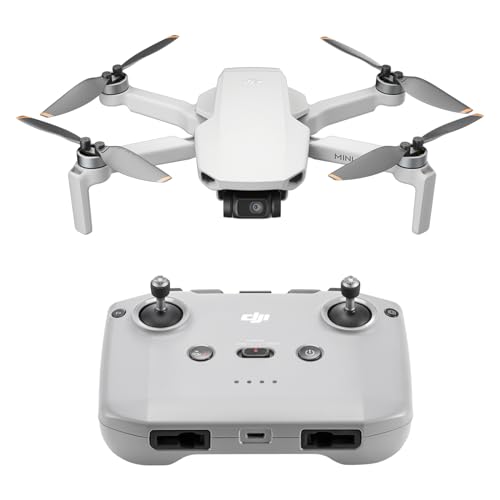
7. DJI Mini 4K: Best Cheap DJI Drone for Travel
So you want DJI's footage for the least money? The Mini 4K is the answer, with a 3-axis gimbal, reliable GPS flight and punchy out-of-camera color that needs no editing.
Imagine a family beach week in Florida. You launch from the sand, fly out over the water and shoot a smooth reveal of the shoreline, and the link reached 2,175 m over the sea in Matty DC Collins' test. Real flights run 20 to 25 minutes. The controller needs your phone as its screen.
The limits are clear, though. There's no obstacle avoidance and no subject tracking, and crashes into trees are owners' top complaint. Dusk footage is noisy too. So would we buy it? For open-air trips on a budget, yes. For sunsets and forests, step up to the Mini 5 Pro (#1).
Best for: Budget travelers who fly over beaches, fields and water and want DJI reliability.
Skip it if: You film at dusk or among trees. The DJI Mini 5 Pro (#1) is the better pick.
Pros
- Cheapest way into stabilized 4K from DJI
- Under 249 g, so no registration for recreational flying
- Solid real range: 2.1 km over open sea in one test
- Easy QuickShots for automated moves
- Real controller included, not phone-only
- Good out-of-camera color for beginners
Cons
- No obstacle avoidance, so trees are a real risk
- No ActiveTrack or follow-me
- No D-Log or HDR, and noisy at blue hour
- Gimbal limited in Sport mode and heavy headwind
- Real flights of 20-25 minutes
- Needs your phone as the screen
Hands-on reviews behind this pick
- DroneXL
Show the verdict
A solid little drone for capturing good photos and footage with minimal fuss, ideal for beginners; no obstacle avoidance, no ActiveTrack and no log profile are fair trade-offs at its price.
- Matty DC Collins
Show the verdict
Still an easy first-drone recommendation in 2026 for daylight shooting: real 4K, good RAW photos and long range, with no collision sensors, no log and a small sensor as the honest trade-offs.
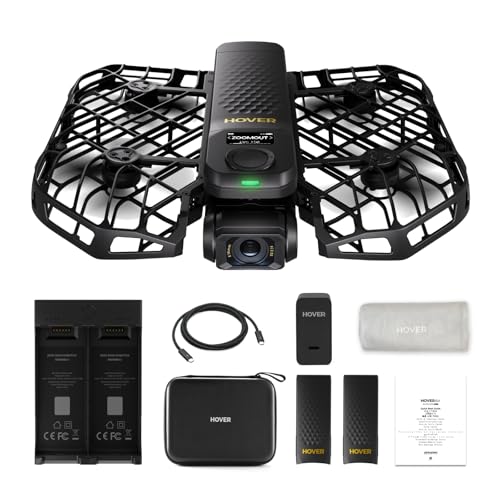
8. HoverAir X1 Pro Max: Best Hands-Free Travel Drone for Selfies
The X1 Pro Max is the travel drone we'd pick for filming yourself. You unfold it, choose a mode on its top screen and launch from your palm, then it follows you on foot, bike or paddleboard with tracking reviewers rate highly.
Say you're paddleboarding a glassy lake in Banff at dawn. Omni Terrain lets it follow over water, and the 1/1.3-inch sensor shoots 8K with 10-bit HLG and log, so the colors hold up next to a bigger drone. It weighs 192 g and its cage shrugs off bumps.
The limits are battery and branches. A seven-month owner gets about 13 to 14 minutes, and only 9 minutes in deep cold. There's no forward sensing, and sudden gusts can push it away. So would we buy it? As a self-filming camera, yes. For scenery shots, the Mini 5 Pro (#1) is more capable.
Best for: Solo travelers who want follow shots of themselves without a controller.
Skip it if: You mostly film landscapes. The DJI Mini 5 Pro (#1) is the better pick.
Pros
- Sharp 8K and strong low light from a 1/1.3-inch sensor
- 10-bit HLG and log for color grading
- Excellent hands-free follow tracking for bikes and ATVs
- Palm launch with no controller needed
- Very durable cage survives repeated crashes
- Omni Terrain lets it follow over water and snow
Cons
- Real flights often just 9-14 minutes per battery
- No forward obstacle sensing; still hits branches
- Gusts above about 20 mph can blow it away
- Some reports of 8K recording stops and overheating
- Beacon screen is tiny for manual flying
- Costs far more than the 4K X1 Pro
Hands-on reviews behind this pick
- DroneXL
Show the verdict
After seven months on his ATV and boat, the reviewer calls it a super fun, very durable, go-anywhere selfie drone with great video, wishing only for longer battery life and better gust handling.
- BIKEPACKING.com
Show the verdict
A months-long trail test finds it a great B-roll tool for riders: tiny, quick to launch and sharp, though it outruns its limit on fast descents and its obstacle sensing still clips trees.
- Jake Sloan
Show the verdict
A pro drone pilot calls it one of the most surprising gadgets of his year: very good 8K footage, easy use and real durability, with battery life of about 8 to 9 minutes in the cold as the main catch.
9. DJI Neo 2 (Drone Only): Best Pocket Travel Drone for Vloggers
The Neo 2 is our pick for travelers who want the lightest possible drone in the bag. It weighs 151 g, its props sit inside full guards, and it launches and lands on your palm, so filming yourself takes seconds rather than a setup routine.
Picture a street-food stop in Bangkok where you want a quick reveal of the stalls. Palm launch, a hand gesture to reframe, and it's back in your pocket. All-round sensing with front LiDAR stopped it before obstacles in testing, and its tracking was rated the most accurate of its type.
But flights are short, at 12 to 15 minutes, and wind pushes it around. Grey Arrows owners trace erratic early flights to batteries that each need a firmware update, so update them all before your trip. So would we buy it? For quick vlog shots, yes. For real aerial scenery, the DJI Flip (#3) flies longer and shoots better.
Best for: Vloggers and casual travelers who want the smallest, simplest self-filming drone.
Skip it if: You want long flights and landscape footage. The DJI Flip (#3) is the better pick.
Pros
- All-round sensing with front LiDAR prevented crashes
- Gesture control lets you reframe a follow shot mid-flight
- Clearly sharper, wider video than the original Neo
- Follows from any angle, not only from behind
- Flies by palm, phone, remote, motion controller or goggles
- Full prop guards and a tough, light body
Cons
- Only about 12-15 minutes per battery in real use
- No microSD slot; 49GB internal storage only
- Too underpowered for confident manual FPV flying
- Buffeted by wind; tiny front screen is hard to read
- Phone-only range fell short of DJI's claim in testing
Hands-on reviews behind this pick
- Camera Jabber
Show the verdict
A fun, light tracking drone and a practical tool for creators, with the most accurate subject tracking of its type so far, though wind, a tiny screen and short flights hold it back.
- DroneXL
Show the verdict
After a year of ownership this is the drone he flies most: portable, durable and flexible, and better after updates, but limited by short flights, a small sensor and no card slot.
- Luke Maximo Bell
Show the verdict
A definite upgrade over the original Neo in almost every way, with far better video, real obstacle avoidance and great gesture control; only battery life failed to improve.
10. Antigravity A1 (Standard Bundle): Best 360 Travel Drone for Creators
The A1 is the travel drone to pick if you'd rather frame shots in the edit than in the air. It's a flying 360 camera built on Insta360 X5 technology that records everything around it in 8K, with the drone and props stitched out.
Imagine a boat trip through Ha Long Bay. You fly once, and later pull a tracking shot, an overhead and a sweeping turn from the same clip. The goggles and one-hand Grip controller are intuitive, though WIRED found them sluggish. DM Productions got about 20 minutes from the standard battery.
But the goggles are the real catch. US rules require a visual observer when you fly through them, so you can't fly solo legally. It also struggles in breezy weather, and the 8-bit footage gets soft if you crop too far. So would we buy it? For a creator with a travel partner, yes. Flying alone? The HoverAir X1 Pro Max (#8) needs no goggles.
Best for: Content creators who travel with a partner and want to frame shots after the flight.
Skip it if: You travel alone or want log color for grading. The DJI Mini 5 Pro (#1) is the better pick.
Pros
- Only drone that films 8K 360: frame every shot later
- Drone and props stitched out of the footage
- Immersive goggles let you look around mid-flight
- Easy point-to-fly controls for beginners
- 249 g with the standard battery
- Good mobile and desktop reframing apps
Cons
- Goggles mandatory: you need a spotter to fly legally
- Real flight time short of the 24-min claim
- Struggles in breezy weather
- 8-bit, no log profile and no ND filters
- Reframed footage softer than a flagship drone
- Awkward for glasses wearers; can cause motion sickness
Hands-on reviews behind this pick
- PCMag
Show the verdict
An ambitious, largely successful debut that is a creative powerhouse for 360 fans and a joy to fly, held back by short real battery life, wind struggles, a high price and a steep editing curve.
- WIRED
Show the verdict
Praises the innovative 360 camera, light build, well-made goggles and strong apps, but finds the flying sluggish and the forced goggle setup fussy, so it falls short of a must-buy at its price.
- DM Productions
Show the verdict
After ten weeks he calls the immersive 360 goggle flight unlike anything else and the footage very good, but wants 10-bit or a flat profile, cheaper goggles and a non-goggle way to fly.
Best drones for travel buying guide for 2027
Do you need to register a travel drone?
Only if it weighs 250 g or more, or you fly for work. Recreational fliers in the US skip FAA registration below that line, which is why so many travel drones sit right at 249 g.
Be careful with the marketing. The DJI Mini 5 Pro (#1) is rated at 249.9 g, but most units weigh about 252 g, so treat it as registered. The DJI Flip (#3), Skyrover X1 (#4), Potensic Atom 2 (#6) and DJI Mini 4K (#7) all stay under. The Air 3S (#2) and Mavic 4 Pro (#5) are well over and always need registering. If staying under matters most, see our picks of drones light enough to skip registration.
How long does a travel drone battery really last?
Plan on about two thirds of the number on the box. Real flights include climbing, framing and wind, and every pick here falls short of its rating.
The Mavic 4 Pro (#5) flew 39 to 43 real minutes and the Air 3S (#2) 30 to 38. The Skyrover X1 (#4) hit about 27.5 minutes in a cruise test, and the Flip (#3) about 27. The Mini 5 Pro (#1) lands at 20 to 25, the Atom 2 (#6) and Mini 4K (#7) at roughly 20 to 22. Self-filming drones are shortest: 12 to 15 minutes for the Neo 2 (#9). That's why a Fly More kit with spare batteries is the smartest add-on for any trip.
Can you take a drone on a plane?
Yes, but your spare batteries ride in the cabin. The FAA's PackSafe rules say spare lithium-ion batteries go in carry-on bags only, with the terminals protected, and each is limited to 100 Wh. Airlines can set stricter limits, so check yours before you fly.
That's where small drones win. A sub-250 g folder like the Flip (#3) or Mini 4K (#7) fits a camera bag with room for spare batteries, and the Neo 2 (#9) fits a jacket pocket. The Mavic 4 Pro (#5) and its three-battery kit take up a real chunk of a carry-on. And look up the drone rules where you land before your first flight there.
Which travel drone handles wind best?
Heavier drones handle wind best. Weight and motor power keep a drone steady when a gust hits a headland, and that's the one place sub-250 g drones give ground.
The Mavic 4 Pro (#5) stayed stable in 35 mph gusts, and the Air 3S (#2) held position in sustained 20 mph wind. The Atom 2 (#6) holds position well for its weight. The Flip (#3) is the weakest here, because its prop guards catch the air, and light self-filming drones like the Neo 2 (#9) and HoverAir X1 Pro Max (#8) can be pushed around. For windy coasts and mountains, carry the Air 3S.
Is a cheap drone good enough for travel video?
Yes, if it has a 3-axis gimbal and GPS. Those two things give you smooth, steady footage and a drone that comes home on its own, and they matter more than the resolution on the box.
The DJI Mini 4K (#7) and Potensic Atom 2 (#6) both have them and stay under 249 g. What you give up is obstacle sensing and low-light quality, so you fly over open ground and shoot in good light. If you're new to flying, our guide to first drones that are easy to learn covers more starter picks, and our list of camera drones under $300 goes cheaper still. For every budget and job, see our full guide to the best drones.
Best drones for travel: frequently asked questions
What is the best drone for travel?
The DJI Mini 5 Pro is our pick. It folds small, carries a 1-inch 50MP sensor that stays clean at dusk, and has omnidirectional sensing plus LiDAR. Most units weigh about 252 g, so plan to register it. If you need a drone that's truly under 250 g, get the DJI Flip.
What is the best travel drone under 250 grams?
The DJI Flip is our pick under 249 g. Its full prop guards make it safe near people, and it shoots 4K at 60fps with 10-bit D-Log M. It struggles in wind, though. For longer flights at 248 g with all-round sensing, the Skyrover X1 is the alternative.
Can I bring my drone on a plane?
Yes. FAA rules put spare lithium-ion batteries in carry-on bags only, with terminals protected and a 100 Wh limit each, and airlines may be stricter. Small folders like the DJI Flip or DJI Mini 4K fit a camera bag with spares; the Mavic 4 Pro kit takes up far more room.
How long do travel drone batteries last?
Expect about two thirds of the rating. The DJI Mavic 4 Pro flew 39 to 43 real minutes and the Air 3S 30 to 38. The Mini 5 Pro lands at 20 to 25 and the Neo 2 at 12 to 15. Whichever you pick, buy a kit with spare batteries.
What is the best cheap drone for travel?
The DJI Mini 4K is the cheapest DJI we'd travel with. It has a 3-axis gimbal for smooth 4K, stays under 249 g and reached 2.1 km over open sea in one test. It has no obstacle sensing, so fly over open ground. The Potensic Atom 2 is the non-DJI alternative.